What is confidence? For many, the word conjures images of loud, charismatic leaders or fearless public speakers. But true self-confidence is often quieter—a steady, internal belief in your own worth and capabilities. If you feel like your inner certainty has been shaken, you're not alone. The great news is that confidence is a skill, not a fixed trait, and one of the most effective ways to build it is by standing on the shoulders of giants. This guide delves into the core principles taught in the best books on self confidence, transforming abstract ideas into actionable strategies for your life. While countless articles simply list the top books on confidence, our goal is different. We're here to unpack the how and the why behind their powerful messages.
What the Best Books on Self Confidence Teach Us
At its heart, low confidence is a crisis of perspective. It’s a story we tell ourselves—that we aren’t smart enough, talented enough, or worthy enough. The most transformative books on this subject don't just offer feel-good platitudes; they provide a new lens through which to view yourself and the world. They help you identify the flawed logic holding you back and give you the tools to rewrite your own narrative. Let's explore the common causes of low confidence and the powerful book-based insights that help dismantle them.
The Comparison Trap and False Exceptionalism
One of the biggest modern drains on self-worth is the endless scroll of social media. In The Subtle Art of Not Giving a Fck*, Mark Manson highlights a key problem of our culture: an obsession with exceptionalism. As he points out in the book summary module, "You Are Not Special," we are constantly exposed to the highlight reel of the top 0.1%—the perfect vacations, flawless bodies, and billion-dollar business deals. This creates an impossible standard, making our normal, problem-filled lives feel inadequate by comparison. Confidence plummets when our reality doesn't match the curated fiction we consume. Manson's counterintuitive advice is to embrace the ordinary and stop trying to be extraordinary. True confidence isn't about being better than everyone else; it's about being comfortable with who you are, problems and all.
The Echo of Subconscious Programming
Do you ever wonder why you react a certain way or why specific situations trigger deep-seated insecurity? Jen Sincero, in You Are a Badass®, argues that our subconscious mind is often running the show. As explained in the book's summary, our conscious mind is just the tip of the iceberg. Deep-seated beliefs, many formed in childhood, operate below the surface, dictating our feelings and reactions. If you grew up hearing, "Money doesn't grow on trees," you might struggle with financial confidence as an adult professional. Sincero’s work is a call to action to identify and actively rewrite these limiting stories. This process is a fundamental confidence exercise: you must first become aware of the old, unhelpful narrative before you can replace it with a new, empowering one.
Building a Foundation of Inner Strength
Understanding the causes of low confidence is the first step, but how do we actively build it back up? The journey of how to overcome confidence long term isn't about puffing yourself up, but about building a solid foundation from within. Key principles from several landmark books provide a powerful roadmap.
Principle 1: Separate Yourself from Your Thinking
Perhaps the most radical and freeing idea comes from Joseph Nguyen's Don't Believe Everything You Think. The premise is simple but profound: you are not your thoughts. Nguyen makes a critical distinction between having "thoughts" (which is an automatic, neutral process) and engaging in "thinking" (the act of grabbing onto a thought, analyzing it, and building a narrative around it). Suffering and anxiety, he argues, come from the latter. When a thought like "I'm going to fail this presentation" arises, the confident person lets it pass like a cloud; the unconfident person grabs onto it, fueling a storm of self-doubt. This is one of the most effective confidence coping strategies. By realizing that thoughts are just mental noise and not objective truth, you strip them of their power to control your emotional state.
Principle 2: Embrace Radical Responsibility
Another foundational shift comes from Mark Manson's work. In The Subtle Art of Not Giving a Fck*, he introduces the powerful distinction between fault and responsibility. Fault is past-tense; it assigns blame for a situation. Responsibility is present-tense; it's about how you choose to respond to the situation, regardless of who's at fault. Someone else might be at fault for a mistake at work, but you are responsible for how you handle the fallout, communicate the issue, and move forward. This shift is crucial for building self-confidence, especially confidence at work. It moves you from a passive victim mindset to an active, empowered one. You can't control what happens to you, but you always control your response, and that is where your power lies.
Principle 3: Find Freedom in Detaching from Approval
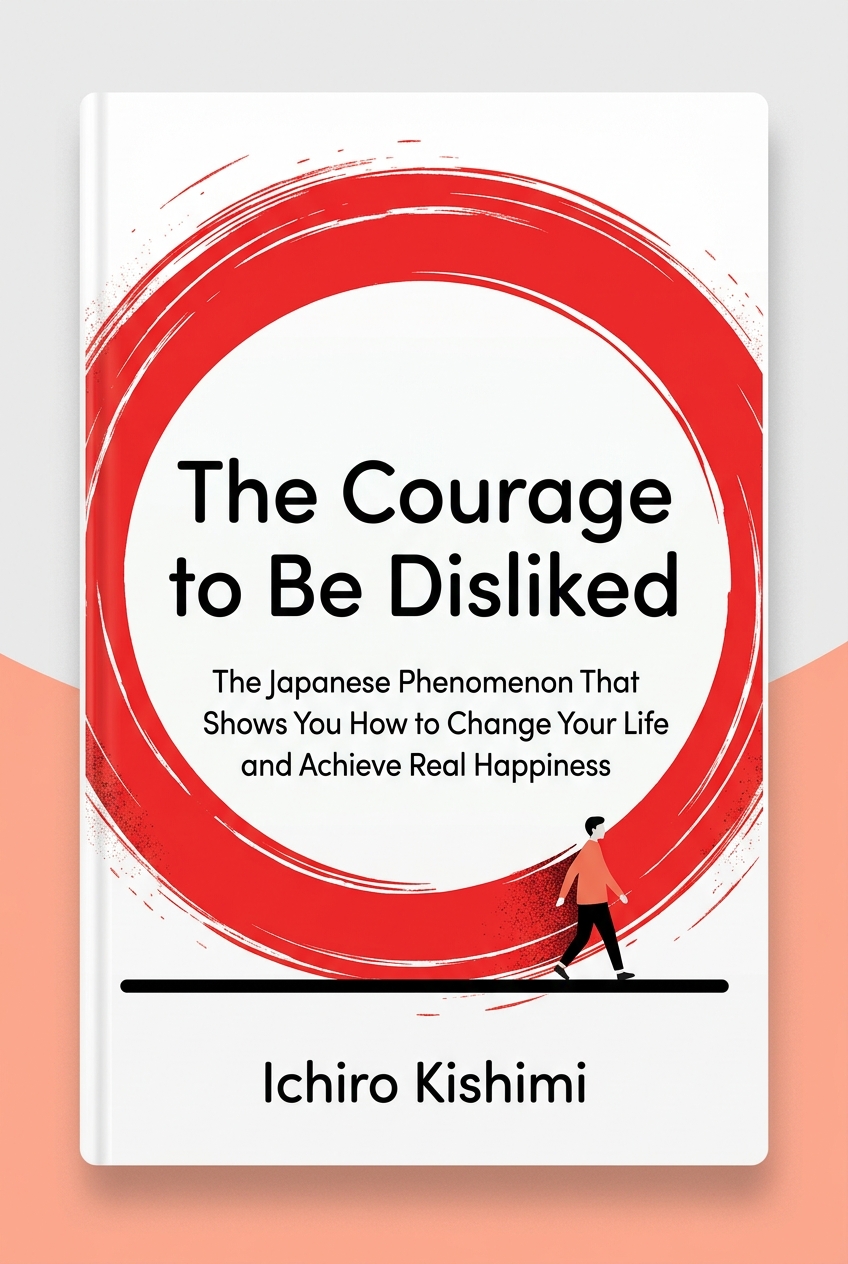
Why is confidence so fragile? Often, it’s because we tie it to the validation of others. The Courage to Be Disliked by Ichiro Kishimi introduces Adlerian psychology to challenge this very notion. The book argues that virtually all our problems are, at their core, interpersonal relationship problems. We suffer because we're constantly seeking recognition and terrified of being disliked. Adlerian psychology offers a liberating solution: the "separation of tasks." Your task is to live your life authentically and pursue your goals. Whether other people like it, approve of it, or praise you for it is their task, not yours. This is a game-changer for developing social confidence and public speaking confidence. When you stop trying to manage others' reactions, you are free to act from a place of inner conviction.
Turning Theory into Actionable Practice
Knowledge is only potential power. To see real change, we must apply these principles. The following strategies, inspired by these transformative books, are practical confidence exercises you can start implementing today.
Confront the Mountain Within
Many of us engage in a frustrating cycle of self-sabotage. We procrastinate on important projects, stay in jobs we hate, or avoid opportunities for growth. Brianna Wiest's The Mountain Is You offers a profound reframe: the mountain you think you need to climb isn't an external obstacle; it's you. Wiest explains that self-sabotage isn't a sign of laziness or a character flaw; it’s a misguided attempt by our psyche to protect us from potential pain or failure. As the book summary reveals, understanding this turns an enemy into an ally. By developing emotional intelligence—what Wiest calls the "climbing gear"—we can decode the messages behind our destructive behaviors. When you procrastinate, instead of berating yourself, ask: What fear is this procrastination protecting me from? This turns self-sabotage into a powerful tool for self-awareness, which is the first step toward genuine self-mastery.
Master Your Inner World to Master the Outer
Whether you're a student facing exams or a professional battling imposter syndrome, your inner state dictates your outer performance. This is where the practical application of these ideas becomes critical. Before a high-stakes meeting, practice the principle from Don't Believe Everything You Think. Notice the anxious thoughts ("They'll think my ideas are stupid"), but don't engage with them. Let them float by, returning your focus to your breath or the physical sensations in the room. This creates the inner peace necessary for your true capabilities to shine through. Similarly, apply the wisdom of Jen Sincero's You Are a Badass® by making an "unwavering decision." Instead of passively wanting to feel more confident in social situations, decide that you will contribute one comment in your next meeting or initiate one conversation at the next event. The decision itself is an act of power that begins to build momentum, rewiring your brain for confidence long before the external outcome is needed for success.
Ultimately, the journey to rebuild and fortify your self-confidence is a deeply personal one. It requires courage, honesty, and a willingness to challenge long-held beliefs. The ideas found in these books are not quick fixes; they are blueprints for a new way of being. They show us that confidence isn't about being fearless, but about taking action despite fear. It's about taking responsibility, detaching from outcomes, and, most importantly, understanding that you have the power to write a new, more empowered story for yourself, one thought and one choice at a time.
Master key ideas in 15 minutes
Listen to audio summaries of these books on VoxBrief
Download Free