What Is Economic History? A Guide to the Best Economic History Books
By VoxBrief Team··6 min read
You scroll through the news and see headlines about inflation, interest rates, and market volatility. You wonder if your savings are safe, if your career path is secure, and why the gap between the rich and everyone else seems to be widening. These aren't just modern anxieties; they are echoes of questions that have reverberated through centuries. To truly understand them, you need more than today's headlines. You need a map of the past. This is where we can answer the question, what is economic history? It's the story of how we got here—the study of how past events, decisions, and ideas have shaped our economies and our lives. This guide will explain why this field is so critical, especially for beginners, and how the best economic history books can serve as your compass.
Economic history isn't an abstract academic discipline; it's a practical tool for navigating the present. For anyone just starting out, especially those learning about economic history in their 20s or for millennials trying to build a stable future, it provides the essential context missing from financial news and investment blogs. It transforms abstract concepts like 'capital' and 'growth' into tangible stories about people, power, and progress.
Why Is Economic History So Important Today?
The past isn't just a collection of stories; it's a living force that shapes the world we inhabit. Understanding economic history is important because it provides a laboratory where the great economic ideas have been tested. It allows us to see what happened when societies experimented with different systems, from pure free markets to centralized control, and to learn from their triumphs and their failures.
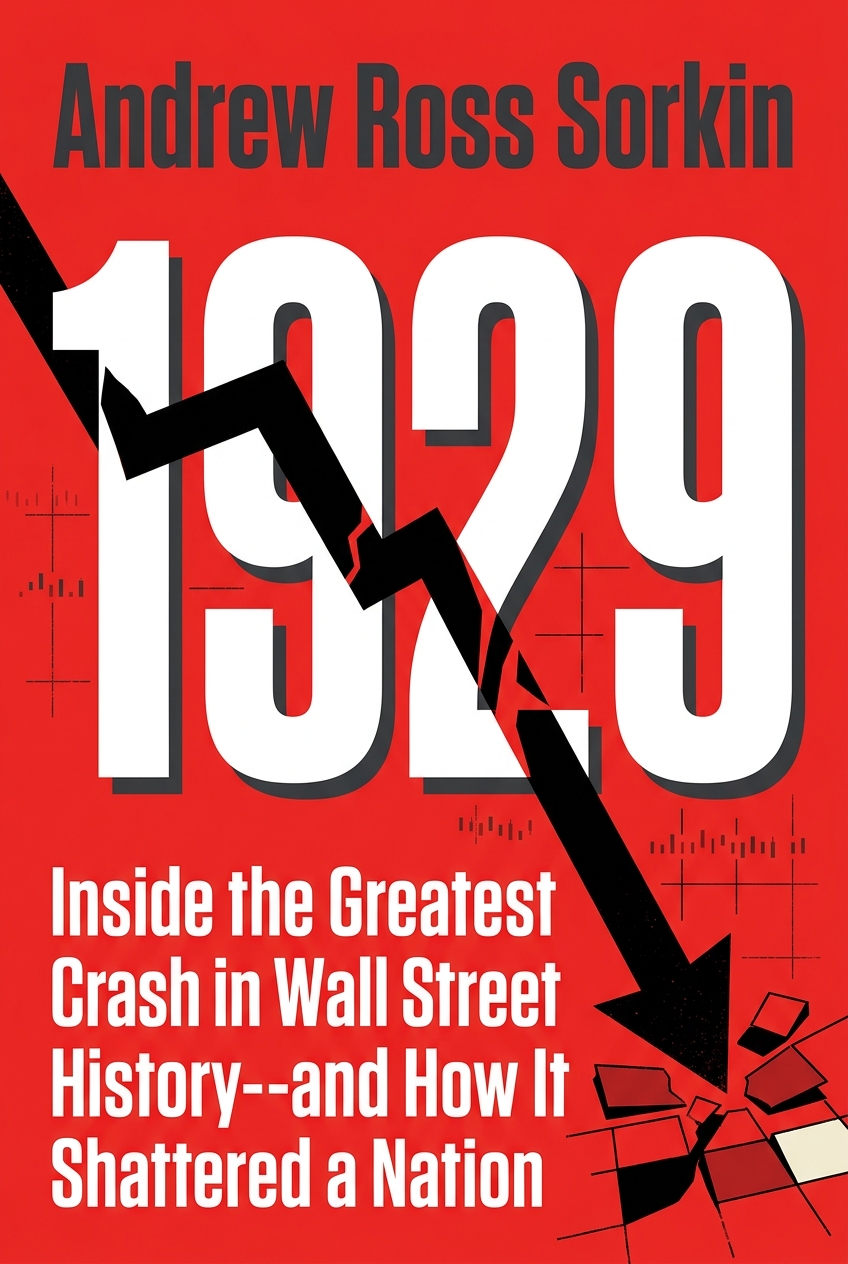
Consider the rhythm of booms and busts that define modern capitalism. Every financial crisis feels unprecedented in the moment, yet they often follow familiar patterns. In his book 1929, Andrew Ross Sorkin details the anatomy of the greatest crash in Wall Street history. He describes the 1920s not just as an economic boom, but as a "cultural phenomenon" where Wall Street became a "main street spectacle." New technologies, easy credit, and a belief that the old rules no longer applied created a sense of invincibility. This narrative offers a chilling mirror to the dot-com bubble of the late 90s or the speculative manias we see today. By studying 1929, we learn that market psychology, human greed, and overconfidence are timeless forces. The technology changes, but the story often remains the same, making this history a vital lesson in risk management.
Furthermore, economic history helps us understand the deep roots of today's most pressing issues, like wealth inequality. It forces us to ask why some nations prosper while others stagnate, and why wealth concentrates in certain hands. It's a field that uncovers the hidden wiring of our world, revealing that the economic 'rules' we live by weren't handed down from on high—they were constructed, debated, and fought over by thinkers and leaders of the past.
Unlocking the Past: A Look Inside the Best Economic History Books
Reading the best economic history books is like having a conversation with the sharpest minds across the centuries. These works do more than recount facts; they provide powerful frameworks for understanding the world. They move beyond simple dates and events to dissect the very ideas that built our modern economic reality.
The Invention of the Economy Itself
Before we can talk about economic principles, we must understand where they came from. For most of human history, the 'economy' as we know it didn't exist. As Robert L. Heilbroner explains in The Worldly Philosophers, societies were organized by tradition or command. You did the work your father did, or you did what the king told you to do. The idea of a society organized around a self-regulating market was truly revolutionary.
Heilbroner introduces us to thinkers like Adam Smith, who were the first to make sense of this new world. They weren't just 'economists'; they were moral philosophers grappling with a fundamental shift in how human society organized itself. Understanding this origin story—the "Birth of the Economic Problem"—is a crucial first step for any beginner. It shows that our current system isn't inevitable or natural, but a specific system with a specific history, invented to solve a particular set of problems.
The Fundamental Engine of Wealth Creation
Once the market system emerged, how did it actually create prosperity? This is the central question Adam Smith tackles in his foundational work, The Wealth of Nations. Smith's revolutionary insight was that a nation's wealth isn't its stockpile of gold, but the productivity of its people. The key to unlocking that productivity, he argued, was the "Division of Labor."
By breaking down production into small, specialized tasks—like the famous example of a pin factory—output could be multiplied exponentially. And what drives this system? Not benevolence, but self-interest. As Smith famously wrote, "It is not from the benevolence of the butcher, the brewer, or the baker that we expect our dinner, but from their regard to their own interest." This concept, that individual ambition channeled through a free market can lead to collective prosperity, is arguably the most powerful economic idea in history. Grasping this principle is essential for understanding the logic of capitalism.
Understanding the Dynamics of Modern Inequality
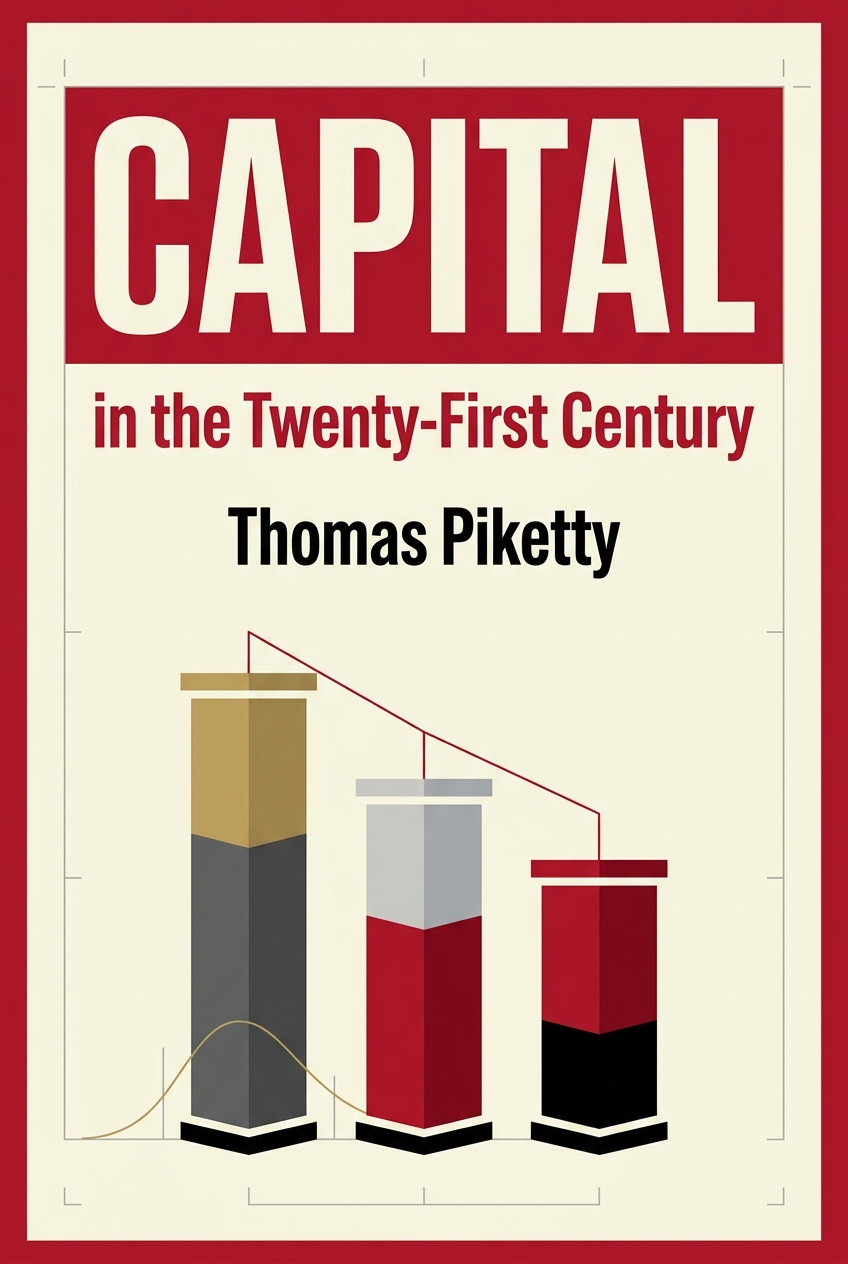
While Smith described an engine of incredible growth, other thinkers have focused on its side effects. In our own time, no one has done so more powerfully than Thomas Piketty in Capital in the Twenty-First Century. Piketty uses centuries of data to uncover a simple but powerful force driving inequality: r > g.
This formula states that, over the long run, the rate of return on capital (r) — things like stocks, bonds, and real estate — tends to be greater than the rate of economic growth (g), which is closely tied to wages. What this means in practice is that wealth derived from owning assets grows faster than wealth derived from labor. If you rely only on your salary, you may be falling behind those whose wealth is already invested. Piketty’s historical analysis, which shows a dramatic "U-shaped curve" of inequality over the past century, provides a data-driven explanation for why the gap between the wealthy and everyone else continues to widen.
How to Build Your Economic History Knowledge from Scratch
Armed with an understanding of why economic history matters, you can begin your own journey of discovery. The goal isn't to become a professional historian, but to develop a new lens through which to view the world. Here are some economic history tips on how to get started.
Practical First Steps for Beginners
Knowing how to start economic history can feel daunting, but the process can be simple. Don't feel you have to read The Wealth of Nations cover-to-cover right away. Start with a question you are genuinely curious about. Is it the rise of China? The 2008 financial crisis? The future of work? Find a book, documentary, or podcast that addresses that specific topic.
A great approach is to start with summaries. Platforms like VoxBrief give you the core arguments and key historical evidence from dense books like Piketty's Capital in a digestible format. This allows you to grasp the main frameworks and decide which thinkers or periods you want to explore in more depth. The key is to build momentum and connect what you're learning to what you see in the world around you.
Common Economic History Mistakes to Avoid
As you begin, it’s important to be aware of a few common pitfalls. The most significant of the economic history mistakes to avoid is assuming that history repeats itself exactly. History rhymes; it doesn't repeat. As Sorkin's work on the 1929 crash shows, the context, technology, and regulations may be different, but the human behaviors are similar. Use history to understand principles, not to make exact predictions.
Another mistake is to look for simple, prescriptive investment advice. Economic history doesn't offer a 'get rich quick' scheme. Its value is far greater: it cultivates a long-term perspective and an appreciation for the deep, structural forces at play. It's about understanding the game, not just trying to predict the next move.
Developing Your Own Economic History Learning Strategy
Ultimately, the best economic history strategy for beginners is to become an active, critical reader. Don't just passively consume information; connect the dots. Ask yourself: How does Adam Smith's concept of the market relate to Piketty's findings on inequality? How did the political response to the Great Depression, as detailed in books like 1929, shape the world we live in today?
Your strategy should be to build a mental latticework of big ideas. When you learn about Heilbroner's "Worldly Philosophers," you're not just learning about individuals; you're learning about the evolution of thought itself. When you combine this with the data-driven history of Piketty and the narrative history of Sorkin, you begin to form a multi-dimensional view of the economy—one that is far more robust and insightful than any single perspective.
By engaging with these stories and ideas, you move from being a passive observer of economic events to an informed participant, capable of thinking critically about the past, present, and future.
Master key ideas in 15 minutes
Listen to audio summaries of these books on VoxBrief
Economic history is crucial because it reveals the patterns and forces that shape our modern economy. For beginners, it provides context for everything from stock market behavior to government policies, helping you make more informed financial decisions and avoid past mistakes.
Starting with little money is easy. You can access countless free resources like podcasts, documentaries, and library books. Platforms like VoxBrief also offer affordable audiobook summaries of foundational texts, giving you core insights without a huge initial investment.
The only real risk is misinterpreting the past or assuming history will repeat itself exactly. Economic history isn't about finding a foolproof investment formula. It's about developing a framework for critical thinking and understanding the principles that drive economic change, which reduces financial risk over the long term.