A Beginner's Guide to Focus Books: How to Reclaim Your Attention
By VoxBrief Team··6 min read
Do you ever reach the end of your day and wonder where all the time went? You were busy—replying to emails, jumping between tasks, scrolling through feeds—but you didn't make progress on what truly matters. This feeling of fractured attention is not just in your head; it’s the defining challenge of our age. The good news is that you can fight back, and a great place to start is with the wisdom found in focus books. These guides offer more than just simple productivity hacks; they provide a comprehensive roadmap for understanding what focus is, why it's so critical, and how to rebuild it in a world designed for distraction.
This article will explore the core principles for reclaiming your concentration, drawing on powerful insights from leading authors. We'll examine the forces working against your attention, discover foundational techniques to rebuild it from the ground up, and learn how to create sustainable habits for long-term success. Whether you're a student struggling to study or a professional drowning in digital noise, these ideas can help you learn how to develop focus and do your best work.
The Modern Attention Crisis: Why Focus Is So Hard
Before we can solve a problem, we must understand its root cause. If you've ever blamed yourself for your inability to concentrate, you're not alone. We often assume a short attention span is a personal failing—a lack of willpower or discipline. However, some of the most insightful focus books argue this is a fundamental misconception.
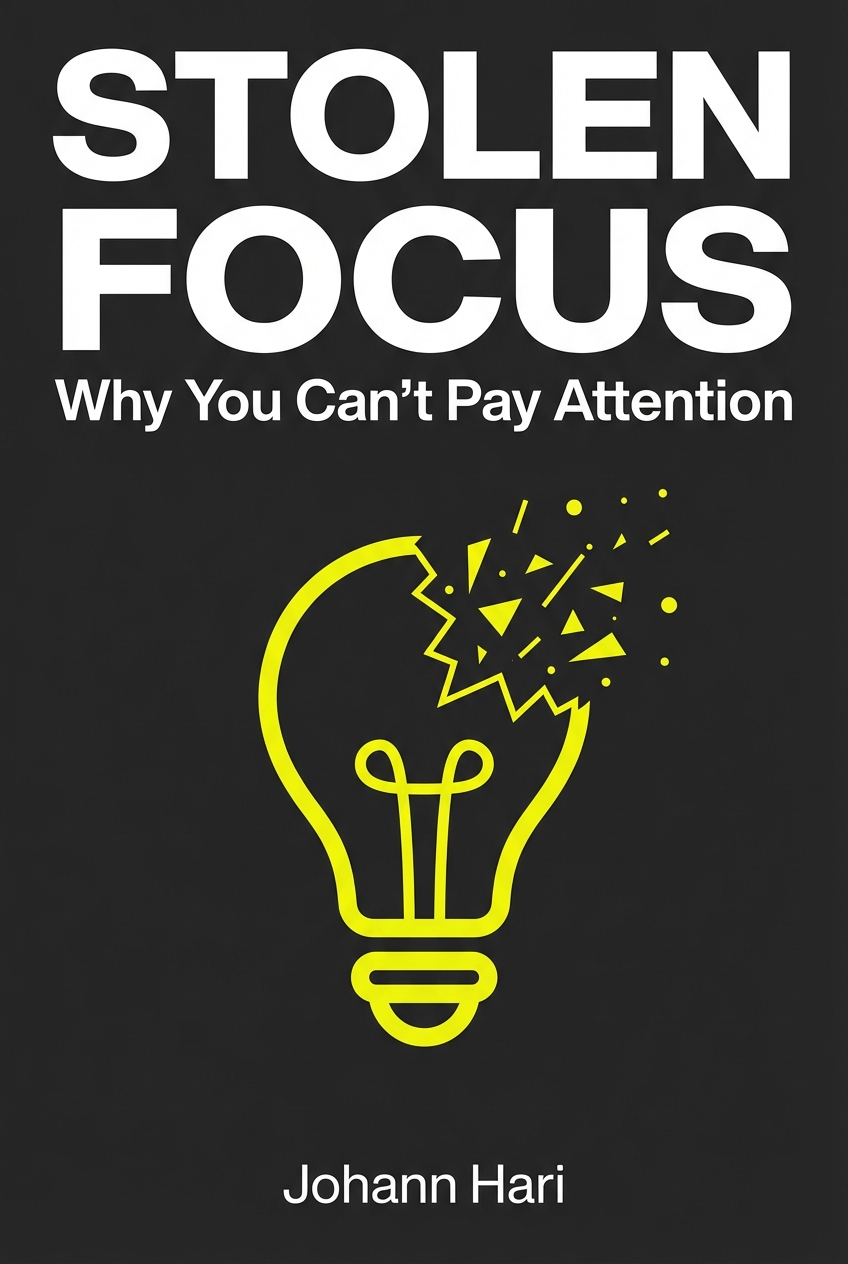
In his groundbreaking work, Stolen Focus, journalist Johann Hari makes a compelling case that our attention hasn't just waned; it has been actively stolen. He argues that we are fighting a losing battle against powerful external forces. This isn't an excuse; it's a diagnosis. Hari identifies what he calls the "Illusion of Individual Failure," where we internalize blame for a systemic problem. The real culprits are a dozen factors deeply embedded in our culture and technology.
One of the primary forces is the sheer speed of modern life. As Hari notes, the constant acceleration of information and communication comes at a steep cognitive price. Our brains are not designed for the perpetual context-switching that has become the norm. Jumping from an email to a spreadsheet to a team chat might feel productive, but it erodes our ability to engage in the deep, sustained thought required for high-quality work and creative problem-solving. This is especially true for professionals trying to maintain focus at work amidst constant interruptions.
Compounding this is the business model of Silicon Valley, which Hari argues is engineered to hijack our minds. Apps and platforms are not neutral tools; they are meticulously designed to capture and monetize our attention. This isn't a conspiracy theory but a documented strategy that keeps us scrolling, clicking, and refreshing, fracturing our focus into smaller and smaller pieces. Recognizing that the environment itself is hostile to concentration is the first step toward reclaiming it.
How to Build Focus: Foundational Pillars for a Resilient Mind
Understanding the problem is liberating, but it's only half the battle. Once we accept that external forces are at play, we can begin to build internal defenses and redesign our personal environments. This is about establishing new focus habits and daily focus practices that restore our mind's natural capacity for concentration. The journey involves strengthening our minds from the inside out.
The Physiological Foundation: Mindful Focus Through Breath
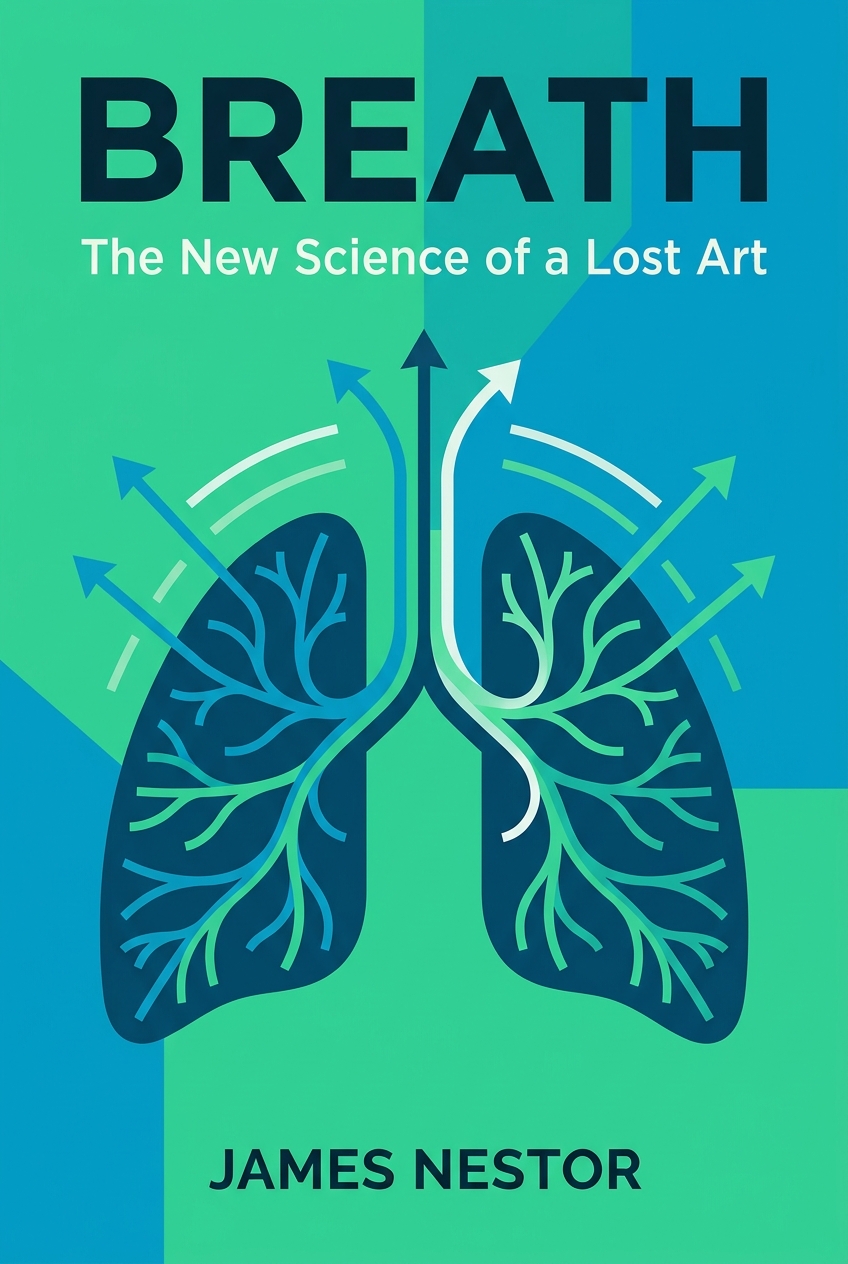
What if one of the most powerful focus techniques that work was something you do 25,000 times a day? In his fascinating book Breath, author James Nestor reveals a startling truth: most modern humans have forgotten how to breathe correctly, and it's sabotaging our health, sleep, and concentration.
Nestor’s research uncovers a direct link between our breathing patterns and our nervous system. When we are stressed or distracted, we tend to breathe quickly and through our mouths. This signals to our brain that we are in a state of fight-or-flight, making sustained focus nearly impossible. Conversely, slow, deep breathing through the nose activates the parasympathetic nervous system, inducing a state of calm and alertness.
One of the book's key takeaways is the power of a full exhalation. Extending your exhale sends a powerful signal to your body to relax. This simple act can lower your heart rate and quiet a racing mind, creating the ideal physiological state for concentration. Integrating just a few minutes of mindful focus on your breath throughout the day can serve as a powerful reset button, pulling you out of a state of scattered attention and into one of calm clarity.
The Skill of Concentration: Deep Work and Deliberate Practice
Focus isn't just a state to be protected; it's a skill to be trained. Like a muscle, your attention span strengthens with consistent, challenging exercise. This is a core idea in the world of performance psychology, and it's essential for anyone who wants to move beyond surface-level work.
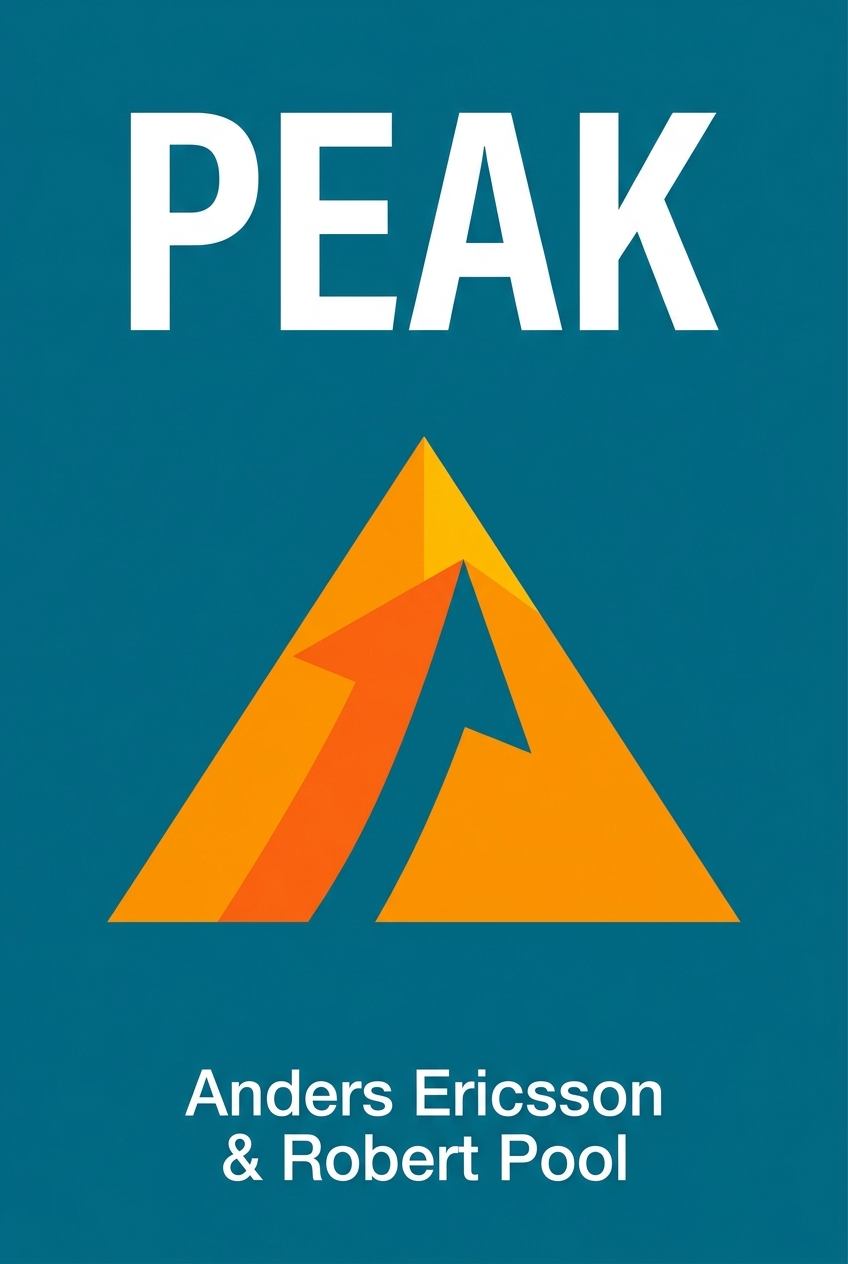
This principle is powerfully articulated in Peak by Anders Ericsson and Robert Pool, the book that formed the basis for the "10,000-hour rule." The authors demolish the myth of innate talent, arguing that world-class performers in any field are products of a specific type of training: deliberate practice. Deliberate practice is not simply repetition; it's a highly structured and mentally demanding activity designed to push you just beyond your current capabilities. It requires intense focus, immediate feedback, and constant refinement.
Applying this to your own life means shifting your mindset from "working" to "training." When you sit down to perform a task, instead of just trying to get it done, you approach it with the specific goal of improving your concentration. This could mean setting a timer for 45 minutes of uninterrupted deep work, where you tackle your most demanding task with zero distractions. By consistently engaging in these focused sprints, you are actively building your attentional muscle, making it easier to concentrate for longer periods over time. For students, this completely transforms how one approaches studying, turning it from a passive review into an active skill-building session.
The Environmental Factor: Digital Minimalism
Even with a calm nervous system and a trained mind, it's difficult to focus in a chaotic environment. To truly protect your attention, you must become the architect of your surroundings. This means consciously curating your physical and digital spaces to support deep work, a philosophy often referred to as digital minimalism.
Connecting back to the issues raised in Stolen Focus, digital minimalism is a practical rebellion against technologies designed to distract you. It’s not about abandoning technology altogether but about being intentional with its use. A few simple focus tips can make a huge difference:
Create a No-Fly Zone: Designate a physical workspace that is sacred to focus. Keep it clean, organized, and free of distractions like your personal phone.
Turn Off Notifications: The single most disruptive element of modern technology is the unsolicited notification. Go into your phone and computer settings and turn off all non-essential alerts.
Schedule Your Inputs: Instead of constantly checking email and social media, batch these activities into specific times of the day. This puts you in control, rather than allowing the platforms to dictate your attention.
By creating friction between you and your biggest distractions, you make it easier to choose focus.
Putting It All Together: From Practice to Flow State
Knowing what to do is different from doing it consistently. The final step is to integrate these principles into a sustainable routine. The goal is not perfection but progress. By combining physiological regulation, skill development, and environmental design, you create the conditions for your best work to emerge.
The Ultimate Goal: The Flow State
The reward for all this hard work is more frequent access to the flow state. Flow is that magical experience where you are so completely absorbed in a task that time seems to melt away. It's a state of high performance and deep enjoyment, where concentration feels effortless.
The practices we've discussed are the direct pathways to achieving flow. A calm nervous system from proper breathing, a trained attention muscle from deliberate practice, and a distraction-free environment are the three legs of the stool that support this peak experience. The more you practice these focus habits, the more often you'll find yourself slipping into this highly productive and satisfying state.
A New Perspective on Ability: Focus vs Talent
Ultimately, the journey to rebuild your focus is an empowering one. It shifts the narrative away from one of innate limitations and toward one of limitless potential. As the researchers behind Peak so powerfully argue, what we often label as "talent" is, in most cases, the result of thousands of hours of highly focused practice. This means that your ability to learn, create, and perform at a high level is not fixed. It is a direct function of your ability to concentrate.
Cultivating focus is one of the most important investments you can make in yourself. It's the meta-skill that enhances every other aspect of your life, from your professional output to your personal relationships. By exploring various books on focus, you can gain not just tips, but a profound understanding of how your mind works and how to help it thrive in a distracted world. Start today with one small change—a few mindful breaths, a 25-minute block of deep work, or turning off a single notification—and begin the journey of reclaiming your most valuable asset: your attention.
Master key ideas in 15 minutes
Listen to audio summaries of these books on VoxBrief
Focus is challenging because our modern environment is designed to fragment our attention. Factors like the speed of information, constant notifications, and a culture of multitasking create a hostile environment for concentration, a core idea explored in books like Johann Hari's *Stolen Focus*.
Research consistently shows that focused practice is far more crucial than innate talent for achieving success. As detailed in the book *Peak*, experts are not born; they are made through thousands of hours of 'deliberate practice,' which requires deep focus. Talent may provide a head start, but sustained focus drives mastery.
The best books on focus are those that resonate with your specific challenges. Some diagnose the systemic problems behind our short attention spans, others provide physiological techniques, and some detail the science of skill-building. Identify your biggest obstacle—is it your phone, your mindset, or your habits?—and find an author who addresses it.
Consistency comes from building small, sustainable focus habits rather than attempting a complete overhaul overnight. Start with a simple daily focus practice, like ten minutes of mindful breathing or a 30-minute block of distraction-free work. Tracking your progress helps build momentum and makes the process feel manageable.