Understanding Criminal Minds: A Guide to Good Criminal Psychology Books
By VoxBrief Team··6 min read
The public's fascination with crime is undeniable. True crime documentaries, podcasts, and dramatic series pull in millions of viewers, all asking the same questions: Why would someone do that? What were they thinking? While entertainment can scratch the surface, the deep, scientific pursuit of these answers lies in the field of forensic psychology. This article serves as a guide, not to a list of grisly case files, but to understanding the foundational ideas that help us analyze criminal behavior, drawing on insights you can find in good criminal psychology books and foundational texts on human behavior.
What Is Forensic Psychology and Why Is It Important?
Before diving into the minds of criminals, it's crucial to understand the discipline that studies them. So, what is forensic psychology? At its core, forensic psychology is the intersection of psychology and the law. It involves applying psychological principles, theories, and research to the legal system, including criminal investigations, court proceedings, and correctional facilities.
This field is far more than the criminal profiler trope often seen on television. Professionals in this area perform a wide range of critical tasks:
Assessments: They evaluate a defendant's mental state to determine competency to stand trial or insanity pleas.
Expert Testimony: They provide expert opinions in court on topics like eyewitness memory, child custody, or the psychological trauma experienced by a victim.
Treatment: They design and implement rehabilitation programs for inmates within correctional facilities, focusing on reducing recidivism.
Consultation: They advise law enforcement on investigation techniques, jury selection, and strategies for interrogating suspects.
The next logical question is, why is forensic psychology important? Its significance is immense. It helps ensure that justice is administered fairly by providing the courts with a scientific understanding of a defendant's mental state and motivations. It moves the conversation beyond simple punishment to focus on the forensic psychology causes and effects, helping to shape effective rehabilitation strategies. For victims, it provides a framework for understanding trauma and aids in their recovery. It is a vital component of a modern, evidence-based justice system, valuable for everyone from law enforcement professionals to the attorneys and judges who rely on their expertise.
The Psychological Drivers Behind Criminal Behavior
Understanding a criminal act requires looking beyond the crime itself and into the psychological patterns that made it possible. Foundational books on human behavior offer powerful frameworks for this analysis.
A Criminal's Mindset: The Trap of Fixed Beliefs
One of the most potent concepts for understanding behavior comes from Dr. Carol S. Dweck's groundbreaking book, Mindset. Dweck identifies two core belief systems: the fixed mindset and the growth mindset. Someone with a fixed mindset believes their character, intelligence, and abilities are static traits they cannot change. In contrast, someone with a growth mindset believes these qualities can be developed through dedication and hard work.
This framework is profoundly relevant to criminal psychology. Dweck’s research shows that when work gets hard or when faced with failure, mindsets diverge. For an individual leaning towards criminal activity, a fixed mindset can become a psychological trap. A person who believes their negative traits are unchangeable may justify their actions with thoughts like, "I'm just a bad person," or "I was born this way." This perspective erodes personal responsibility and makes the idea of reform seem futile. It becomes a self-fulfilling prophecy where failures (like being caught for a crime) are seen not as learning opportunities but as confirmation of their unchangeable, flawed identity. This is especially relevant for forensic psychology for students learning about rehabilitation theories.
The Habit Loop of Unlawful Actions
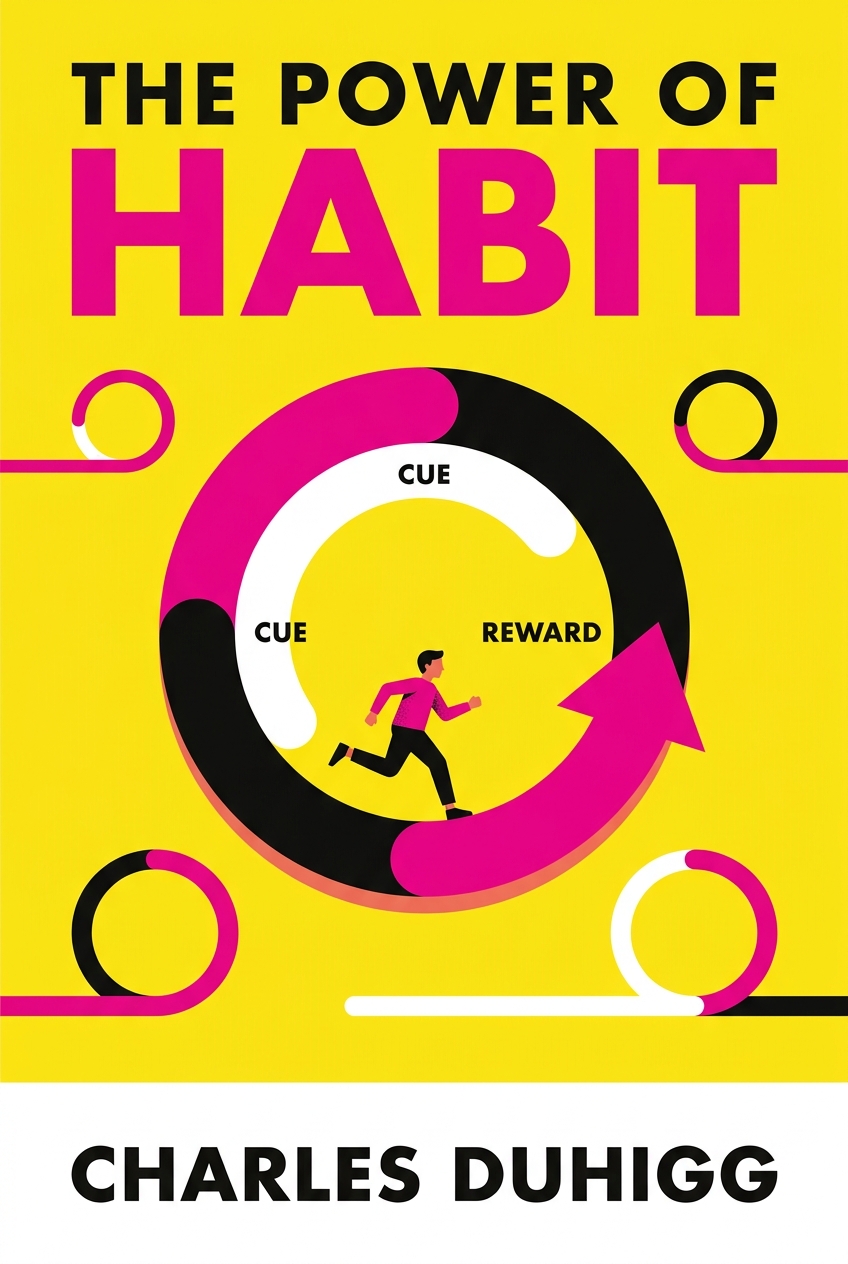
Many criminal acts are not the result of a single, monumental decision but the endpoint of a deeply ingrained habit. In The Power of Habit, Charles Duhigg explains the neurological feedback loop that governs all habitual behavior: the Cue-Routine-Reward loop. Understanding this is essential in deconstructing criminal patterns.
Cue: The trigger that tells your brain to go into automatic mode. For a potential offender, this could be loneliness, financial stress, a perceived insult, or the presence of an unguarded opportunity.
Routine: The physical or emotional action that follows the cue. This is the criminal act itself—shoplifting, lashing out in anger, or engaging in substance abuse.
Reward: The feeling that reinforces the loop, making it more likely to be repeated. The reward could be the thrill of getting away with it, the temporary relief from financial pressure, or a fleeting sense of power and control.
When this loop is repeated, the behavior becomes automatic. The conscious brain takes a back seat. This is why some individuals commit crimes without seeming to think about the consequences; the habit is in control. Forensic psychology at work often involves identifying these loops and designing interventions to disrupt them. By helping an individual recognize their cues and substitute the destructive routine with a constructive one, a therapist can begin to rewire the brain and break the cycle of criminal behavior.
Fault vs. Responsibility in Rehabilitation
How do we hold individuals accountable while still acknowledging the societal and environmental factors that contribute to crime? Mark Manson, in The Subtle Art of Not Giving a Fck*, offers a powerful distinction between fault and responsibility. As he puts it, "Fault is past-tense. Responsibility is present-tense."
This is a game-changing concept for rehabilitation. A person may not be at fault for being born into poverty, experiencing childhood abuse, or growing up in a high-crime neighborhood. These are circumstances they did not choose. However, they are 100% responsible for how they respond to those circumstances today.
This framework is an effective forensic psychology coping strategy for professionals working with offenders. It bypasses the blame game, which often leads to defensive-ness and stagnation. Instead of arguing about who is at fault for the past, the focus shifts to taking responsibility for the present and future. It empowers the individual by telling them, "Your past doesn't have to define your future, but only you have the power to build a different one." This is a critical step in moving from an external locus of control (blaming the world) to an internal one (taking ownership of one's actions).
Finding Real Insight in Good Criminal Psychology Books
When people search for information on this topic, they often look for titles filled with shocking case studies. While those can be compelling, the most profound insights often come from understanding the underlying human operating system. That is why the truly good criminal psychology books are often masterworks of general behavioral psychology, as they provide the universal tools needed to decode specific, extreme behaviors.
Exploring these foundational texts is invaluable for the forensic psychology for beginners audience, as it builds a solid theoretical base before moving on to more specialized topics. For forensic psychology for professionals, revisiting these core concepts can offer fresh perspectives on complex cases. The best crime psychology books are arguably those that don't just describe what criminals do but provide a scientific framework for why they do it, drawing on universal principles of habit, mindset, and human motivation.
Practical Applications: Forensic Psychology at Work
Applying these psychological theories is where the real work begins. The challenges are immense, from managing personal bias to dealing with emotionally draining material.
Developing Professional Coping Strategies
Those who work in this field are constantly exposed to the darkest aspects of human behavior. How to deal with forensic psychology's emotional toll is a critical question for practitioners. Burnout is a significant risk. Here again, principles from behavioral psychology can serve as effective forensic psychology exercises for mental resilience.
Manson's idea of choosing what to give your energy to is paramount. A professional cannot carry the weight of every case; they must learn to focus on their professional duty—the process, the evidence, the therapeutic alliance—and let go of the outcomes they can't control. Similarly, principles from James Clear's Atomic Habits can be used to build small, consistent routines for decompression and mental separation, like a short walk after a difficult interview or a strict policy of no case files after 6 p.m. These small habits create a strong boundary between work and personal life.
How to Improve Forensic Practice Through Behavioral Science
Finally, the question remains: can forensic psychology be improved? The answer is a resounding yes, and behavioral science provides the roadmap. The concept of 1% improvement, popularized in Atomic Habits, is directly applicable. Lasting change and professional growth don't come from a single breakthrough but from the compounding effect of tiny, consistent enhancements.
A criminal profiler could implement a small habit of double-checking their analysis against a list of common cognitive biases to improve objectivity. A correctional therapist could use Duhigg's Habit Loop framework to co-design a more effective behavioral intervention plan with an inmate. These are not grand, sweeping changes but small, deliberate improvements that, over time, lead to a more effective and just application of psychology within the legal system. This approach is key to understanding how to overcome forensic psychology challenges in a sustainable, long-term way.
The journey into the criminal mind is complex and often disturbing. Yet, it is not an impenetrable fortress of mystery. By using the powerful frameworks of mindset, habit, and responsibility, we can begin to see the patterns, triggers, and beliefs that drive even the most perplexing human behaviors. The real work of forensic psychology is not just about understanding criminals; it's about applying fundamental truths of human nature to build a safer and more just world.
Master key ideas in 15 minutes
Listen to audio summaries of these books on VoxBrief
Forensic psychology is inherently complex, blending legal standards with intricate psychological theories. The subject matter can also be emotionally heavy, which makes objective study difficult. Success often requires building a strong foundation in general psychology before tackling its application in the justice system.
Absolutely. The field is constantly evolving with new research into cognitive biases, risk assessment tools, and rehabilitation techniques. Applying frameworks from behavioral science, such as understanding habit loops and mindset, helps professionals refine their methods and improve the accuracy and fairness of their work.
Long-term success involves a commitment to continuous learning, seeking mentorship, and developing robust emotional boundaries. Reading some of the best crime psychology books is a great start, but applying these insights and creating personal coping strategies are essential for navigating the field's unique pressures and complexities.