Life is a constant stream of experiences, but experience alone doesn't guarantee wisdom. True growth comes from our ability to pause, reflect, and extract meaning from those experiences—a process of learning life lessons. This guide is for anyone looking to accelerate that process by tapping into the concentrated wisdom found in good books on life lessons. We'll explore what life lessons are, why they're crucial for personal and professional development, and most importantly, how to actively integrate their wisdom into your daily life.
What Are Life Lessons and Why Do They Matter?
So, what is a life lesson? At its core, a life lesson is a piece of wisdom or an insight gained from experience that fundamentally alters your perspective and guides your future actions. It’s the shift from knowing that fire is hot to understanding not to touch the stove. These lessons aren't always grand epiphanies; often, they are small, incremental shifts in understanding that accumulate over time.
Why is learning life lessons important? Because they are the scaffolding upon which we build a more resilient, empathetic, and fulfilled self. For students navigating the complexities of identity or for professionals facing challenges at work, these lessons provide a compass. They help us make better decisions, form stronger relationships, and find purpose even when faced with adversity. They are the essential tools for self-creation.
Consider the powerful memoir Educated by Tara Westover. Her story is a profound exploration of this very concept. Raised in a radical home without formal schooling, Westover’s reality was defined by the powerful narratives her father created. Her journey to get an education wasn't just about accumulating facts; it was the act of learning to question those inherited narratives and forge her own identity. Her experience teaches a critical life lesson: the beliefs that shape us are not always truths we must accept. Education, whether formal or self-directed, becomes the tool for building a new self, demonstrating that the most powerful life lessons often involve unlearning what we thought we knew.
How to Build Lasting Wisdom with Good Books on Life Lessons
Reading about life lessons is one thing; internalizing them is another. The goal is to move beyond passive consumption of information and into active application. The pages of a book can offer a map, but you still have to walk the path. Here are some life lessons techniques that work for turning written words into lived wisdom.
From Passive Reading to Active Application
To truly learn from what you read, you must engage with the material. This is one of the most effective life lessons tips for beginners. Instead of just highlighting passages, try these practices:
- Ask questions as you read: Why does the author believe this? How does this concept apply to my own life? What is one small change I could make based on this idea?
- Summarize each chapter or module in your own words: This forces your brain to process the information, not just recognize it. If you can't explain it simply, you may not understand it fully.
- Connect ideas to your own experiences: When a book discusses resilience, think of a time you had to be resilient. This anchors the abstract concept in your personal history, making it more memorable and meaningful.
This approach turns reading from a leisure activity into a powerful practice for personal development.
Finding Meaning in Adversity
Many of life’s most profound lessons are forged in the crucible of suffering. But how do you find meaning when things feel meaningless? This is the central question explored in Viktor E. Frankl's monumental work, Man's Search for Meaning. Drawing from his horrific experiences in Nazi concentration camps, Frankl observed that the prisoners who survived were often not the strongest physically, but those who held onto a sense of purpose—a reason to live.
Frankl’s key insight is what he called "the last of the human freedoms": the ability to choose one's attitude in any given set of circumstances. He argues that we can find meaning through three primary paths: by creating a work or doing a deed, by experiencing something or encountering someone (love), and by the attitude we take toward unavoidable suffering. This framework offers one of the most powerful life lessons: we cannot always control what happens to us, but we can always control how we respond. Applying this means consciously looking for purpose in your struggles, whether it’s a difficult project at work or a personal setback, and asking, "What can this teach me?"
Building Unstoppable Daily Life Lessons Practices
Grand, transformative change rarely happens overnight. It's the result of small, consistent actions—daily life lessons practices that gradually reshape our habits and mindset. These are the life lesson books that offer not just theory, but a starting point for immediate action.
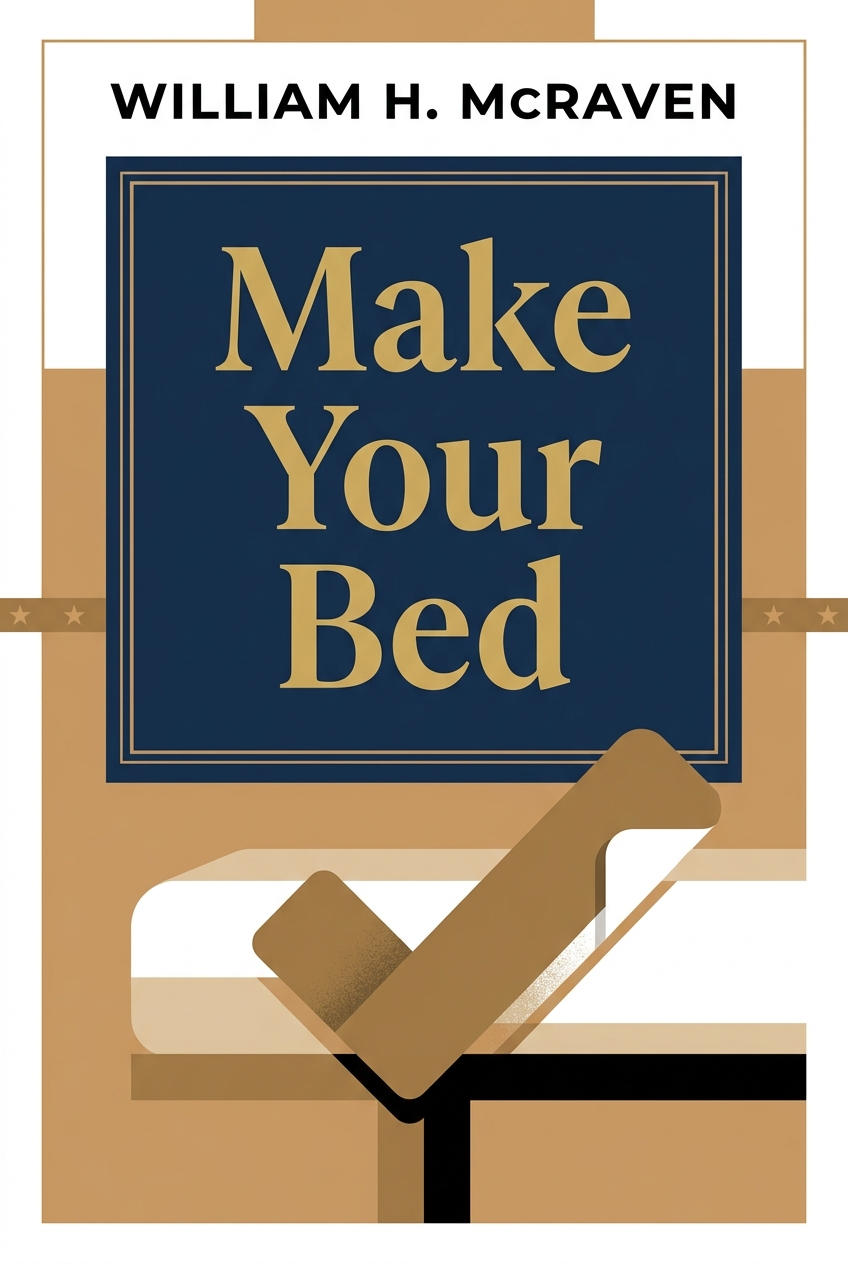
In Make Your Bed, Admiral William H. McRaven presents a powerful philosophy built on this very idea. His core message is that if you want to change the world, you must start by making your bed perfectly every morning. This small act of discipline provides your first accomplishment of the day, creating a ripple effect of order and competence. McRaven’s lessons—like embracing adversity and knowing you cannot succeed alone—are grounded in the principle that excellence is a habit. He teaches that building resilience and courage starts with doing the small things well, consistently. This is a life lessons habit that anyone, from a student to a CEO, can implement tomorrow to build a foundation for greater achievement.
Master key ideas in 15 minutes
Listen to audio summaries of these books on VoxBrief
Download Free