In today's fast-paced world, conversations about well-being are more important than ever. But what is mental health, really? It’s not just the absence of illness; it's a state of emotional, psychological, and social well-being that affects how we think, feel, and act. For anyone looking to understand their inner world better, this guide explores some of the most insightful books about mental health, translating complex ideas into actionable knowledge.
Whether you're a student navigating academic pressures, a professional managing stress at work, or simply someone on a journey of self-discovery, these summaries offer a starting point. They provide a framework for understanding challenges like anxiety and depression, and offer powerful mental health coping strategies to help you build a more resilient and fulfilling life.
What is Mental Health and Why Is It Important?
Mental health is a fundamental component of our overall health. It influences how we handle stress, relate to others, and make choices. When our mental health is strong, we are better equipped to cope with life's adversities, realize our full potential, and make meaningful contributions to our communities. It's the foundation for our thoughts, emotions, and behaviors.
But why is mental health important? Because it impacts everything. From our physical health (the mind-body connection is powerful) to our relationships and professional success, our mental state is the lens through which we experience life. Ignoring it is like trying to drive a car with a foggy windshield; you might get by, but you won't see the road clearly or enjoy the journey.
Common signs of mental health struggles can include persistent sadness, excessive worry, dramatic changes in sleep or eating habits, social withdrawal, and an inability to cope with daily problems. The mental health causes and effects are complex, often involving a mix of genetic predispositions, brain chemistry, life experiences such as trauma, and family history. Understanding these signs and causes is the first crucial step in learning how to deal with mental health challenges effectively.
Foundational Concepts from Top Books About Mental Health
Reading can be a powerful form of self-education, providing language for feelings we couldn't name and frameworks for problems that felt unsolvable. Certain books offer paradigm-shifting insights that can profoundly change how we view ourselves and our struggles. Here, we'll explore key concepts from a few of these transformative works.
Understanding Trauma's Physical Footprint
Many people associate trauma with a specific, catastrophic event. However, as Dr. Bessel van der Kolk explains in his groundbreaking book, The Body Keeps the Score, trauma's impact is far more nuanced and deeply physiological. He argues that traumatic memories are not stored as coherent stories but are shattered into sensory fragments—images, sounds, and physical sensations. This is why a person might be triggered by a seemingly random smell or noise, re-experiencing the terror of the past as if it were happening in the present.
Van der Kolk’s central thesis is that the body is the "scorecard" of our experiences, holding onto trauma in our very physiology. This can manifest as chronic pain, autoimmune diseases, or persistent anxiety. For this reason, traditional talk therapy, which primarily engages the rational brain, can sometimes fall short. The key to healing, he suggests, lies in approaches that help the body release these trapped experiences. This opens the door to understanding the importance of somatic therapies, yoga, and mindfulness as critical mental health exercises for recovery. The brain’s capacity to change—a concept known as neuroplasticity—offers profound hope. True healing involves creating new, safe experiences in the present that contradict the helplessness of the past.
Uncovering Inherited Family Patterns
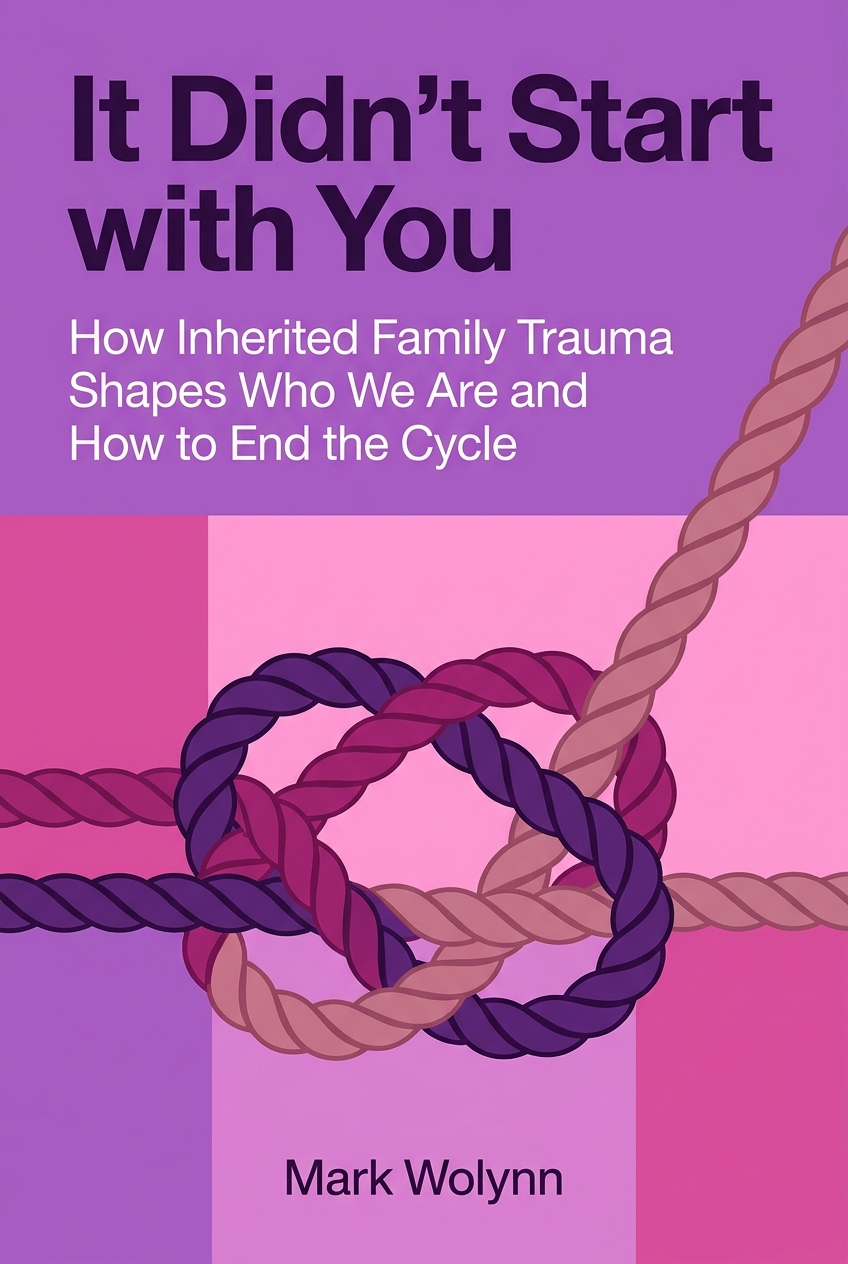
Have you ever struggled with a fear, anxiety, or self-sabotaging pattern that feels like it doesn't entirely belong to you? Mark Wolynn's It Didn't Start with You introduces a fascinating and powerful idea: we can inherit the unresolved traumas of our parents, grandparents, and even great-grandparents. These legacies can manifest as unexplained depression, anxiety, or relationship difficulties that persist despite our best efforts to change them.
Wolynn provides a method for uncovering these hidden dynamics called the Core Language Approach. He suggests that the specific words we use to describe our deepest fears and struggles often point directly to an originating trauma in our family history. For instance, a persistent fear of being abandoned might echo a grandparent's experience of being orphaned. By mapping this language, we can identify the unconscious loyalties that keep us stuck. Healing, according to Wolynn, requires more than just insight. It involves taking new actions and creating new internal experiences—through visualization, specific healing sentences, and other exercises—to break the cycle and claim our own lives. This framework helps answer the difficult question, "why do I struggle with mental health?" by looking beyond our own life experiences.
Building Purpose and Resilience
While some books help us understand the past, others give us a map for building a better future. Ikigai: The Japanese Secret to a Long and Happy Life by Héctor García and Francesc Miralles shifts the focus toward purpose and proactive well-being. The concept of "ikigai" is described as your "reason for being"—the intersection of what you love, what you're good at, what the world needs, and what you can be paid for.
However, ikigai is more than a career-finding tool; it's a philosophy for a fulfilling life. A key part of living your ikigai is finding a state of "flow." Coined by psychologist Mihaly Csikszentmihalyi, flow is the experience of being so completely absorbed in an activity that you lose track of time. This state is not only deeply enjoyable but is also essential for growth and mastery. For mental health for students or professionals facing burnout, finding activities that induce flow can be a powerful antidote to stress and disengagement. The book also emphasizes resilience—the ability to persevere through setbacks. By having a clear purpose, you have a reason to get back up after you fall, turning adversity into a stepping stone rather than a roadblock.
Practical Strategies for Improving Your Well-being
Understanding the theories behind mental health is one thing; applying them is another. Knowledge becomes power when we translate it into daily actions. Here are some practical strategies, inspired by insights from leading thinkers, to help you navigate mental health at work, school, and in your personal life.
Stress Management and Self-Care
Stress is an unavoidable part of modern life, but chronic stress can be debilitating. Effective stress management involves developing a toolkit of practices that work for you. This doesn't have to be complicated. In his book Make Your Bed, Admiral William H. McRaven makes a powerful case for the impact of small, consistent actions. He argues that starting your day by accomplishing one small task—making your bed—sets a tone of discipline and competence that carries you through the day.
This principle can be applied to self-care. Instead of waiting until you're completely overwhelmed, integrate small, restorative acts into your routine. This could be a five-minute mindfulness meditation, a short walk during your lunch break, or dedicating 15 minutes before bed to reading. The key is consistency. These small acts build a foundation of well-being that makes you more resilient when significant stressors arise. Self-care isn't a luxury; it's a necessary practice for sustained performance and mental clarity.
Developing Effective Coping Strategies
When faced with anxiety or depression, it’s easy to feel powerless. Developing mental health coping strategies is about reclaiming your agency. One of the most effective strategies is cognitive reframing, which involves identifying and challenging negative thought patterns. For example, instead of thinking, "I failed, so I'm a failure," you can reframe it as, "I experienced a setback, what can I learn from this?"
Another powerful strategy is grounding. This is especially useful during moments of intense anxiety or panic. Grounding exercises pull your focus away from distressing thoughts and into the present moment through your senses. One simple technique is the 5-4-3-2-1 method: name five things you can see, four things you can feel, three things you can hear, two things you can smell, and one thing you can taste. This technique, rooted in mindfulness, helps regulate the nervous system and can be done anywhere, anytime.
The Role of Therapy and Professional Help
While books and self-help strategies are invaluable tools, they are not a substitute for professional help, especially when dealing with significant mental health challenges. Therapy provides a safe, confidential space to explore your thoughts and feelings with a trained expert. There are many different therapy approaches, and finding the right one for you is key.
Cognitive Behavioral Therapy (CBT), for example, is highly effective for anxiety and depression, focusing on changing negative thought patterns and behaviors. Somatic therapies, as highlighted by the work in The Body Keeps the Score, focus on the mind-body connection to release stored trauma. Seeking professional help is a sign of strength and a proactive step towards learning how to overcome mental health long term.
Your journey to better mental well-being is uniquely yours. It is not a linear path but a continuous process of learning, growing, and adapting. By arming yourself with knowledge from insightful books, practicing consistent self-care, and seeking support when you need it, you can navigate life's challenges with greater resilience and build a life of purpose and meaning.
Master key ideas in 15 minutes
Listen to audio summaries of these books on VoxBrief
Mental health struggles are deeply personal and can stem from a wide range of factors, including biology, environment, life events, and even inherited family patterns. Understanding the specific mental health causes and effects in your life is the first step toward developing effective coping strategies and finding a path to healing.
Absolutely. Just like physical health, mental health can be improved with conscious effort and the right tools. Learning through insightful mental health books, practicing self-care, building resilience, and seeking professional support when needed can all lead to significant and lasting improvements in your well-being.
Long-term improvement depends on building sustainable habits and resilience, not searching for a quick fix. It involves integrating practices like mindfulness, purpose-driven activities, and healthy boundaries into your daily life. The goal is to create a lifestyle that supports your mental well-being consistently over time.