Have you ever wondered why you act the way you do? What drives your decisions, shapes your habits, and fuels your relationships? This deep curiosity is at the heart of psychology, the scientific study of the mind and behavior. For many, the journey into this fascinating world begins with a simple search for a good book about psychology. And for good reason—a great book can translate complex theories into powerful, life-changing insights.
So, what is psychology, really? It’s a vast field that explores everything from the neural circuits firing in your brain to the social dynamics of entire cultures. Understanding its principles is crucial because it helps demystify your own experiences. It provides a framework for knowing why you might procrastinate on an important task, feel anxious in social situations, or repeat the same mistakes in relationships. This guide will walk you through foundational concepts and show how the right knowledge can be a practical tool for a better life.
The Inner Workings of Your Mind: Core Concepts
Before you can effectively deal with psychology, you need a basic map of the territory. At its core, psychology seeks to understand the causes and effects of human behavior. It’s a field with many branches, each offering a unique lens through which to view ourselves. For beginners, a few key areas provide the most immediate value.
Cognitive & Behavioral Psychology: The 'How' of Your Habits
Cognitive psychology focuses on our mental processes—thinking, memory, perception, and problem-solving. Behavioral psychology, on the other hand, examines how our environment shapes our actions through conditioning. The two are deeply intertwined; how you think influences how you act, and how you act reinforces how you think.
A groundbreaking exploration of this is found in Daniel Kahneman's Thinking, Fast and Slow. The Nobel laureate introduces the idea that our mind operates using two distinct systems. System 1 is fast, intuitive, and emotional; it’s the gut feeling that guides most of our daily life. System 2 is slow, deliberate, and logical; it’s the conscious effort we use to solve a math problem or weigh the pros and cons of a major decision. Kahneman reveals that we rely on the fast-acting System 1 far more than we realize, and its built-in shortcuts, or heuristics, often lead to predictable errors in judgment. Understanding this dual-system dynamic is a cornerstone of modern psychology for students and professionals alike, as it explains everything from marketing tactics to investment mistakes.
Positive Psychology: The Science of Flourishing
For much of its history, psychology focused on what was wrong with people—disorders, trauma, and dysfunction. Positive psychology, a relatively newer field, flips the script. It asks: What makes life worth living? What are the components of well-being, happiness, and fulfillment? It’s not about ignoring problems, but about building up human strengths.
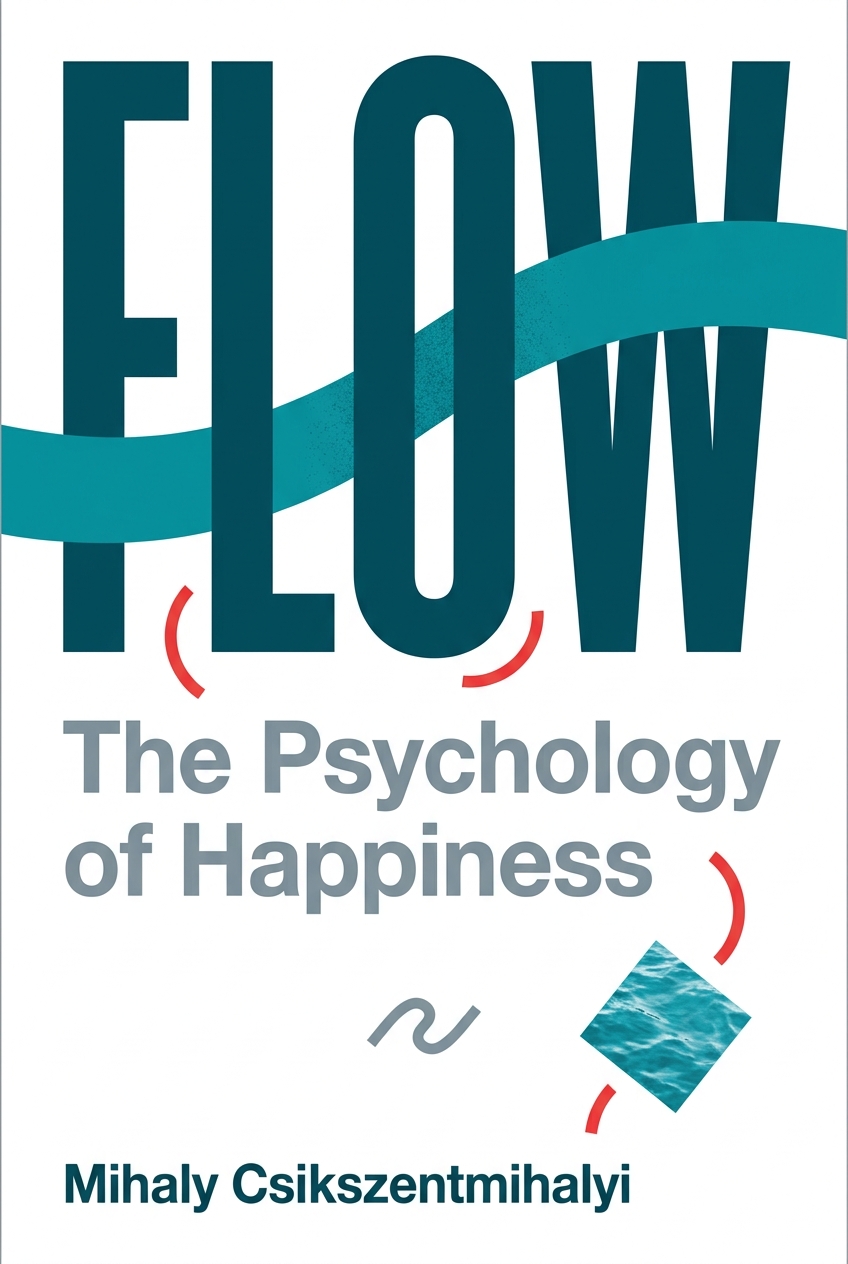
One of the most powerful concepts within positive psychology is “flow,” as detailed by Mihaly Csikszentmihalyi in his seminal book, Flow. He describes flow as an “optimal experience” where you are so completely absorbed in an activity that everything else seems to fall away. Time distorts, self-consciousness vanishes, and you feel a deep sense of enjoyment and control. Csikszentmihalyi discovered that these aren't random moments of grace; they occur under specific conditions, primarily when a high-level challenge is met with an equally high level of skill. Learning to create these conditions in your work, hobbies, and even daily chores is one of the most effective psychology exercises for building a genuinely satisfying life.
Why a Good Book About Psychology Can Change Your Life
Reading about psychological concepts isn’t just an academic exercise. A good book about psychology acts as a user manual for your own mind, providing clarity and actionable strategies that can profoundly impact your day-to-day reality. It offers a new language to describe your inner world and empowers you to become an active participant in your own development.
For professionals, understanding psychology at work is a superpower. It can help you navigate team dynamics, communicate more persuasively, and become a more effective leader. For students, it provides meta-learning skills—understanding how you learn best, how to manage motivation, and how to overcome performance anxiety. In your personal life, it helps you build healthier relationships by understanding attachment styles, communication patterns, and the roots of conflict.
Ultimately, these books help you grasp the intricate link between psychology causes and effects. You start to see why a lack of sleep impacts your mood, how past experiences shape your current fears, and what specific thought patterns lead to feelings of hopelessness or excitement. This self-awareness is the first and most critical step toward meaningful change. While even the best popular psychology books are not a substitute for therapy, they provide an invaluable, accessible roadmap to self-improvement.
Putting Psychology into Practice: From Knowledge to Action
Knowledge is only potential power. True transformation happens when you apply what you’ve learned. The goal is to move from passively understanding concepts to actively using them as psychology coping strategies and tools for growth. This is how you go from knowing about psychology to using it to your advantage.
Shifting Your Mindset for Long-Term Growth
One of the most persistent questions people have is, “Can psychology be improved?” The answer from resounding research is a definitive “yes.” Stanford psychologist Carol S. Dweck’s work in Mindset: The New Psychology of Success provides a powerful framework for this. Dweck identifies two core beliefs people hold about their own abilities: a “fixed mindset” and a “growth mindset.”
Someone with a fixed mindset believes their intelligence and talents are static traits. They avoid challenges to prevent failure and view effort as a sign of weakness. Conversely, someone with a growth mindset believes their abilities can be developed through dedication and hard work. They embrace challenges, persist through setbacks, and see effort as the path to mastery. Simply knowing these two mindsets exist is a game-changer. Adopting a growth mindset is fundamental to how to overcome psychology long term, as it reframes every obstacle from a verdict on your worth into an opportunity to learn and develop.
Building Better Financial Habits Through Behavioral Insights
Psychology’s reach extends into every corner of our lives, including the one many people find most stressful: money. In The Psychology of Money, Morgan Housel makes a compelling case that financial success has little to do with how smart you are and everything to do with how you behave. It’s a perfect example of behavioral psychology in action.
Housel argues that we often make financial decisions based on emotion, ego, and social comparison rather than cold, hard numbers. He explains that skills like patience, humility, and avoiding catastrophic mistakes are far more important than complex investment strategies. For instance, he distinguishes between getting wealthy and staying wealthy, noting that the latter requires a completely different—and much rarer—set of psychological skills rooted in risk management and avoiding greed. By understanding the psychological traps that lead to poor financial health, you can design systems and behaviors that align with your long-term goals, proving that mastering your money is, first and foremost, an exercise in mastering your mind.
Your Journey Starts Here
Exploring psychology is one of the most rewarding journeys you can undertake. It’s a path to understanding not only the abstract workings of the human mind but the deeply personal forces that shape your life every single day. From the two systems that govern your thinking to the mindset that defines your potential, these concepts are not just trivia—they are tools.
Whether you're a student just starting, a professional looking for an edge, or simply a curious individual seeking to live more intentionally, the insights of psychology offer a powerful starting point. It all begins with the decision to learn more, and often, that first step is cracking open a book.
Master key ideas in 15 minutes
Listen to audio summaries of these books on VoxBrief
Download Free