A Beginner's Guide to the Best Books About Habits and How They Work
By VoxBrief Team··7 min read
We’ve all been there. Fired up with motivation, we set an ambitious goal—to exercise daily, learn a new language, or finally start that side project. But a few weeks later, that motivation fades, and we're right back where we started. The problem isn't a lack of desire; it's a misunderstanding of how change actually happens. The key to unlocking lasting change lies in understanding the science of behavior, and the insights from the best books about habits provide a clear roadmap.
This article won't just list titles. Instead, we'll distill the most powerful frameworks and routines and habits techniques that work, drawing on foundational ideas from leading authors in the field. You'll learn the 'what,' 'why,' and 'how' behind building a life you design, one small action at a time. Whether you're a student, a busy professional, or simply someone looking for a fresh start, these principles offer a universal guide to self-improvement.
What Are Routines and Habits, and Why Are They Important?
Before we can change our behavior, we need to understand what it is. What is routines and habits? At its core, a habit is a behavior that has been repeated enough times to become automatic. It's a mental shortcut your brain creates to save energy. Think about tying your shoes, driving to work, or brushing your teeth—you do these things without conscious thought. a routine is a sequence of habits you perform in a specific order, like your morning or evening rituals.
Why is routines and habits important? a Because they are the invisible architecture of your life. a nearly half of what you do every day isn't based on active decision-making but on habit. Therefore, if you want to change your life, you must change your habits. They are the compound interest of self-improvement. a small, positive habit might seem insignificant on any given day, but over months and years, the cumulative effect can be extraordinary.
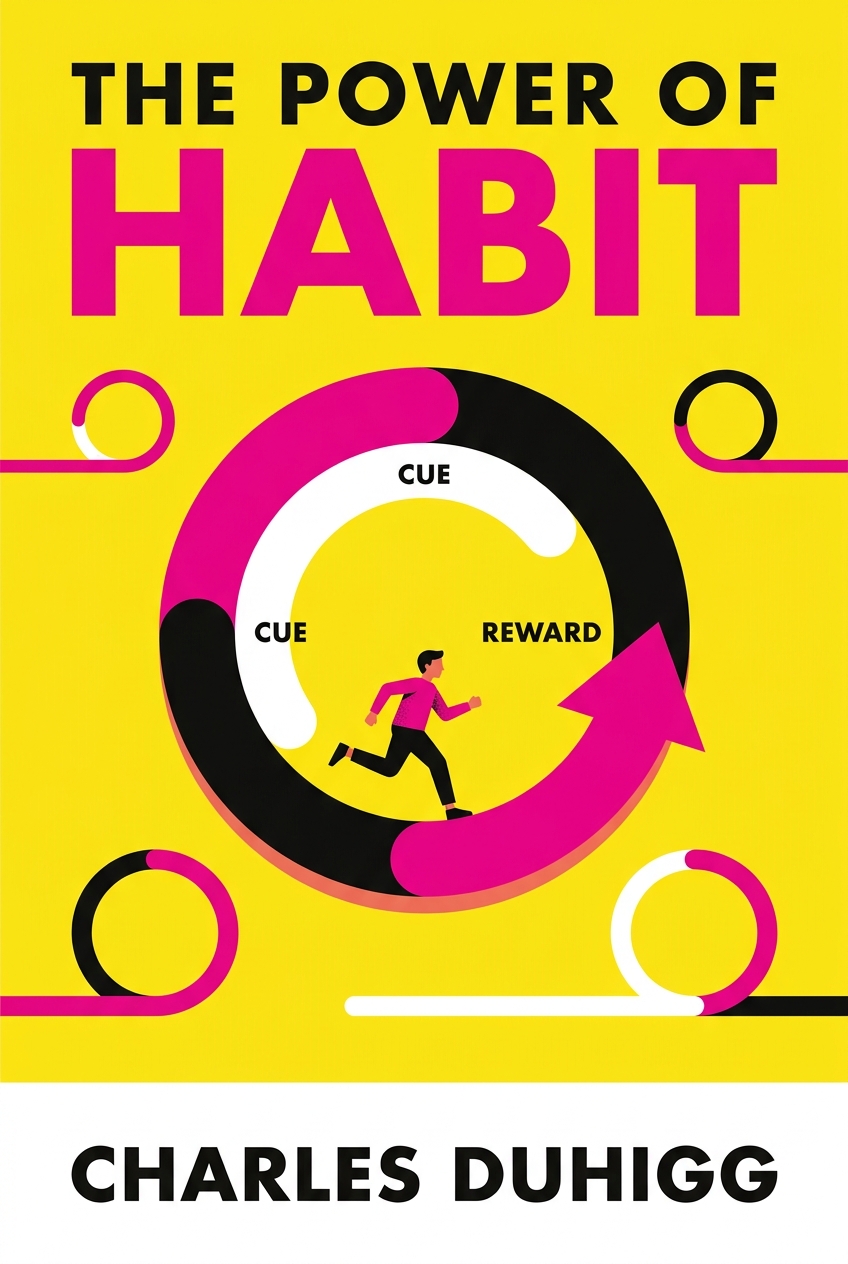
In his groundbreaking book The Power of Habit, Charles Duhigg explains that every habit follows a simple neurological loop, which he calls the "Habit Loop." This consists of three parts:
The Cue: A trigger that tells your brain to go into automatic mode and which habit to use. This could be a time of day, a location, an emotion, or the preceding action in a sequence.
The Routine: The physical, mental, or emotional behavior that follows the cue. This is the habit itself.
The Reward: a positive stimulus that tells your brain that this particular loop is worth remembering for the future. The reward satisfies the craving initiated by the cue.
Understanding this loop is the first step toward re-engineering your own behaviors. You can't simply eliminate a bad habit; you must diagnose its components and replace the routine with a better one that still delivers a similar reward.
Core Frameworks: Learning from the Best Books About Habits
Knowing the theory is one thing, but putting it into practice is another. Fortunately, decades of research have been condensed into actionable frameworks that anyone can apply. These are not just abstract ideas; they are practical tools for engineering a better life, whether for personal growth, academic success, or professional development.
The Power of 1% Improvement
One of the biggest mistakes we make is trying to do too much, too soon. We believe transformation requires a massive, heroic effort. In Atomic Habits, James Clear dismantles this myth, arguing that real change comes from the compounding effect of tiny, 1% improvements. He calls these "atomic habits"—small actions that are the building blocks of remarkable results.
The math is compelling: if you get just 1% better each day, you'll be nearly 38 times better by the end of the year. Conversely, a 1% decline daily leads you nearly to zero. This principle is one of the most powerful routines and habits tips because it reframes the goal from 'achieving a result' to 'becoming the type of person who achieves that result' through small, daily routines and habits practices. It shifts the focus from a finite goal (running a marathon) to an infinite system (being a runner).
The Four Laws of Behavior Change
Building on the Habit Loop, James Clear offers a simple, four-step model for creating good habits and breaking bad ones. To build a good habit, you must make it:
Obvious (Cue): Our environment often dictates our behavior. To make a habit obvious, design your surroundings to nudge you in the right direction. Want to read more? Put a book on your pillow. Want to drink more water? Fill a water bottle and place it on your desk each morning.
Attractive (Craving): The more appealing a habit is, the more likely you are to do it. One effective technique is "temptation bundling," where you pair an action you want to do with an action you need to do. For example, only listening to your favorite podcast while you're exercising.
Easy (Routine): Reduce the friction associated with a good habit. The easier it is to perform, the less motivation you need. This is where the "Two-Minute Rule" comes in: when starting a new habit, it should take less than two minutes to do. "Read before bed" becomes "read one page." The goal is to master the art of showing up.
Satisfying (Reward): Your brain is wired to repeat rewarding behaviors. The final law is to make the habit immediately satisfying. A long-term benefit like 'getting in shape' is too delayed for your brain. Instead, give yourself an immediate reward, like putting a checkmark on a habit tracker or transferring a dollar into a savings account after you complete a habit. This creates a positive feedback loop that reinforces the behavior.
This framework is particularly effective for professionals building better routines and habits at work or for students trying to develop consistent study schedules.
Identifying Keystone Habits for Maximum Impact
Not all habits are created equal. In The Power of Habit, Duhigg introduces the concept of "keystone habits." These are powerful habits that, when adopted, create a ripple effect, leading to the development of other good habits unintentionally. They are the cornerstones that spark a chain reaction of positive change.
For example, studies have shown that exercise is a classic keystone habit. People who start exercising regularly often begin to eat better, become more productive at work, and feel less stressed without making a conscious effort to improve in those areas. Other common keystone habits include making your bed every morning, tracking your food, or practicing daily meditation. Identifying and focusing on just one keystone habit can be a far more effective strategy than trying to change everything at once.
Overcoming Common Challenges in Habit Formation
If it were as simple as following a formula, everyone would have perfect habits. The reality is that we all face obstacles. Understanding these challenges is crucial for developing the resilience needed to stick with your new routines.
Routines and Habits vs. Talent
It's easy to look at successful people and attribute their achievements to innate talent. But this is a misleading and disempowering narrative. The truth is that systems and consistency triumph over talent. A person with average talent but an excellent system of daily practice will almost always outperform a talented person who relies on sporadic bursts of inspiration.
This is why focusing on building effective daily routines and habits practices is so liberating. It puts the power back in your hands. You don't have to be born a genius or a world-class athlete; you just have to be willing to show up and put in the work consistently. Your habits are the system that guarantees progress, even on days when you don't feel motivated.
The Mindset Behind the Method
Why are you building these habits in the first place? This is where the wisdom from a seemingly different book, The Subtle Art of Not Giving a Fck* by Mark Manson, becomes incredibly relevant. Manson argues that a happy life isn't about eliminating problems; it's about choosing better problems. a life is defined by what we're willing to struggle for.
This reframes habit formation entirely. Building a habit isn't a chore; it's a choice. You are actively choosing your struggle. The discomfort of an early morning workout is your chosen struggle, and it is infinitely better than the struggle of poor health. The frustration of learning a new skill is your chosen struggle, far superior to the struggle of career stagnation. By consciously choosing which habits are worth the effort because they align with your core values, you infuse the process with meaning and purpose, making it easier to persevere when challenges arise.
How to Stay Consistent and Handle Failure
One of the most pressing questions is how to stay consistent with routines and habits. The key is to never miss twice. Life happens. You'll get sick, work will get crazy, and you'll inevitably miss a day. The difference between success and failure is not avoiding that first slip-up but preventing it from turning into a downward spiral. If you miss one workout, make sure you get the next one in, even if it's short. This mindset prevents an 'all-or-nothing' mentality from derailing your progress.
Another powerful tool is a habit tracker. The simple act of marking an 'X' on a calendar provides immediate satisfaction and creates a visual record of your streak. The goal is not to have a perfect chain, but to see your commitment over time, which builds identity-based motivation: you're not just doing a habit, you are the kind of person who is consistent.
A Final Thought
Ultimately, the journey of building better habits is not a race to a finish line. It is an infinite process of continuous refinement. By understanding the science behind how habits work, leveraging powerful frameworks like the Four Laws, and adopting a mindset of consistency over perfection, you can move from being a passive recipient of your circumstances to the active architect of your life. The change may start small—atomically small—but the results, compounded over time, are nothing short of monumental.
Master key ideas in 15 minutes
Listen to audio summaries of these books on VoxBrief
Building new habits is difficult because our brains are wired for efficiency and prefer established neural pathways. Overcoming this inertia requires conscious effort to create a new loop of cue, routine, and reward until it becomes automatic. It's less about a lack of willpower and more about competing against deeply ingrained behaviors.
Consistency comes from making habits obvious, attractive, easy, and satisfying, a framework popularized by James Clear. Start with incredibly small actions, track your progress visually, and link your new habit to an existing one. Remember that consistency beats intensity; showing up, even imperfectly, is the most important part.
While talent provides a starting advantage, routines and habits are what ultimately drive long-term success. Talent is unreliable and fades without practice, whereas a strong system of habits ensures consistent progress regardless of motivation levels. As many of the best books about habits argue, disciplined systems outperform raw talent every time.
For beginners, the key is to start with a habit that is so small you can't say no—this is often called a 'two-minute rule'. Instead of 'read more,' the habit is 'read one page.' This builds the initial momentum and sense of accomplishment needed to scale up later.