What Are the Best Books About Russia? An Introduction to Its History
By VoxBrief Team··6 min read
Russia is a nation of profound contradictions—a land of breathtaking art and brutalist architecture, literary giants and oppressive censors, revolutionary idealism and cynical autocracy. To truly grasp its present role on the world stage, one must delve into its turbulent past. For those embarking on this journey, a great starting point is exploring some of the best books about russia, but understanding the terrain first is critical. This article serves as an introduction to Russian history for beginners, providing the essential context needed to navigate its complex and compelling story.
Understanding Russia isn’t just an academic exercise; it's essential for making sense of the 21st century. The nation's historical narratives, grievances, and ambitions directly impact global economics, politics, and security. By examining the key events and forces that shaped it, we can begin to answer the fundamental question: what is Russian history and why does it still matter so much?
Why Understanding Russian History is Essential
Many people view history as a static collection of dates and facts. But Russian history is a living, breathing force. The historical choices made centuries ago echo in today’s headlines. To understand why, we need to look beyond a simple timeline and examine the powerful ideas that have driven social change. The question of how did Russian history shape today is answered by looking at the deep currents of ideology, power, and context.
Take the Russian Revolution of 1917. It's easy to see it as a spontaneous mass uprising, but that simplifies a complex reality. In his book The Tipping Point, Malcolm Gladwell explains how social epidemics are often driven by a small, dedicated group of people. He calls this "The Law of the Few." This framework is incredibly useful for understanding 1917. The Bolsheviks, led by figures like Lenin and Trotsky, were a relatively small, highly organized group—the "exceptional people" Gladwell describes. They successfully spread their revolutionary ideas in a society destabilized by war and inequality. Their message had what Gladwell terms a high "Stickiness Factor"; the promise of "Peace, Land, and Bread" was simple, memorable, and resonated deeply with the suffering populace.
Furthermore, Gladwell’s concept of "The Power of Context" is critical. The Bolsheviks didn't succeed in a vacuum. Their revolution was possible only because the context—a disastrous world war, a collapsing monarchy, and widespread famine—made the Russian people desperate for radical change. Understanding this context is a key component of any meaningful introduction to russian history. It shows that key events are not inevitable but are the product of specific people, powerful ideas, and the right environment coming together at a critical moment.
Unlocking the Past: How the Best Books About Russia Explain Its Trajectory
To make sense of this vast narrative, it helps to break the russian history timeline down into distinct, transformative eras. Each period builds on the last, creating a chain of events that leads directly to the present day. For anyone new to the topic, this high-level overview provides a map of the most important Russian history facts and turning points.
The Rise of the Tsars: Forging an Empire
The story of modern Russia begins with the consolidation of power around Moscow after centuries of fragmentation and Mongol rule. Figures like Ivan the Terrible were instrumental in this process, using ruthless tactics to centralize authority and expand the state's territory. This period established a foundational template for Russian governance: a powerful, autocratic ruler at the center of a vast, multi-ethnic empire.
Later, leaders like Peter the Great sought to modernize Russia by forcibly adopting Western technology and culture, all while strengthening the absolute power of the monarchy. This created a persistent tension in the Russian identity that exists to this day: is Russia part of Europe, or is it a unique civilization with its own distinct destiny? This era explains the origins of Russia's imperial ambitions and its long-standing focus on a strong, centralized state to manage its immense size and diversity.
Revolution and the Soviet Experiment
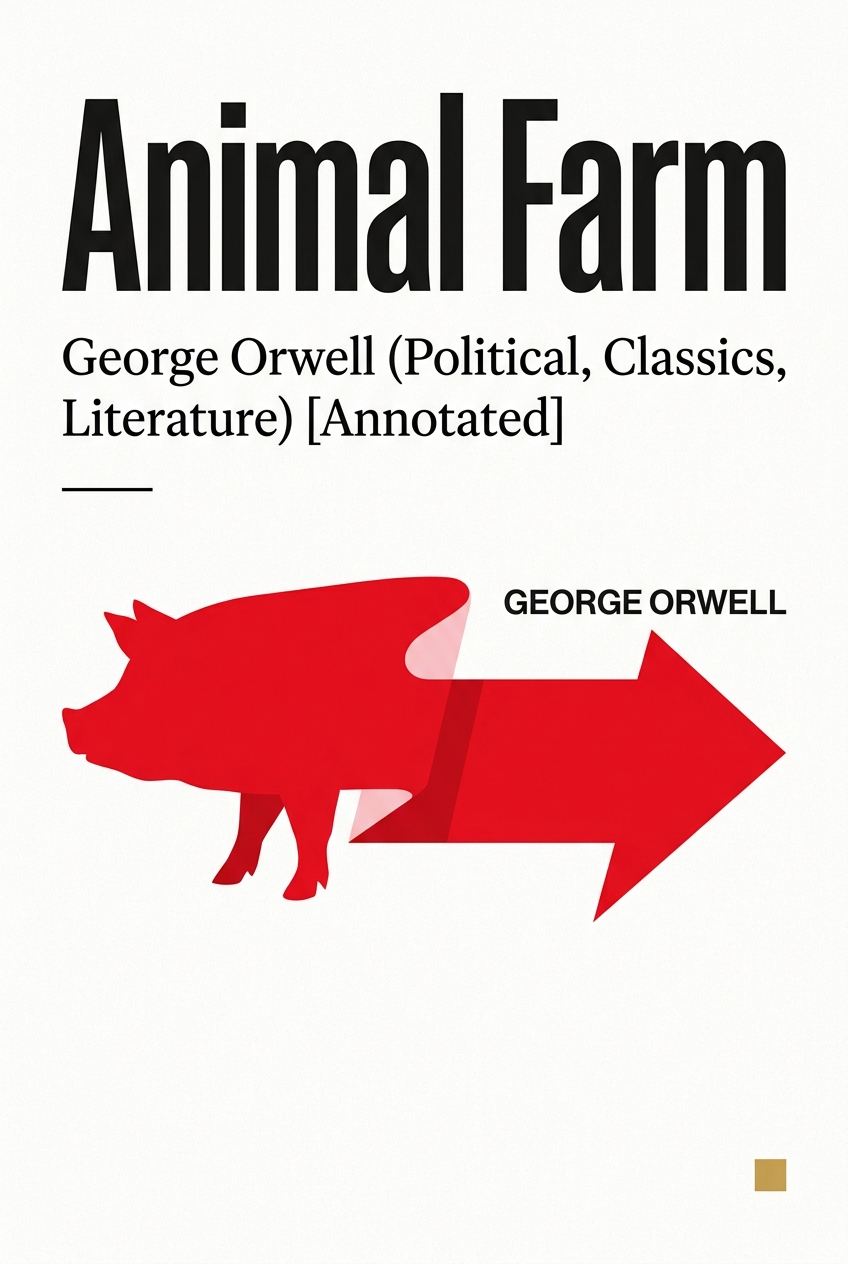
By the early 20th century, the Tsarist system was brittle and failing. The pressures of industrialization, political unrest, and the catastrophe of World War I created the perfect storm for revolution. This is where one of the most powerful allegories for this period becomes an indispensable tool for understanding: George Orwell's Animal Farm.
Orwell’s classic fable is perhaps one of the most insightful “books” about the Russian experience without being a history text. It provides a chilling explanation of how the noble ideals of the 1917 Revolution decayed into totalitarian terror. The revolution in the book begins with Old Major’s dream of an egalitarian society, mirroring the initial Marxist-Leninist vision. However, after the animals successfully overthrow their human masters, a new power structure emerges. In the book summary on VoxBrief, it's explained that leadership is taken by the pigs, "recognized as the cleverest animals on the farm." This directly mirrors the Bolsheviks positioning themselves as the vanguard of the proletariat.
The summary further highlights the internal power struggle between Snowball (the visionary Trotsky) and Napoleon (the cunning Stalin). Napoleon’s eventual seizure of absolute power, followed by his purges and show trials, is a direct parallel to Stalin's Great Terror. The gradual erosion of the Seven Commandments of Animalism—ending with the infamous line, "All animals are equal, but some animals are more equal than others"—is a perfect metaphor for how the Soviet state twisted its founding principles to justify a new, even more oppressive, form of tyranny. Animal Farm delivers one of the most profound russian history lessons: that revolutions can devour their own children, and the fight for freedom can easily become a blueprint for control.
The Cold War and the Collapse of the USSR
Following World War II, the Soviet Union emerged as one of two global superpowers, locked in an ideological, political, and military struggle with the United States known as the Cold War. The USSR controlled a vast bloc of satellite states in Eastern Europe and projected its influence across the globe. This period was defined by nuclear brinkmanship, proxy wars, and an ideological battle between communism and capitalism.
However, the centralized Soviet economy eventually stagnated. The system's inherent inefficiencies and the immense cost of the arms race proved unsustainable. In the 1980s, leader Mikhail Gorbachev introduced reforms—glasnost (openness) and perestroika (restructuring)—in an attempt to revitalize the system. Instead, these reforms uncorked decades of pent-up nationalist and democratic aspirations. The collapse of the Berlin Wall in 1989 signaled the end of Soviet control in Eastern Europe, and by 1991, the Soviet Union itself had dissolved, marking one of the most significant russian history key events of the 20th century.
Post-Soviet Russia: A New Identity
The 1990s were a period of traumatic and chaotic transformation for Russia. The transition to a market economy was marked by hyperinflation, economic collapse, and the rise of a small class of politically connected businessmen—the oligarchs—who amassed enormous wealth. For many Russians, this era was not one of liberation but of national humiliation, poverty, and loss of superpower status.
This context is vital for understanding the rise of Vladimir Putin at the end of the decade. He came to power promising to restore order, national pride, and Russia's standing in the world. His presidency has been defined by the recentralization of state power, the curbing of political freedoms, and an assertive foreign policy aimed at challenging the post-Cold War order. The grievances of the 1990s are a powerful political tool used today to justify the state's actions and build a narrative of Russia rising from the ashes, which is a crucial aspect of russian history explained for the modern era.
Conclusion: A Story Without an End
Why is Russian history important? Because its story is far from over. From the imperial ambitions of the Tsars to the ideological fervor of the Soviets and the resentful nationalism of today, a few core themes persist: the struggle between autocracy and freedom, a deep-seated suspicion of the outside world, and the search for a unique national identity.
As a topic for russian history for beginners, it can seem daunting. But by using frameworks like those found in The Tipping Point to understand how change happens and allegories like Animal Farm to grasp the human tragedy of failed ideals, we can move beyond memorizing facts. We can start to understand the powerful forces that have shaped this fascinating, complex, and enduringly important nation.
Master key ideas in 15 minutes
Listen to audio summaries of these books on VoxBrief
Studying Russian history is crucial because it provides essential context for contemporary global politics, culture, and conflicts. It reveals how a nation's past, from tsarist rule to the Soviet era, directly influences its present actions on the world stage.
One of the key lessons from Russian history is the cyclical nature of authoritarianism and the fragility of democratic reforms. It also teaches us how powerful ideologies can mobilize, and ultimately control, vast populations, often with devastating human consequences.
Russia's history of territorial insecurity, strong centralized power, and deep-seated suspicion of Western influence continues to shape its modern geopolitical strategy. Events like the collapse of the USSR created a sense of national grievance that fuels many of its current policies and patriotic sentiments.