Navigating the Markets: Why Trading Books Are Your Best First Investment
Scrolling through social media, it’s easy to feel like everyone is getting rich from the stock market. You see screenshots of massive gains, hear stories of overnight success, and feel the pressure to jump in. This is especially true for millennials and those in their 20s looking to build wealth. But the reality is far more complex. The market is not a get-rich-quick scheme; it's a dynamic, often unforgiving environment that requires knowledge, strategy, and a powerful mindset. So, where do you begin? The single best investment you can make before risking a single dollar is in your own education, and the most timeless wisdom is found in trading books. This guide will walk you through the foundational concepts, psychological hurdles, and practical strategies you need to know, all illuminated by insights from the masters of the craft.
Understanding the Foundation: What Is Stock Trading?
Before diving into complex strategies, it’s crucial to understand the basics. At its core, what is stock trading? When you buy a stock, you're buying a small piece of ownership in a publicly-traded company. The goal of trading or investing is to buy these shares at a lower price and sell them at a higher price, capturing the difference as profit. The collection of all these buyers and sellers interacting constitutes the stock market.
Why is stock trading important? For centuries, it has been one of the most effective engines for wealth creation. It allows individuals to participate in the growth of the world's most innovative companies, enabling their capital to grow faster than inflation over time. However, it's essential to distinguish between long-term investing and short-term trading.
- Investing is typically a long-term game. Investors buy companies they believe have strong fundamentals and hold them for years, or even decades, with the goal of benefiting from the company's sustained growth and compounding returns.
- Trading involves a shorter time horizon. Traders aim to profit from short-to-medium-term price fluctuations. This requires a different skill set, a deeper understanding of market mechanics, and a robust psychological framework.
For those just starting, grasping these stock market basics is the non-negotiable first step. It provides the context needed to understand the strategies and risks that lie ahead.
The Psychology of a Trader: Winning the Inner Game
Many beginners believe that success in the market comes from finding the perfect indicator or a secret analytical formula. They spend countless hours searching for a holy grail that will tell them exactly when to buy and sell. The truth, as explained by the most profound books on the subject, is that success is an inside game. Your mindset is infinitely more important than your method.
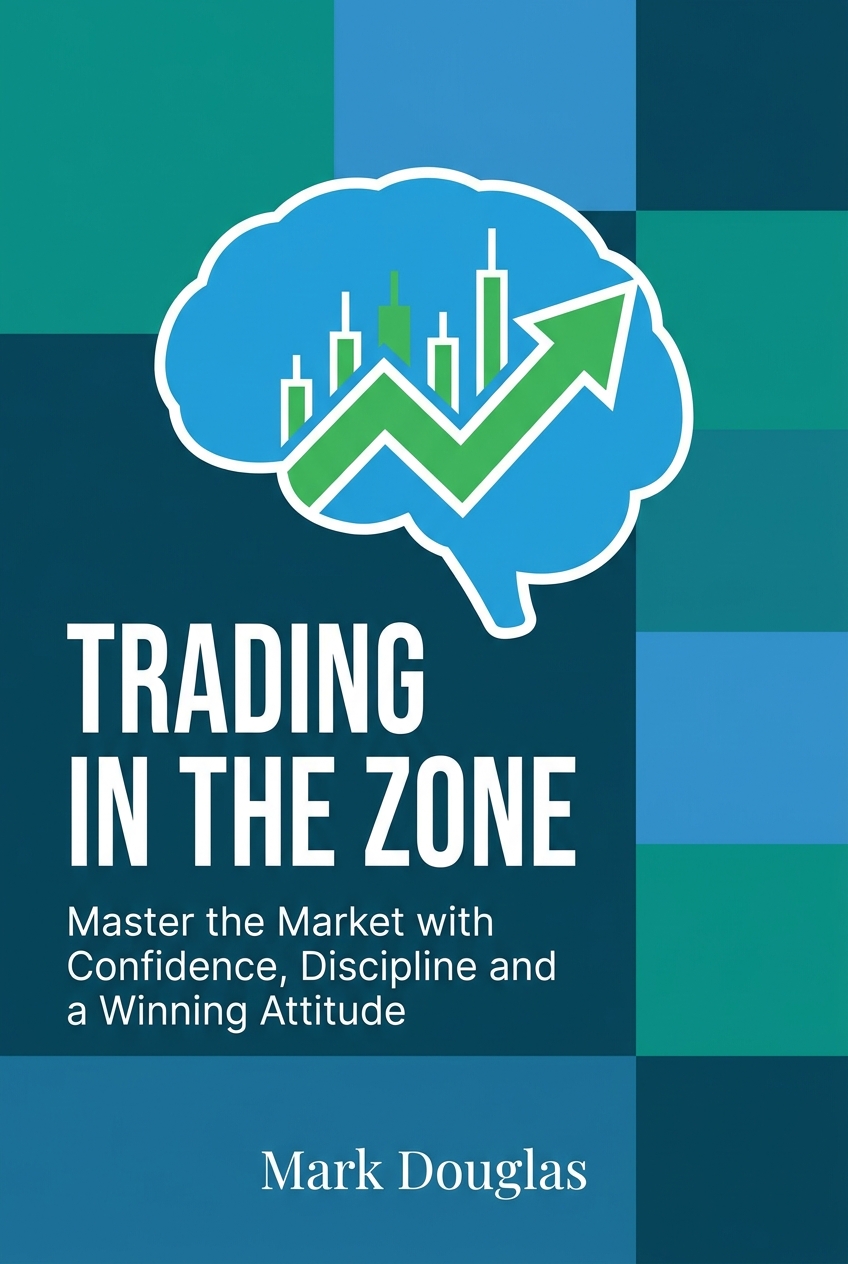
In his groundbreaking book, Trading in the Zone, Mark Douglas identifies the primary challenge most traders face: the psychological gap between analysis and action. You can have a flawless analytical model that identifies a great opportunity, but if you hesitate out of fear or jump in too early out of greed, you sabotage the trade. Douglas argues that successful traders don't try to predict the future with certainty; they think in probabilities, like a casino. They know that any single trade can be a loser, but if their strategy has a positive expectancy (an "edge"), they will come out ahead over a series of trades. This requires detaching your ego from any single outcome and executing your strategy with unwavering discipline.
This idea is powerfully echoed in The Psychology of Money by Morgan Housel. Housel makes a compelling case that financial success is driven by behavior, not intelligence. He explains that we often underestimate the roles of luck and risk, which he calls "two sides of the same coin." You can make a perfect decision that leads to a bad outcome because of bad luck, and vice versa. Recognizing this helps you avoid becoming overconfident after a win or despondent after a loss. One of the most common stock trading mistakes to avoid is letting your emotions dictate your decisions. Housel teaches that building and keeping wealth are two entirely different skills; the latter requires humility, discipline, and a plan for surviving unpredictable market swings.
Your mind can be your greatest asset or your worst enemy. Before you learn a single analytical technique, you must learn to manage your own psychology.
The world of trading is filled with different philosophies and methods. Once you have a firm grasp on the psychological component, you can begin exploring the tools and stock trading strategies that align with your goals and risk tolerance. The right trading books provide a map to this landscape, helping you navigate complex ideas with clarity.
Fundamental vs. Technical Analysis
At a high level, there are two primary schools of thought for analyzing securities:
Fundamental Analysis: This approach involves dissecting a company's financial health to determine its intrinsic value. Analysts look at revenues, earnings, debt levels, and management quality. The goal is to determine if a stock is overvalued or undervalued by the market. This is the preferred methodology of long-term investors like Warren Buffett.
Technical Analysis: This method ignores a company's fundamentals and focuses entirely on price action. Technical analysts use charts to identify patterns, trends, and key price levels. The core assumption is that all known information is already reflected in the stock's price, and historical price movements can give clues about future direction.
Neither method is inherently superior; they are simply different tools for different jobs. Many successful traders use a combination of both.
Common Stock Trading Strategies for Beginners
As you delve deeper, you'll encounter various trading styles. It's crucial for beginners to understand what they are and the risks involved.
Day Trading: This is the most active form of trading, where positions are opened and closed within the same day. Day trading requires intense focus, significant capital, and an expert-level understanding of market microstructure. It is extremely high-risk and not recommended for anyone new to the markets.
Swing Trading: This strategy involves holding positions for several days to several weeks to profit from an anticipated price move or "swing." Swing trading is less intensive than day trading but still requires a solid grasp of technical and/or fundamental analysis to identify opportunities.
Long-Term Investing: While not "trading" in the active sense, this is often the best stock trading strategy for beginners. In The Simple Path to Wealth, JL Collins advocates for a brilliantly simple approach: buy broad-market, low-cost index funds and hold them. He argues that trying to beat the market is a loser's game for most people. Instead, by owning the entire market, you guarantee yourself a share of its long-term growth. This strategy minimizes fees, reduces emotional decision-making, and has historically proven to be incredibly effective.
How to Start Stock Trading: A Practical Checklist
Feeling ready to take the first step? Here are some practical stock trading tips to guide your journey from theory to practice:
- Define Your Goals: Why do you want to trade or invest? Are you saving for retirement, a down payment, or generating supplemental income? Your goals will determine your strategy and risk tolerance.
- Commit to Education: Your journey has already begun by reading this article. Continue it by exploring foundational books. The principles in The Richest Man in Babylon on paying yourself first and living below your means are as relevant today as they were thousands of years ago.
- Create a Plan: Success is never an accident. As Napoleon Hill explains in Think and Grow Rich, all achievement begins with a burning desire backed by a definite plan. Decide what your rules are for entering and exiting trades, how you will manage risk, and what your criteria for an investment will be. Write it down.
- Choose the Right Broker: In today's market, there are countless low-cost online brokers that offer access to stocks, ETFs, and other assets. Look for one with a user-friendly interface, low fees, and good customer support.
- Start Small: There's no need to bet the farm. As you learn
how to start stock trading with little money, use a small amount of capital you are fully prepared to lose. This allows you to experience the real psychological pressures of having money on the line without risking your financial security.
Conclusion: Your Journey to Confident Trading
Embarking on a journey into the stock market is one of the most exciting and potentially rewarding endeavors you can undertake. However, a successful outcome is rarely a matter of luck. It is the result of dedicated learning, disciplined practice, and, most importantly, mastering your own psychology.
By starting with the wisdom contained in the world's best trading and investment books, you equip yourself with the mental models and strategic frameworks of those who have already succeeded. You learn to manage fear and greed from Mark Douglas, to respect risk and behavior from Morgan Housel, and to appreciate the profound power of simplicity from JL Collins. The path to becoming a confident, profitable trader is a marathon, not a sprint, and your education is the fuel that will carry you to the finish line.
Master key ideas in 15 minutes
Listen to audio summaries of these books on VoxBrief
Download Free