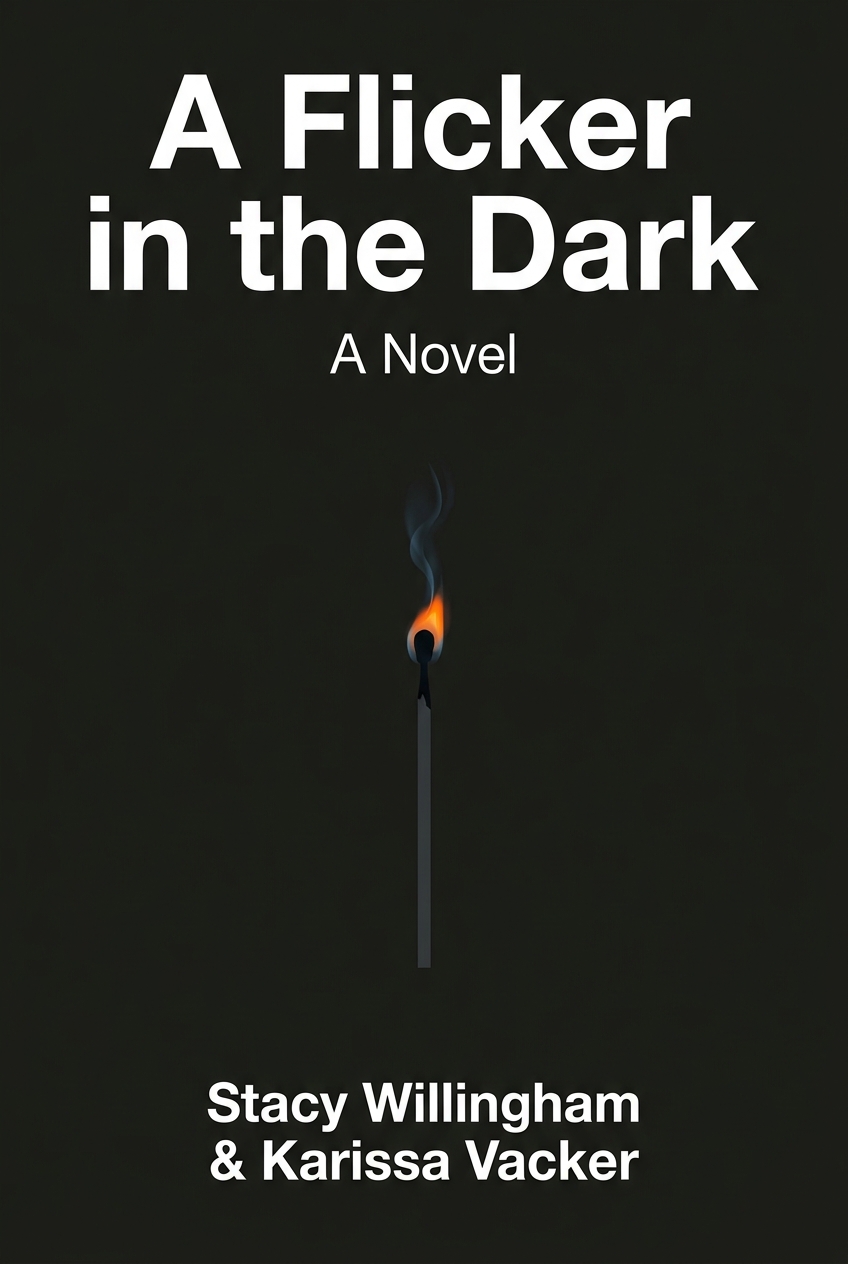
A Flicker in the Dark
A Novel
What's it about
What happens when the man you love starts to look like the monster you've feared your whole life? Dive into a chilling psychological thriller where a woman's past comes back to haunt her in the most terrifying way imaginable. Years after her father was convicted as a serial killer, Chloe Davis has built a new life as a psychologist. But when local teenage girls start to disappear again, the disappearances eerily mirror the crimes of her father. Uncover the dark secrets and twisted connections as Chloe races to find the truth before she becomes the next victim, or worse, realizes the killer is someone she trusts completely.
Meet the author
Stacy Willingham is the New York Times and USA Today bestselling author whose debut novel, A Flicker in the Dark, was a Book of the Month club pick. Before becoming a full-time author, she earned her MFA in writing and worked as a copywriter and brand strategist for various marketing agencies. This background in crafting compelling narratives, combined with a lifelong fascination for psychology and the origins of human evil, powerfully informs her chilling and suspenseful storytelling.
The Script
It's an ordinary Monday afternoon, and you're at the grocery store. As you move through the produce section, you see a familiar face—a neighbor from a few blocks over. You exchange a brief, polite wave. You've seen them at the post office, walking their dog, bringing in their recycling bins. They seem normal. But as you pass the aisle, a fleeting thought surfaces: what do you really know about them? What happens behind their closed doors, after the sun goes down and the streetlights flicker on? We build our lives on a foundation of trust in the ordinary, in the predictable rhythm of suburban life. We assume the person next door is just like us. But sometimes, that foundation cracks, revealing a darkness we never suspected was there, forcing us to question how well we can ever truly know the people we live beside—or even the people we love.
That unsettling question—of the darkness that can hide in the most familiar places—is precisely what compelled Stacy Willingham to write A Flicker in the Dark. Growing up in a small town where everyone knew everyone, Willingham was fascinated and horrified by the stories that would occasionally shatter that illusion of safety, particularly the cases of Ted Bundy and the Gainesville Ripper in her home state of Florida. She became obsessed with the families of these infamous men, especially the daughters, who had to reconcile their love for a father with the monstrous truth of his actions. A former copywriter and brand strategist with a background in journalism, Willingham channeled this fascination into a gripping narrative, exploring the psychological toll of inheriting a legacy of violence and the terrifying possibility that the monster you've always feared might be the person you're supposed to trust the most.
Module 1: The Architecture of Fear
The book opens with a powerful premise. Our understanding of fear evolves. As children, we fear abstract shadows. We imagine monsters under the bed. But as adults, we learn a harder truth. Real monsters move in plain sight. Chloe Davis, the protagonist, articulates this shift perfectly. Her childhood fears were of mysterious presences in the dark. Her adult reality is the terrifying knowledge that danger wears a familiar face. This was a sudden crash for her at age twelve. That’s when the shadows took on the shape of her own father. This core idea sets the stage for the entire narrative. It establishes that for Chloe, the line between safety and danger, family and threat, is permanently blurred.
From this foundation, we see how trauma builds a persistent architecture of fear in our lives. Chloe, now a psychologist, lives by a set of subconscious safety behaviors. These are actions many women will recognize. She clutches her keys between her fingers like a weapon. She checks the back seat of her car before getting in. She parks under streetlights. Subconscious safety behaviors become an automatic response to a world perceived as hostile. They are the quiet, daily rituals of a life shaped by the constant threat of violence. Her vigilance is ingrained. It's a psychological scar from a town-wide trauma twenty years ago, when six girls disappeared from her small Louisiana community.
This leads to a critical insight about home and safety. We think of home as a sanctuary. But for Chloe, that idea is corrupted. Trauma can poison familiar places, turning sanctuaries into sources of suspicion. Her childhood home was the epicenter of the horror. This memory infects her present. She struggles to feel safe in her own house as an adult. An unlit porch light isn't an oversight. It's a vulnerability. A dark road isn't just a dark road. It’s a disorienting void where all sense of direction is lost. The book shows how the past doesn't just haunt us. It actively re-wires our perception of the physical world. Safety becomes a fragile, fleeting illusion, constantly threatened by the echoes of what came before.