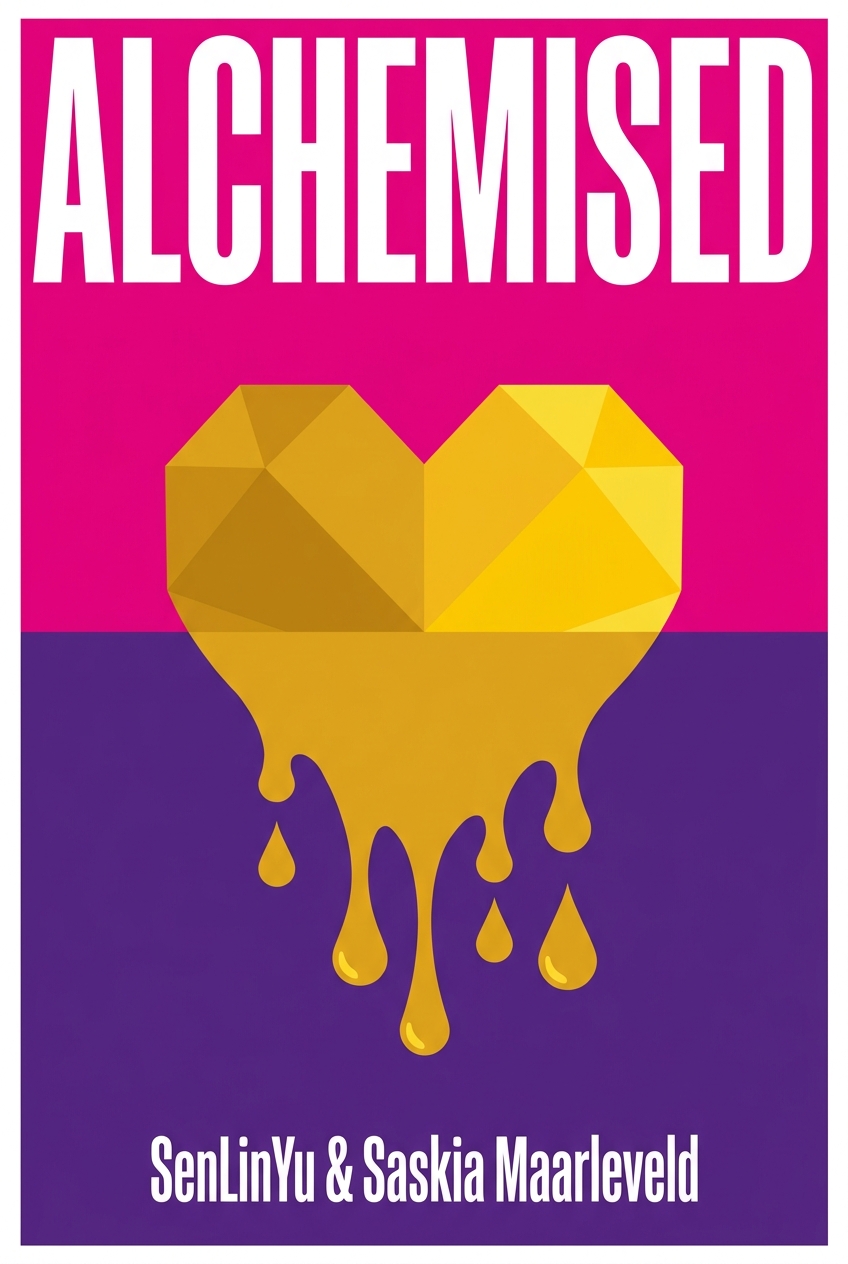
Alchemised
What's it about
What if the key to winning a war wasn't on the battlefield, but locked away in the mind of your greatest enemy? This dark, wartime romance challenges you to explore the brutal costs of survival and the intoxicating, dangerous line between love and manipulation. You'll discover how a brilliant witch, stripped of her identity and forced into a strategic partnership, must navigate a treacherous new reality. Uncover the psychological tactics she uses to survive, the unexpected bonds that form under duress, and the earth-shattering secrets that could either save everyone or destroy them all.
Meet the author
SenLinYu is the celebrated author of the most read fanfiction of all time, Manacled, a globally recognized work that has captivated millions of readers with its profound storytelling. Drawing from her background in social work and a deep understanding of human psychology, she masterfully explores themes of trauma, healing, and resilience. Her unique perspective allows her to craft intensely emotional and complex narratives that resonate with a vast and dedicated audience, cementing her status as a transformative voice in modern fiction.
Opens the App Store to download Voxbrief

The Script
A master swordsmith and a grandmaster of chess are given the same challenge: create an object of perfect balance. The swordsmith takes a piece of raw, folded steel, its imperfections visible like scars. She heats and hammers, folds and quenches, to integrate the flaws, transforming them into a source of unique strength and resilience. The final blade is perfectly balanced, its history contributing to its lethal grace. The chessmaster, however, is given a pristine board and a set of identical, perfectly carved pieces. He arranges them in a formation of theoretical perfection—a textbook opening, flawless in its logic and symmetry. Yet, the moment the first opposing move is made, that perfect balance shatters. The swordsmith created an object that finds balance within chaos; the chessmaster created a balance that can only exist in its absence. This reveals a fundamental truth about human connection: is it a state of pristine perfection we should strive for, or is it a dynamic, resilient balance forged from our deepest flaws and most painful histories?
This very question is at the heart of SenLinYu’s work. Originally published as a serial fanfiction, Alchemised began as an exploration of how two deeply broken people, scarred by war and prejudice, could find a form of mutual salvation. SenLinYu, a practicing physician, approached the story with an almost clinical interest in the psychology of trauma and recovery. She wasn't interested in a magical fix for her characters' wounds. Instead, she methodically built a narrative where redemption is about integrating the past—alchemizing pain into a new, stronger, and more profound kind of love.
Module 1: The Architecture of Oppression
The world of Alchemised is built on a foundation of sophisticated control. It’s a system where power isn’t just wielded through brute force, but through a chilling combination of magic, technology, and psychological warfare. The ruling regime, the Undying, has perfected the art of dehumanization.
A central practice is the creation of necrothralls. These are reanimated corpses, puppets used for labor and terror. The Warden of the Outpost, a brutal labor camp, strings up the bodies of curfew-breakers to rot in public. Then, she reanimates them to work alongside the living. This sends a clear message: disobedience erases you, even in death. You become a tool, a constant, grim reminder of the regime’s power. This is psychological warfare designed to extinguish any spark of rebellion.
This control extends to the very essence of a person's being. Alchemists, individuals with innate magical abilities, are the world’s most valuable resource. But under the Undying, their power is a liability. Specialized tools are used to suppress and control individual abilities. The protagonist, Helena, is fitted with manacles made of lumithium, a rare magical metal. These cuffs generate a kind of static in her nerves, blurring her senses and completely blocking her ability to use her alchemical resonance. She is rendered powerless, a high-value asset neutralized and ready for exploitation.
And here’s where the system becomes truly terrifying. The regime is obsessed with forbidden knowledge, particularly magic that manipulates the mind and soul. Prisoners are experimental subjects. The pursuit of forbidden knowledge justifies extreme cruelty. Helena’s mind has been surgically and magically altered, a feat described by her captor as "genius" work. She is valuable as a puzzle to be solved. Her captors openly discuss vivisection—surgery on her living brain—as a viable method to extract information. This clinical, detached approach to torture reveals a regime where human life has no intrinsic value. It is merely raw material for the advancement of power.
Module 2: The Psychology of Survival
Now let’s shift from the system to the individual. How do you survive in a world designed to break you? Alchemised offers a raw, unflinching look at the psychology of endurance. It's about the grim, minute-by-minute calculus of staying alive.
When Helena awakens from stasis into total darkness, her first challenge is sensory deprivation. The isolation is so complete she begins to question her own physical existence. To fight this, she imposes a strict mental routine to preserve her sanity. She imagines walking through familiar places. She recites books from memory. She creates a structured inner world to prevent her mind from dissolving into the void. This is an active, disciplined fight against psychological collapse.
But in this timeless darkness, how do you even mark the passage of time? The answer is as brutal as the world itself. Controlled pain becomes a paradoxical tool for timekeeping and preservation. Regular, violent electrical surges are administered to her body to prevent muscle atrophy. At first, Helena uses the three-hour interval between these surges to count time. Later, she simply counts the surges themselves. Pain becomes her only clock, the one reliable anchor in an endless, featureless existence. It’s a horrifying concept, but it shows how the human mind will adapt and use any available stimulus to maintain a grip on reality.
So what happens when you’re finally rescued, only to be thrust into a different kind of prison? Helena’s struggle for agency continues. She finds herself in a constant negotiation between two powerful drives. Survival becomes an internal battle between self-destruction and strategic patience. She immediately searches her room for anything she can use to commit suicide, viewing death as a pragmatic choice to escape a worse fate. Yet, at the same time, she forces herself to exercise, to rebuild her strength. She observes her captor, Kaine Ferron, looking for a weakness. This push and pull shows that even in the depths of despair, the instinct to survive is locked in a desperate struggle with the desire for escape.