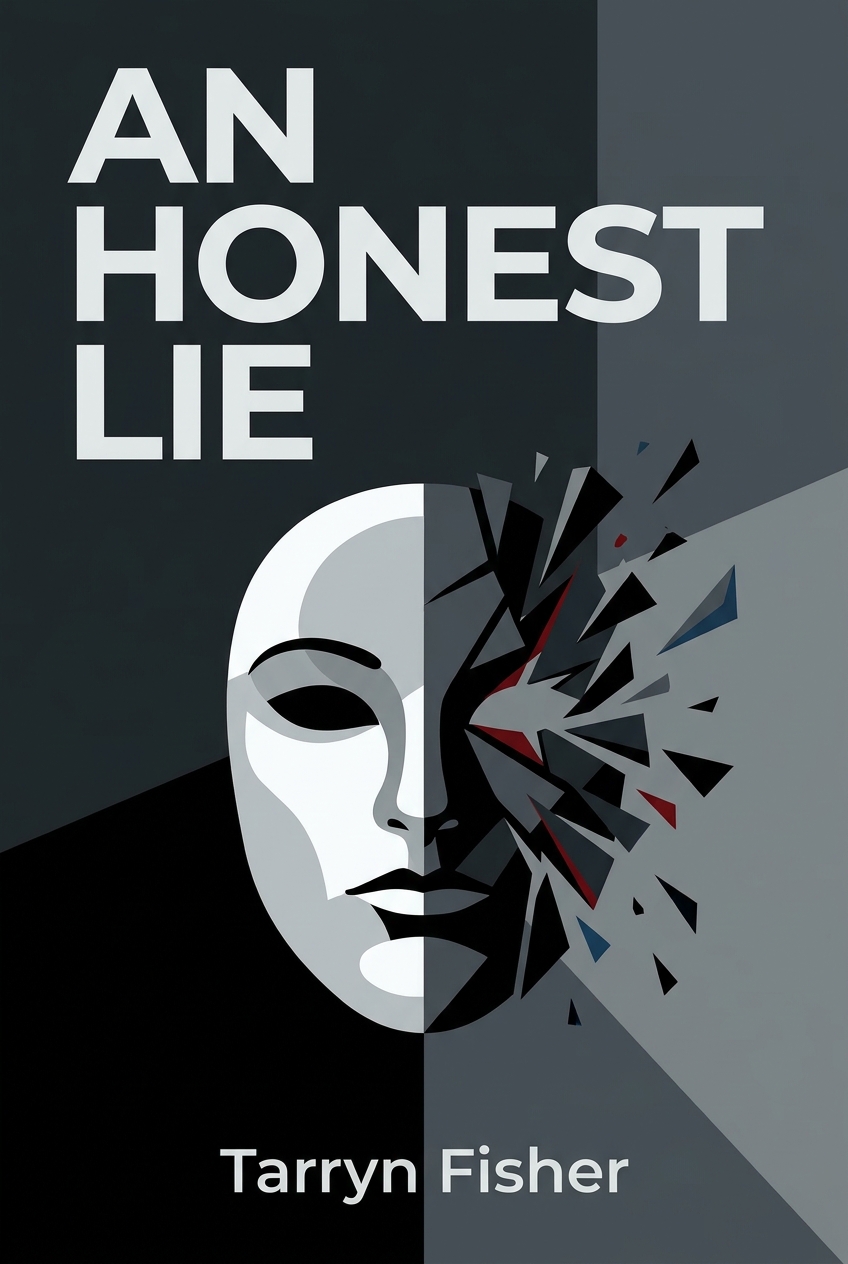
An Honest Lie
A Domestic Thriller – A Gripping Psychological Mystery of Hidden Secrets and Survival
What's it about
Have you ever told a lie so big it threatened to destroy your entire life? For Rainy, a dark past she desperately tried to bury is about to be unearthed. A girls' trip to Vegas turns into a nightmare when she's abducted by a group who knows her secrets. Now, Rainy is forced into an impossible choice: reveal the devastating truth of who she once was, or risk her new life—and the lives of her friends—going up in flames. You’ll uncover the chilling connection between her past and present as she fights for survival against a captor who wants more than just the truth.
Meet the author
Tarryn Fisher is a New York Times and USA Today bestselling author renowned for her psychologically complex thrillers that delve into the dark corners of the human mind. A self-proclaimed enthusiast of villains, her fascination with flawed, morally ambiguous characters fuels her gripping narratives of suspense and survival. This unique perspective allows Fisher to craft intricate plots and unforgettable anti-heroines, exploring the hidden secrets we all carry and the extreme lengths people will go to protect them.
Opens the App Store to download Voxbrief

The Script
Imagine you're at a bachelorette party weekend in Vegas—the kind with cheap champagne, glittering lights, and forced fun. It's loud and chaotic, but you're with your best friends. Suddenly, one of them is gone. Not just wandered off to another slot machine, but vanished. The hotel says she checked out. Her phone goes straight to voicemail. The police are strangely unconcerned. Your friends, caught in the neon haze, think you're overreacting. But you know something is wrong. A cold dread settles in your stomach, a feeling that this is a kidnapping.
Then comes the impossible demand. The kidnappers don't want money. They want you to do something, something that betrays the one person you trust most in the world: your husband. They know a secret about your past, a life you buried and ran from years ago. Now, you're trapped. To save your friend, you have to dig up the person you swore you'd never be again and destroy the life you so carefully built. It's a choice with no right answer, a collision between who you are and who you were forced to be.
This high-stakes, twisting scenario is the kind of moral labyrinth that Tarryn Fisher thrives in. As a New York Times bestselling author, she has built a career exploring the darker, more complex corners of the human heart, particularly the secrets women keep and the lengths they'll go to for survival. Fisher wrote "An Honest Lie" to explore the idea that our past selves never truly disappear; they just lie dormant, waiting for a crisis to reawaken them. She wanted to place a character at an impossible crossroads, forcing a confrontation between a carefully constructed present and a violent, buried history, leaving readers to question what they would do when faced with a choice between two different kinds of betrayal.
Module 1: The Dual Identity and the Unsettled Present
The novel introduces us to a woman living a life built on a fragile foundation. Her name is Rainy, an artist living a quiet, reclusive life on a mountain in Washington with her partner, Grant. But Rainy isn't her real name. It’s a shield. Her real name is Summer, a name she shed along with a traumatic childhood spent in a cult. This brings us to a critical insight. Your past is an active force shaping your present decisions. Rainy's entire life is a reaction to her past. She avoids crowds. She craves solitude. She keeps her history locked away, even from the man she loves.
This constant vigilance creates a deep tension in her relationships. She joins Grant’s tight-knit group of friends, the "Tiger Mountain" crew. But for her, every social gathering feels like a performance. The group’s leader, Braithe, is glamorous and welcoming. But Rainy is wary. She sees the subtle power dynamics, the unspoken rules, and the pressure to conform. She fakes a sneeze to avoid the group’s customary hugs. She feels scrutinized and judged, a feeling rooted in a past where survival depended on being invisible.
Furthermore, we learn that unresolved trauma makes you perceive control as a threat, even when it's disguised as care. Grant is a loving partner. He tries to help Rainy integrate with his friends. He even buys her a plane ticket for a "girls' trip" to Vegas, thinking it will be good for her. For Rainy, this is a violation. Vegas is the epicenter of her trauma, the place where everything fell apart. Grant’s attempt to help feels like control. It triggers a visceral fear, a panic she has to hide. She agrees to the trip, not because she wants to go, but because maintaining the lie of her "normal" life feels safer than revealing the truth of her past. This decision sets the entire terrifying plot in motion.
Finally, the story shows how secrecy becomes a survival instinct that ultimately isolates you. Rainy lies by omission to Grant about why she can't go to Vegas. She feels a profound guilt, but the fear of him seeing her differently—of him seeing "Summer"—is greater. Her secrets are a wall she's built to protect herself. But that wall also keeps everyone else out, leaving her completely alone when the past comes calling. The trip to Vegas is a collision course with the ghosts she thought she'd left behind.
Module 2: The Anatomy of a Cult and the Mechanics of Control
To understand Rainy's terror, we have to understand where she came from. The narrative flashes back to her childhood as Summer, living in a desolate Nevada compound. It was a former women's correctional facility run by a charismatic and dangerous leader named Taured. Here, the book dissects the insidious nature of cults. The first lesson is that authoritarian control is established by isolating members and reframing it as protection. Taured tells his followers that the outside world is corrupt and godless. He uses news events like the Columbine shooting to reinforce this narrative. The compound, he claims, is a sanctuary. But its high walls and remote location serve another purpose. They cut people off from their families, their pasts, and reality itself.
This isolation paves the way for the next stage of control. Charismatic leaders systematically dismantle family units to ensure primary loyalty is to the group. Taured introduces "Kids' Camp," separating children from their parents. He argues that children are too dependent on their parents and need to learn to depend on God—and by extension, on him. Summer is torn from her mother, Lorraine. This act is psychological warfare. It breaks the most fundamental human bond and replaces it with loyalty to the leader. Summer’s loyalty slowly shifts from her increasingly desperate mother to the man who offers structure, praise, and a twisted sense of belonging.
From this foundation, the book shows how control is maintained through a combination of psychological manipulation and public humiliation. Taured's rules are arbitrary and constantly changing. He institutes "detox fasts" that leave people weak and malnourished. He uses public shaming as a tool of enforcement. When Summer attempts to escape with her mother, her punishment is a "cleansing." She is stripped down in the courtyard and hosed with cold water in front of the entire community. This is about dehumanization. It teaches everyone a powerful lesson: dissent will not be tolerated. Resistance leads to shame and further isolation. This brutal conditioning explains why, as an adult, Rainy is so terrified of being the center of attention and so quick to retreat from any perceived threat.