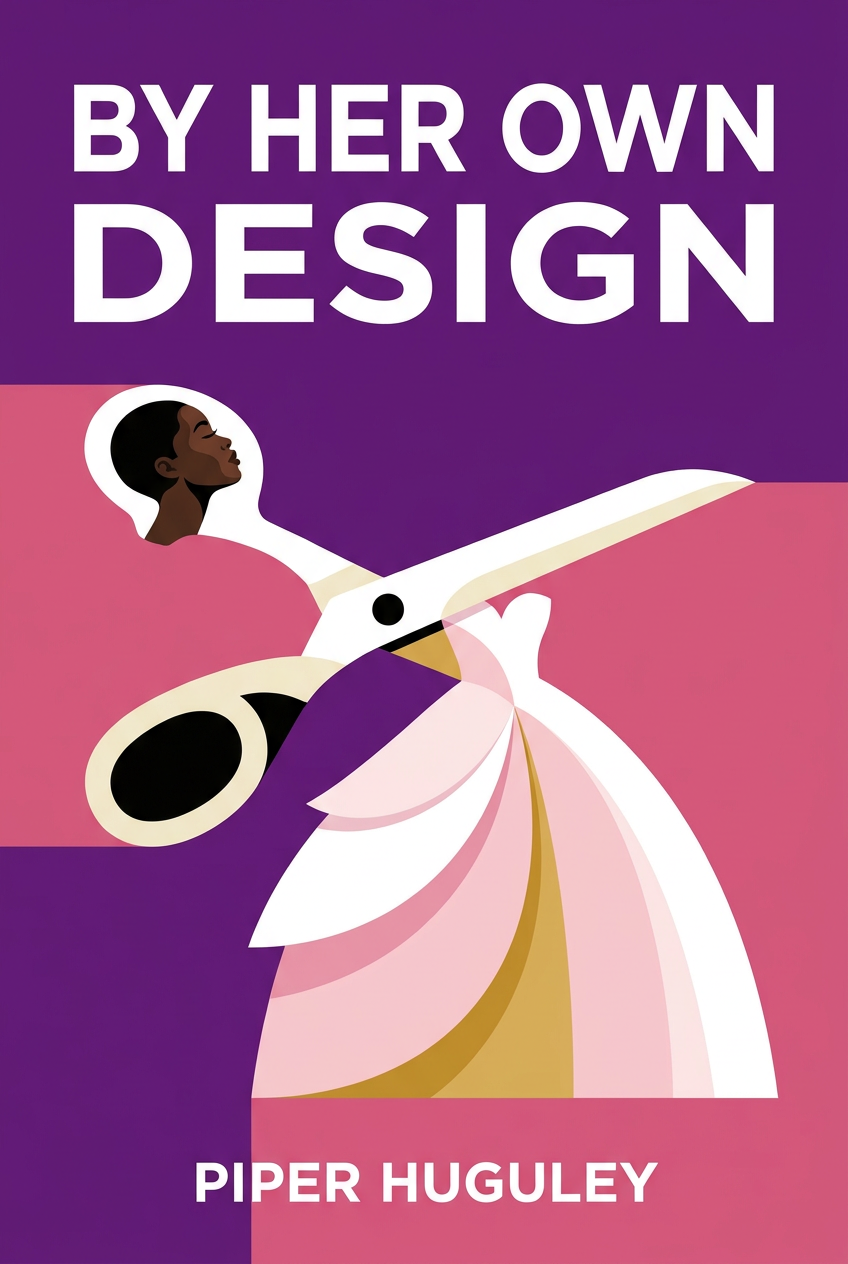
By Her Own Design
A Novel of Ann Lowe, Fashion Designer to the Social Register
What's it about
Ever wonder what it takes to become an icon, even when the world tries to erase you? Discover the story of Ann Lowe, the visionary Black designer behind Jackie Kennedy’s wedding dress, who defied a segregated America to dress the nation’s most powerful women. You'll learn how Lowe navigated the Jim Crow South and the cutthroat New York fashion scene, using her unparalleled talent to build a legacy. This story reveals her secret struggles, her creative genius, and the resilience required to claim her rightful place in history.
Meet the author
Piper Huguley is a literature professor and acclaimed author whose work champions forgotten Black historical figures, earning her a nomination for the prestigious Hurston/Wright Legacy Award. Her deep dive into the archives to unearth the stories of Black women, like fashion visionary Ann Lowe, stems from a personal mission to correct the historical record. This passion drives her to bring these vital, untold narratives of excellence and resilience to a new generation of readers.
Opens the App Store to download Voxbrief

The Script
Every family has its official stories, the ones polished and told at holiday tables. They are the smooth, approved versions of events. But often, tucked away in an attic or the back of a closet, there’s a second archive. It’s a box of unsorted, candid photographs, loose letters, and perhaps a forgotten, fragile garment. This second archive tells a different story. It’s messy, contradictory, and filled with the details the official narrative leaves out—the awkward glance, the unsmiling relative, the dress that doesn’t quite fit the grand occasion it was supposedly worn for. These artifacts don’t just supplement the official story; they challenge it, revealing the complex, often hidden, human reality that was actually lived.
This gap between the public, celebrated narrative and the private, often erased truth is precisely what compelled Piper Huguley to write. While researching a different project, she stumbled upon a single, tantalizing photograph of a Black designer named Ann Lowe, whose name was vaguely attached to one of the most famous wedding dresses in American history—Jacqueline Kennedy's. But the official story credited a different, more socially prominent, designer. This glaring contradiction between the public record and a nearly forgotten truth sparked a years-long obsession for Huguley, a literature professor with a passion for unearthing hidden histories. She felt an urgent need to reconstruct the story from that second, messier archive, giving voice to the brilliant woman whose legacy had been relegated to a historical footnote.
Module 1: The Power of a Name
Ann Lowe's story begins and ends with a fight for recognition. It's a battle against being rendered anonymous. Her entire career was a quiet insistence that her name, her identity, and her craft mattered.
This struggle is woven through the narrative. In one scene, an elderly Ann corrects her daughter for calling a client "Jackie Onassis." She insists on using the name "Jacqueline Kennedy." Ann then explains, "A name, it matters. What I put on my label mattered." This was a core principle. To respect a client's name was to demand respect for her own: Ann Cole Lowe, Designer. She saw her label as a declaration of her existence and her artistry.
And here's the thing. This fight was necessary because the world constantly tried to erase her. Your name is your legacy; you must claim it and defend it. Lowe was infuriated when a popular biography described her as merely "a pair of hands or the family seamstress." This description denied her role as a creator, an artist, and a business owner. It reduced her to a functionary. Her response was to double down on her identity. She knew her worth, even when others refused to see it. For professionals today, this is a powerful reminder. Your title, your byline, your credit on a project—these are markers of your contribution. They build the story of your career.
So what does this look like in practice? It means ensuring your work is properly attributed. It means speaking up when you are overlooked. Insist on credit for your work, because recognition is earned and defended. Ann Lowe did this by sewing her name into the most exclusive garments in the country. She couldn't control the newspapers. But she could control her craft. Each "Ann Lowe" label was a small act of defiance. It was a message to the woman wearing the dress. A message that said: a person made this. A person with a name.
Building on that idea, the book itself is framed as an act of claiming that legacy. Huguley presents Lowe's story as a direct answer to historical neglect. She's setting the record straight. Your legacy is the story people tell about you when you're not in the room. Ann Lowe spent her life trying to shape that story. She understood that without a name, her incredible body of work could be forgotten. Or worse, credited to someone else. This is a crucial lesson in an era of collaborative, often ephemeral digital work. Claim your contribution. Attach your name to your value. It’s the only way to build a legacy that lasts.
Module 2: The Architecture of Resilience
Ann Lowe’s life was a masterclass in resilience. She faced a relentless series of personal and professional crises. An abusive marriage. The death of her mother and son. A catastrophic flood that destroyed her most important commission. Financial ruin. Yet she never stopped. Her story reveals that success is about the relentless, often brutal, act of rebuilding.
Let's look at the 1953 flood. Just ten days before Jacqueline Bouvier's wedding to John F. Kennedy, a pipe burst in Lowe's New York studio. It ruined the wedding gown and ten bridesmaid dresses. This was a career-ending disaster. Her first reaction was despair. But it lasted only a moment. Her sister, Sallie, stood by her side. And Ann's resolve kicked in. She decided then and there, "She and her seamstresses will find the way to re-create the dresses... they will do it." She didn't call the client. She didn't make excuses. She took complete ownership.
This is the first insight. When facing a crisis, immediate, decisive action is more powerful than prolonged analysis or blame. Ann Lowe’s mind immediately went to solutions. She remembered fabric saved from Jacqueline's previously canceled engagement. She mobilized her network, recruiting women from her church to sew around the clock. She turned a disaster into a testament to her resourcefulness. She absorbed a loss of thousands of dollars—a fortune at the time—to protect her client and her reputation. She chose to solve the problem herself, fearing the powerful Kennedy family would simply conclude "a Black woman cannot handle this commission." She navigated the racial and social dynamics with strategic silence, solving the problem instead of explaining it.
But flip the coin. This resilience was forged in daily choices. True resilience is built through small, consistent acts of courage. Years earlier, as a young woman in 1918, Lowe was trapped in an abusive marriage. One night, she took her young son and fled. She left with almost nothing. The book calls this the start of "the adventure of a lifetime." She turned a personal crisis into a professional opportunity. She moved to Florida, enrolled in a segregated design school, and began building the career that would define her life. This escape wasn't a single event. It was a profound choice to value her talent and her future over her present security.
And it doesn't stop there. The prologue shows an elderly Ann Lowe, near death. She's in a hospital bed, losing her eyesight. But she's still passionately analyzing wedding dress trends. She critiques the 1970s. She predicts Princess Diana's wedding will revive the industry. Your deepest passions fuel your resilience long after external motivations fade. Her dedication was lifelong. It was unwavering. It was the engine that drove her through every obstacle. For anyone building a company or a career, her story is a blueprint. Resilience is an active, daily practice of problem-solving, courage, and unwavering dedication to your craft.