All Books
Self-Growth
Business & Career
Health & Wellness
Society & Culture
Money & Finance
Relationships
Science & Tech
Fiction
Topics
Blog
Download on the App Store

Carefully Taught

American History through Broadway Musicals

14 minCary Ginell

What's it about

Struggling to make American history stick? Imagine learning about the Civil War, the Roaring Twenties, and the Great Depression not from a dry textbook, but through the unforgettable songs and stories of Broadway. This summary shows you how. Discover how musicals like Hamilton, 1776, and Hair aren't just entertainment—they're powerful, popular retellings of pivotal moments in US history. You'll understand how these shows shaped, and were shaped by, the American experience, offering a uniquely memorable way to grasp the nation's past.

Meet the author

Cary Ginell is a Grammy-nominated music historian and acclaimed author whose work meticulously documents the cultural impact of American popular music and theater. His unique expertise stems from a lifetime spent as a radio broadcaster, journalist, and stage director, giving him an unparalleled perspective on how Broadway musicals have both reflected and shaped pivotal moments in American history. This background allows him to reveal the hidden historical narratives woven into our most beloved show tunes.
Listen Now

Opens the App Store to download Voxbrief

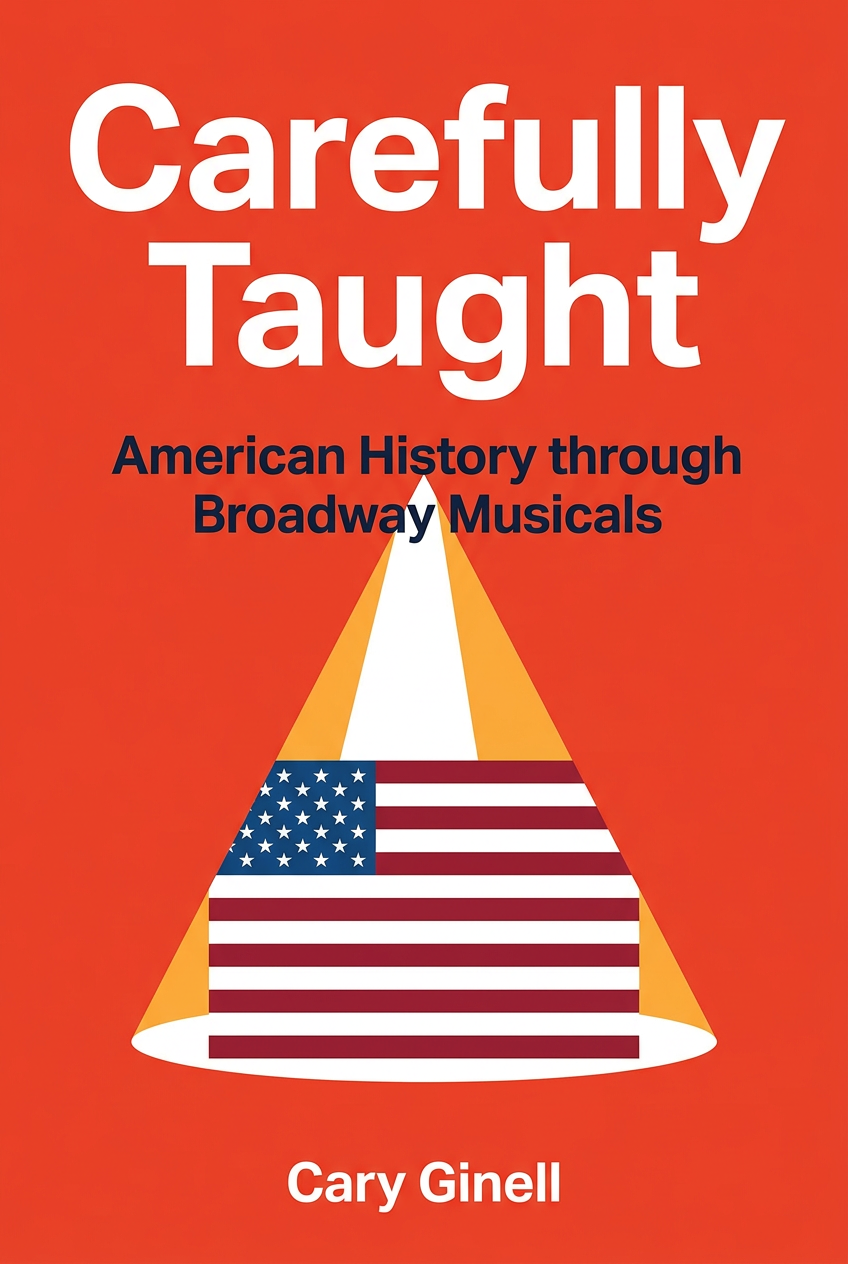
Carefully Taught book cover

The Script

Imagine a child sitting in the back of a classroom, watching the teacher. The child is observing how the teacher frames the history lesson. They notice which figures are presented as heroes and which are glossed over. They see the subtle shift in tone when discussing one event versus another. This child starts to understand that history is a story, and the storyteller holds immense power. They begin to see the difference between the official textbook version of events and the more complex, often contradictory, stories told at the family dinner table or whispered among friends. The child learns that the most important lessons are hidden in the way the curriculum is delivered—in the emphasis, the omissions, and the quiet biases that shape a young person's understanding of their world and their place in it.

That quiet observation of how values are transmitted, often unconsciously, is the thread that runs through Cary Ginell’s life and work. As a lifelong educator, theater historian, and Grammy-nominated producer, Ginell has spent decades analyzing how stories shape our beliefs, particularly the stories we tell our children through entertainment. He noticed a profound shift in the messages embedded in musicals, from the overt patriotism of the 1920s to the complex social questions posed in the 1950s. This book, "Carefully Taught," emerged from his personal quest to understand the precise moment when Broadway decided it had a responsibility to educate and challenge the prejudices of its audience. It is the culmination of a lifetime spent watching the teachers, on stage and off, and meticulously documenting what they chose to teach.

Module 1: History as Spectacle — The Grand Narrative

The first major theme Ginell explores is how musicals transform history into a grand, often celebratory spectacle. These shows are crafting a national mythology. They use the power of music and drama to create a shared sense of identity and purpose.

A powerful insight here is that musicals often use historical settings to address contemporary anxieties. Take Oklahoma! from 1943. It's set in the Oklahoma territory before statehood. But it was created during the height of World War II. The show presented a nostalgic vision of American frontier spirit. It was a story of community, optimism, and manifest destiny. For a wartime audience, it was a reminder of the ideals they were fighting for. The history was a mirror reflecting present-day hopes and fears.

Another key point is that artistic license is used to humanize iconic figures and simplify complex events. The musical 1776 offers a perfect example. It portrays the Founding Fathers as flawed, stressed, and relatable men. The show compresses timelines. It invents dialogue. It even adds a giant tally board to track votes for independence—a device that never existed. Why? To make the dense political debates of the Continental Congress accessible and dramatic. The goal is emotional truth over documentary accuracy. The show adapts John and Abigail Adams's eloquent letters into song. This gives the audience a powerful emotional connection to their partnership and sacrifice.

Finally, Ginell shows how musicals can elevate local folklore into national legend. The 1925 musical Dearest Enemy was based on a largely unproven story about Mary Lindley Murray. Legend says she delayed a British General during the Revolutionary War, allowing American troops to escape. The story was perfect for the stage. It was a tale of female patriotism and cleverness. Its debut came just after women gained the right to vote, and it resonated deeply. The musical took a piece of local folklore and, by setting it to music, cemented it in the popular imagination. It demonstrates a core function of historical musicals: to find and amplify the stories that we want to be true.

Module 2: The Darker Side — History as Critique

Now, let's turn to a more complex function of musical theater. Musicals also critique history. Ginell argues that some of the most powerful shows are those that force audiences to confront the nation's most difficult and problematic chapters.

This brings us to a crucial idea: musicals can be powerful tools for social commentary, using the past to critique the present. Take the 2010 rock musical Bloody Bloody Andrew Jackson. On the surface, it’s a story about the seventh U.S. president. But it was created as a direct reaction to the political climate of the post-9/11 George W. Bush era. The show uses an aggressive, punk-rock style and modern slang to satirize Jackson's populism and nativist policies. It draws a direct, uncomfortable line from his historical actions, like the Indian Removal Act, to contemporary political rhetoric. The show is about how his brand of politics continues to echo in America.

Furthermore, Ginell shows that confronting painful history often requires breaking theatrical conventions. The musical Assassins, by Stephen Sondheim, is a masterclass in this. The show brings nine presidential assassins and would-be assassins together in a surreal, timeless space. It’s a revue that explores their twisted motivations. Sondheim’s score brilliantly mimics and distorts American musical styles. He uses folk ballads, marches, and pop songs to get inside the heads of these disturbed individuals. The show makes the audience deeply uncomfortable. It forces you to question the American Dream and the dark-side of the pursuit of fame. It’s a musical that refuses to give easy answers.

This leads to another point: some of the most groundbreaking musicals directly tackle the issue of race in America. Long before it was fashionable, shows were pushing the envelope. Show Boat in 1927 dealt with miscegenation. South Pacific in 1949 featured the song "You've Got to Be Carefully Taught," a direct and controversial statement that racism is a learned behavior. More recently, Ragtime weaves together the stories of Black, white, and immigrant families to create a panoramic view of racial and class tensions at the turn of the 20th century. These shows use their historical settings to expose the deep, often ugly, roots of prejudice in American society. They prove that musical theater can be a forum for difficult, but necessary, conversations.

Read More