All Books
Self-Growth
Business & Career
Health & Wellness
Society & Culture
Money & Finance
Relationships
Science & Tech
Fiction
Topics
Blog
Download on the App Store

Don't Let Her Stay

An unputdownable psychological thriller with a breathtaking twist

14 minNicola Sanders

What's it about

Have you ever felt like someone in your own home was turning your life upside down? Imagine finally having the perfect family, only for your new stepdaughter to arrive and systematically begin to dismantle everything you’ve built. This summary explores that chilling reality. You'll discover the subtle, terrifying tactics used to manipulate a family from within and witness one woman's desperate fight to protect her child and her sanity. Uncover the dark secrets and psychological games at play when a dream life becomes a waking nightmare you can't escape.

Meet the author

Nicola Sanders is a USA Today bestselling author whose debut psychological thriller, Don't Let Her Stay, has sold over a million copies worldwide. A former social media manager, she discovered her passion for writing twisty, suspenseful stories while on maternity leave. Nicola now writes full-time from her home in the UK, drawing inspiration from the complexities of family dynamics to craft her gripping, unputdownable novels.
Listen Now
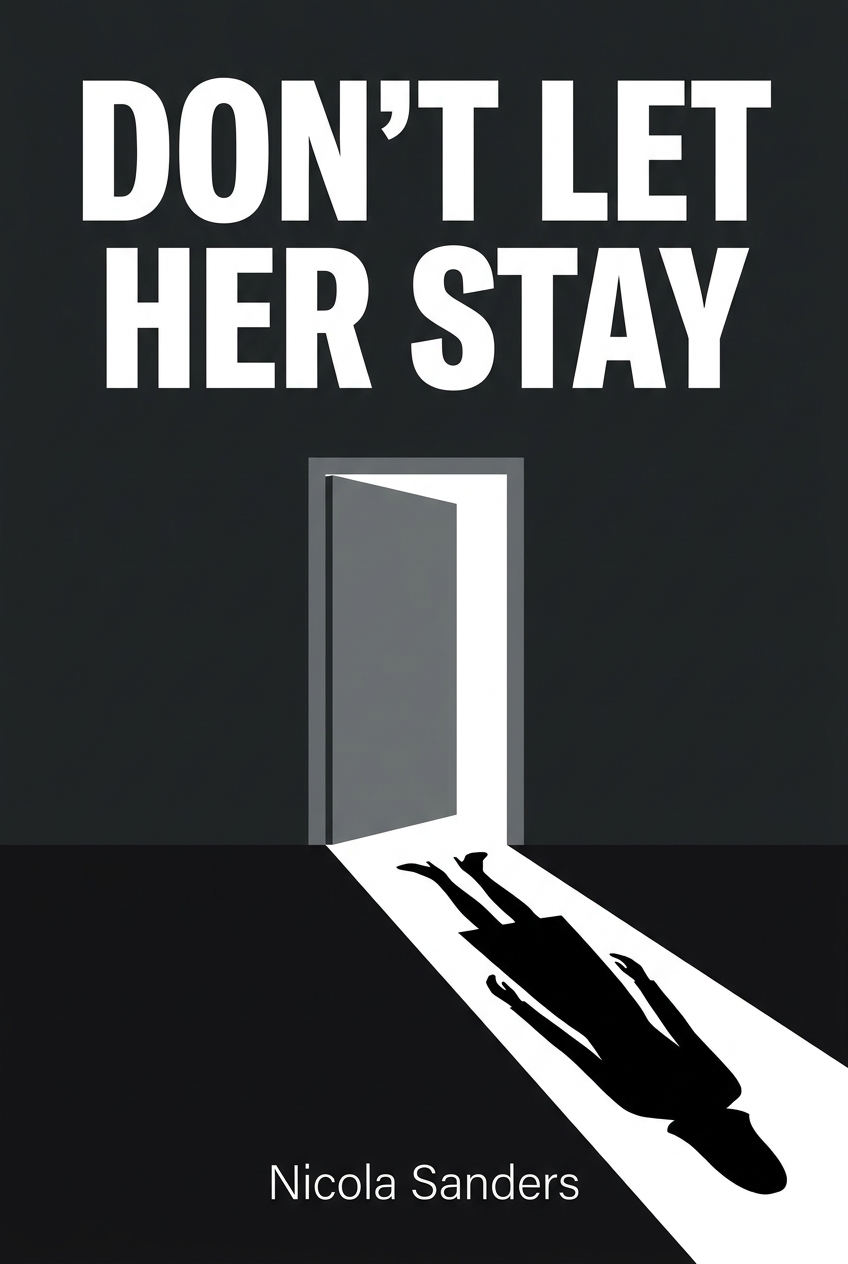
Don't Let Her Stay book cover

The Script

Think about the last time you were at a public aquarium, watching the fish. You see a tank where one sleek, predatory fish glides silently, while the others give it a wide berth. Its movements are calm, almost lazy, but every other creature in the tank orients itself around this silent threat. Now imagine that same dynamic, but instead of an aquarium, it’s your own home. The predatory fish is a child—your partner’s child. To everyone else, she’s just a sweet, quiet girl. But you see the subtle shifts in the room when she enters. You feel the constant, low-level hum of calculation in her gaze. You notice how stories change, objects move, and loyalties pivot around her, yet you’re the only one who seems to be watching the tank.

This is the unsettling scenario that fueled Nicola Sanders's debut thriller. As a new stepmother herself, Sanders became fascinated by the uniquely vulnerable position of a woman entering a pre-existing family unit. She noticed how stepmothers are often expected to love unconditionally while being viewed with suspicion, creating a perfect blind spot for manipulation. Drawing on her background in family counseling, Sanders decided to write a novel that pushes this dynamic to its most terrifying extreme, crafting a story from the desperate, isolated perspective of a woman who must convince her own husband that the danger he can’t see might destroy them all.

Module 1: The Architecture of Unease

The story opens with Joanne, a new mother living in a beautiful but isolated country home. She’s grappling with the loss of her professional identity and the exhaustion of caring for her infant daughter, Evie. Her husband, Richard, is a loving but often absent provider. This seemingly perfect domestic picture quickly begins to crack when Richard’s estranged 21-year-old daughter, Chloe, announces she wants to visit. This sets the stage for a masterclass in domestic tension.

The first critical insight is that psychological manipulation often begins by exploiting existing insecurities. Joanne is already vulnerable. She feels disconnected from her old life and overwhelmed by motherhood. Chloe arrives and immediately weaponizes these feelings. She makes subtle digs about Joanne’s age, her appearance, and her forgetfulness. For instance, Chloe points out a baby-sick stain on Joanne's shirt and criticizes her for repeating herself. These are small, sharp cuts designed to undermine Joanne's confidence. This is a powerful tactic. It makes the target feel inadequate while allowing the manipulator to maintain plausible deniability.

This leads to the next point. A manipulator often presents a different face to different people. Chloe is a master of this. With her father, Richard, she is sweet, innocent, and childlike, using a high-pitched voice and calling him "Daddy." With Joanne, her tone is cold, mature, and dismissive. When Joanne tries to give her a welcoming hug, Chloe extends a hand for a formal handshake, instantly establishing distance. Later, after mishandling the baby, she tells Richard that Joanne simply overreacted. This creates a classic "he said, she said" scenario. It isolates Joanne by making her look unreasonable and paranoid to the one person she should be able to trust. Richard, blinded by guilt over his past with Chloe, consistently sides with his daughter, leaving Joanne completely alone.

And here's the thing. This dynamic shows how parental guilt can become a powerful tool for a manipulator. Richard feels immense guilt over the traumatic death of Chloe's mother years ago. He admits he has spoiled Chloe to make up for it. Because of this, he is incapable of seeing her faults. When Joanne raises concerns, he sees someone attacking his traumatized daughter. He dismisses Joanne’s fears about Chloe’s strange behavior as jealousy or fatigue. This is a critical lesson in relationship dynamics. Unresolved guilt in one partner can create a blind spot that a third party can ruthlessly exploit. Richard’s need to be a good father to Chloe makes him a bad partner to Joanne.

Finally, we see that control is often asserted through the invasion of personal boundaries. Chloe doesn't just enter the home; she conquers it. She insists on a full tour, touching Joanne’s personal items in her office and bedroom. She picks up baby Evie without permission, ignoring Joanne's maternal authority. Most significantly, she proposes moving in for months to act as Evie's nanny, effectively inserting herself into the household long-term. Richard, eager to please Chloe, agrees. This forces Joanne into a corner. She must either accept this intrusion or risk looking like the unwelcoming stepmother, further damaging her relationship with Richard. This slow, creeping invasion of space and authority is a hallmark of psychological abuse, designed to make the victim feel powerless in their own home.

So far, we've set the stage. A vulnerable new mother, a manipulative stepdaughter, and a blind, guilt-ridden husband. Now, let's look at how this unease escalates into all-out psychological warfare.

Read More