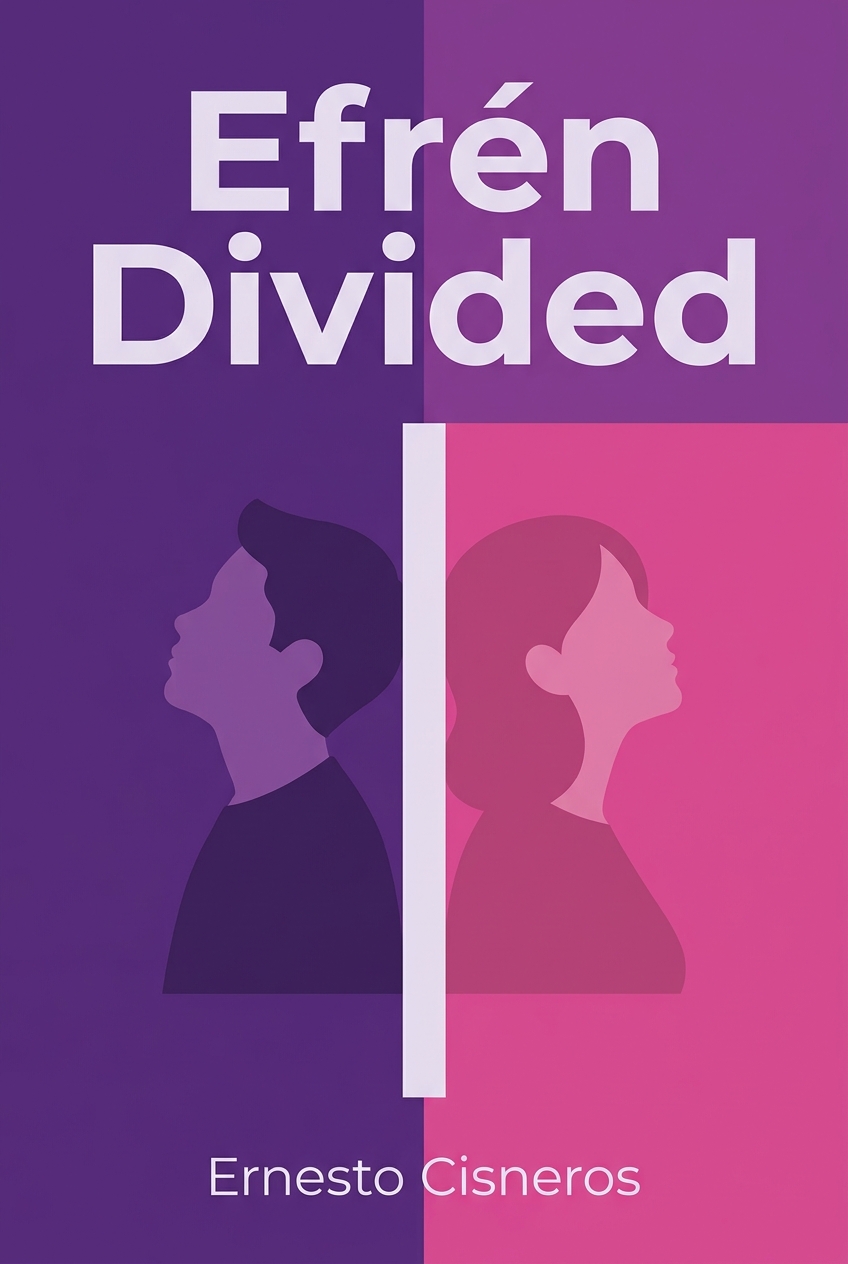
Efrén Divided
What's it about
What would you do if your family was suddenly torn apart? For twelve-year-old Efrén, this nightmare becomes reality when his mother is deported. He must now navigate a new, terrifying world while trying to hold his family together. Discover a story of incredible resilience and the unbreakable bonds of family. You'll follow Efrén's journey as he cares for his younger siblings, excels in school, and undertakes a perilous quest to reunite with his Amá, learning powerful lessons about love, sacrifice, and hope against all odds.
Meet the author
Ernesto Cisneros is a Pura Belpré Award-winning author and dedicated middle school teacher who was named the 2023 National Teacher of the Year. Drawing from two decades in the classroom and his own experiences growing up in a Mexican American community, Cisneros was inspired by his students to write stories where they could see themselves reflected. His work gives a powerful voice to the children of immigrants, celebrating their resilience, culture, and love for family in the face of adversity.
Opens the App Store to download Voxbrief

The Script
In a school play, there are two roles for the same character: the one who is seen, and the one who is heard. The visible actor moves across the stage, performing all the actions—picking up a prop, gesturing to another character, reacting with a silent gasp or a smile. Their body tells a story. But their voice comes from somewhere else. Offstage, in the wings, the second actor speaks the lines into a microphone, their voice filling the theater, giving words to the on-stage actor's silent movements. For the audience, the two are one; a seamless person. But for the actors, it’s a constant, tense negotiation. They must be perfectly in sync, breathing together, anticipating each other’s timing, one listening for the cue to speak, the other listening for the cue to move. If the connection falters for even a second, the illusion shatters, and the audience sees not one person, but two halves of a person struggling to stay whole.
This feeling of being split in two, of having one part of your life performing normalcy while the other part screams from the shadows, is a reality Ernesto Cisneros knows intimately. As a middle school teacher in Santa Ana, California, he saw this silent struggle in his students every day. He watched bright, funny, talented kids suddenly grow quiet and distant, their lives fractured by a family crisis no one at school could see. He saw children forced to become the off-stage voice for their families, translating legal documents, making adult phone calls, and carrying burdens far too heavy for their years. Cisneros wrote Efrén Divided as an act of witness for the students he serves, giving a voice to the kids who are forced to live two lives at once, and showing the world the incredible strength it takes to keep those two halves from being torn apart.
Module 1: The Sudden Shift – When Childhood Ends
The story opens with the warm, chaotic, and completely normal routine of a loving family. Efrén Nava is a typical middle schooler. He shares a mattress with his younger twin siblings, Max and Mía. He worries about his ears sticking out. He playfully argues with his mom, Amá, over practicing English versus preserving Spanish. Their life is defined by small acts of love and resourcefulness. Amá makes sopes for breakfast, a "special treat," and scrapes a cactus for her own meal so the kids can eat first. This is a story of love in the face of scarcity.
And then, one afternoon, the routine shatters. Efrén comes home from school to an empty apartment. The stale scent of dread replaces the familiar smell of his mother’s cooking. His younger siblings have been dropped off by a teacher. A neighbor delivers the devastating news: "La migra la tiene." Immigration has her. In that single moment, Efrén’s world is cleaved in two. His lifelong fear, the boogeyman known as ICE, has become real. The first casualty of a family crisis is a child's sense of security. Efrén’s reality becomes about a missing parent and a family structure that has just collapsed.
This leads to an immediate and brutal transformation. Efrén is no longer just a big brother; he becomes a surrogate parent. His father, Apá, is a loving but now overwhelmed man, forced to work double shifts to keep them afloat and save money for a "coyote," a smuggler to bring Amá back. The weight of the household falls squarely on Efrén’s shoulders. He must now get the twins ready for school, cook their meals, manage their emotional distress, and navigate his own grief in silence.
Here’s the thing. A child's resilience is often mistaken for a lack of pain. Efrén tries to maintain normalcy for his siblings. He attempts to make "donut critters" for breakfast like Amá did, but he burns himself and they end up eating cereal. He lies to his kindergarten teacher, saying Amá has a new job. He lies to the twins, promising Amá will be back "soon." These are desperate attempts to hold a fracturing world together. He carries the emotional and logistical weight of an adult, but he is still just a boy. This forced maturity is a central theme. Efrén feels jealousy toward the twins for their "clueless" innocence. He wishes he could be kept in the dark, too. But that is a luxury he can no longer afford.
Module 2: The Weight of Secrecy and the Search for Sanctuary
Now, let's explore how this crisis isolates Efrén. With his new responsibilities, his school performance plummets. He's late, he misses homework, and his clothes are wrinkled. His teacher, Mr. Garrett, notices. But Efrén can't explain why. His father has explicitly warned him never to discuss their legal status with teachers. This fear is rooted in past policies and a deep-seated distrust. So, Efrén remains silent, accepting detention and the slow erosion of his academic life.
This is where the power of secrets becomes a crushing burden. Secrecy in a crisis creates profound emotional isolation. Efrén wants to confide in his best friend, David. He starts to say the words, "My Amá got deported," but they get lodged in his throat. He holds back, fearing the pity that will follow. He fears the casseroles, the offers of money, the shift in their dynamic from equals to a charity case. He has always been proud that David never pitied him for being poor, and he is desperate to maintain that. So, he carries the burden alone.
So what happens next? Efrén seeks refuge. For him, the library is a sanctuary. It’s the one place where he is free from his responsibilities, free from the worry, and free to just be himself. It’s in the library that he discovers a book that changes his perspective: The House on Mango Street. He sees his own feelings reflected in the narrator's story. This literary connection provides a powerful sense of validation. He isn't alone in his feelings.
Furthermore, this sanctuary becomes a place of unexpected human connection. He bonds with a classmate, Jennifer Huerta, over their shared love of books and their experience with "Spanglish." This connection deepens when Jennifer confides that her own mother is undocumented. Efrén reciprocates, sharing his family's status. Shared vulnerability is the foundation of true connection. In that moment of mutual trust, the wall of isolation around Efrén cracks, just a little. Jennifer also introduces him to a powerful proverb that becomes a recurring theme: "They tried to bury us, but they didn’t know we were seeds." This idea of resilience, of growth from hardship, plants itself in Efrén's mind.