All Books
Self-Growth
Business & Career
Health & Wellness
Society & Culture
Money & Finance
Relationships
Science & Tech
Fiction
Topics
Blog
Download on the App Store

Foul Trouble

14 minJohn Feinstein

What's it about

Ever wondered what it takes to be a top college basketball recruit? Go behind the scenes of the high-stakes, high-pressure world where agents, coaches, and shoe companies all want a piece of you before you even step on a college court. Follow Terrell and Danny, two of the nation's best high school players, as they navigate this treacherous landscape. You'll uncover the shady deals, the immense temptations, and the tough choices they face. Learn what it truly means to chase a dream when everyone around you has their own agenda.

Meet the author

John Feinstein is one of America's most celebrated sports journalists and the 1 New York Times bestselling author of more than forty books. A longtime commentator for NPR, The Washington Post, and Golf Channel, his career is built on unparalleled access to the biggest names and inside stories in sports. Feinstein's deep connections with legendary coaches and players, forged over decades of dedicated reporting, provide the authentic, behind-the-scenes perspective that makes his storytelling so compelling and uniquely insightful.
Listen Now

Opens the App Store to download Voxbrief

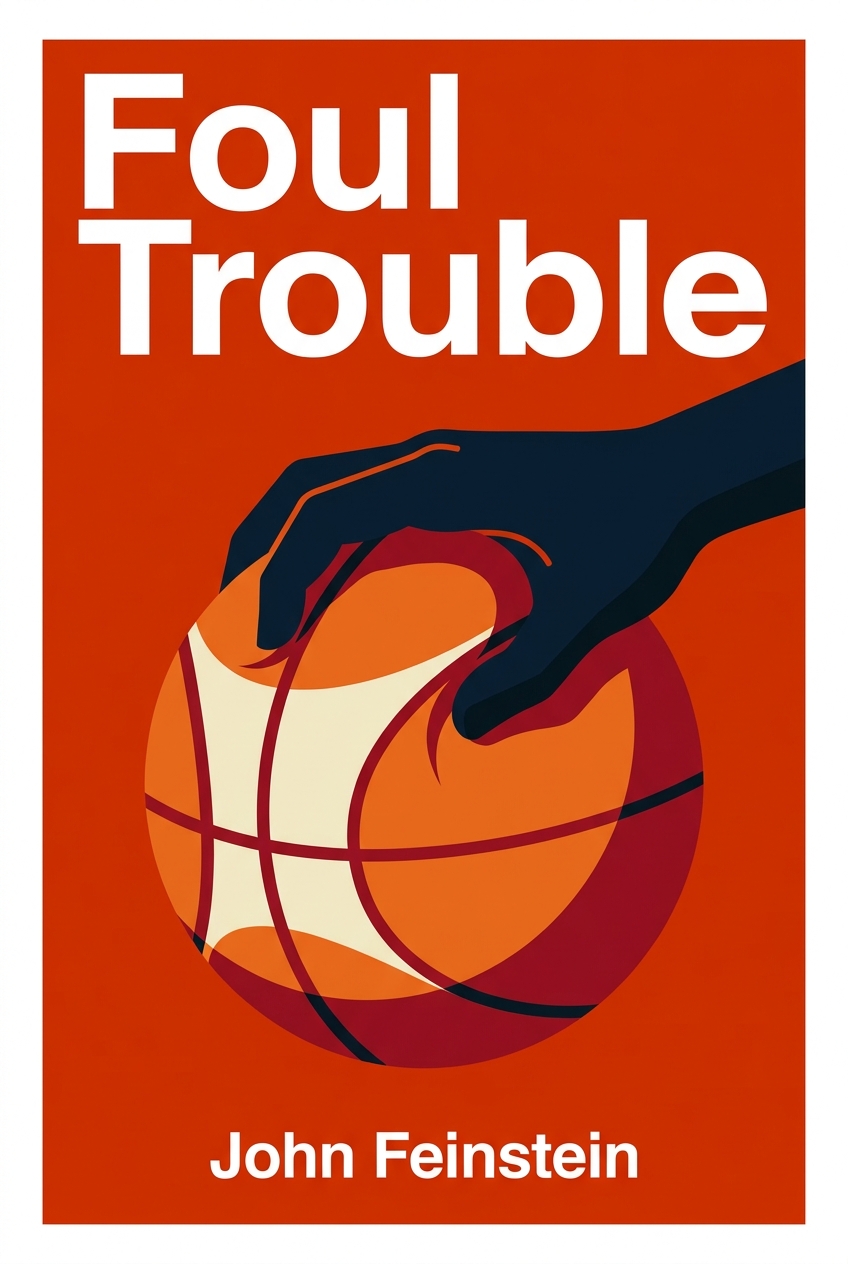
Foul Trouble book cover

The Script

At the highest level of amateur basketball, there are two distinct sounds. The first is public and deafening: the squeak of sneakers on polished hardwood, the roar of a packed stadium, the swish of a perfectly shot three-pointer at the buzzer. It’s the sound of glory, of scholarships earned and championships won. But there’s a second sound, one that’s much quieter and harder to hear. It’s the whisper of a shoe company representative in a hotel lobby, the rustle of an envelope passed under a diner table, the low murmur of a phone call promising a kid's family a new car. One sound is the game; the other is the business that threatens to consume it.

These two sounds create an impossible tension for the country's most talented young players. They are told to focus on the game, to love the sport, to represent their schools with honor. Yet, they are constantly surrounded by the other sound—the one that offers life-changing money and security, but at the risk of their eligibility and their futures. Navigating this world is a high-wire act without a net, where one misstep, one foul move off the court, can end a career before it ever truly begins.

That tension is precisely what veteran sports journalist John Feinstein has spent his career documenting. Having covered the inner workings of college sports for decades for outlets like The Washington Post and NPR, he grew fascinated and troubled by the immense pressure placed on teenage athletes. He saw firsthand how the intense, often illicit, world of recruiting forced 17-year-olds to make decisions that would stump seasoned adults. Feinstein wrote Foul Trouble to pull back the curtain and expose the complex moral compromises and temptations that define the path from high school stardom to the bright lights of the NCAA tournament.

Module 1: The Anatomy of the Hunt

The moment a young athlete shows elite potential, the hunt begins. It’s a relentless, all-encompassing flood of attention that turns a teenager's life into a public spectacle. The book's central character, Terrell Jamerson, is the number one high school player in the country. His breakout season attracts more than just college coaches. Suddenly, men in expensive suits appear at his games. They are agents, shoe company reps, and scouts known as "bird dogs." These are people who identify talent for others.

This leads to the first core insight. The recruitment of a top prospect is a full-spectrum assault on their attention and privacy. Feinstein describes it as a deluge. Terrell is bombarded with phone calls, emails, texts, and social media messages. The goal is to create constant contact. This overwhelming presence is designed to normalize the influence of outsiders. It blurs the line between genuine interest and predatory pursuit.

This brings us to the next point. The system creates a culture of "package deals" to gain leverage. Recruiters will target an athlete's inner circle to influence the star player. Terrell's best friend and teammate, Danny Wilcox, is a solid point guard. He's good enough for a Division III school. But suddenly, top-tier programs like Kentucky and UCLA start sending him recruitment letters. Why? Because he is Terrell’s best friend. The strategy is simple. Offer the friend a scholarship he might not otherwise get. This makes the star player more likely to join the program. It extends even further. Danny’s father, a respected high school coach, starts getting calls about assistant coaching jobs at major universities. Everyone around the star player becomes a pawn in the game.

And here's the thing. This environment makes trusted adults absolutely essential. Young athletes require a protective barrier of mentors who prioritize their well-being over personal gain. Coach Wilcox, Danny's father, recognizes the danger. He creates his own summer league team just to keep a close eye on Terrell. He is transparent with Terrell, even showing him the job offers he has received. He warns Terrell that many people see him as a ticket to getting rich. They see him as a commodity. The coach tells him a cautionary tale about a former prospect whose career ended with an injury. Once he was hurt, all his new "friends" disappeared. This stark warning frames the entire book. Without a trusted guide, a young athlete is completely exposed.

Module 2: The High-Stakes World of Showcase Camps

Now, let's turn to the summer camp circuit. These events are the main marketplace for talent. They are highly commercialized, pressure-filled showcases with millions of dollars at stake. The camp Terrell and Danny attend is sponsored by "Brickley Shoes." The name of the camp is the "School Comes First" Camp, a title Feinstein calls laughable. Upon arrival, players are handed bags overflowing with branded gear. Their jerseys are billboards for the shoe company.

This environment reveals a crucial truth. Elite amateur camps are commercial enterprises disguised as developmental opportunities. The entire event is structured for maximum exposure. Twenty teams play seven games in four days. The championship will be televised on a national sports network. The stands are packed. One section is reserved entirely for college coaches. Famous figures like Mike Krzyzewski and Roy Williams are there, wearing their school colors, turning the gym into a live-action trading floor. The pressure is immense.

This intense environment also forces a distinction between talent and skill. A former coach, Frank Sullivan, gives a speech to the players. He explains that coaches are not looking for flashy dunks. They already know who the great athletes are. Coaches at showcases value basketball IQ and team-oriented fundamentals over raw athleticism. They want to see players who help on defense, set good screens, and find the open man. This is the difference between being an "athlete" and being a "basketball player." Terrell Jamerson is the athlete, gifted with effortless physical talent. Danny Wilcox is the basketball player, a coach's son with a high basketball IQ who makes his team better. The camp is where these two styles are tested.

But flip the coin. The pressure of the showcase often brings out the worst in players. The high-stakes environment breeds conflict and exposes fragile egos. During a key game, the tension boils over. Terrell’s teammate, Jay Swanson, loafs on defense after a missed shot. He is focused on his own performance, not the team's. Frustrated, Danny intentionally throws a hard pass that hits Swanson in the face. A fistfight breaks out on the court. This is what happens when individual ambition, fueled by the pressure to impress, clashes with the discipline of teamwork. It’s a reminder that these are still teenagers, operating in an adult-driven, high-pressure world.

Read More