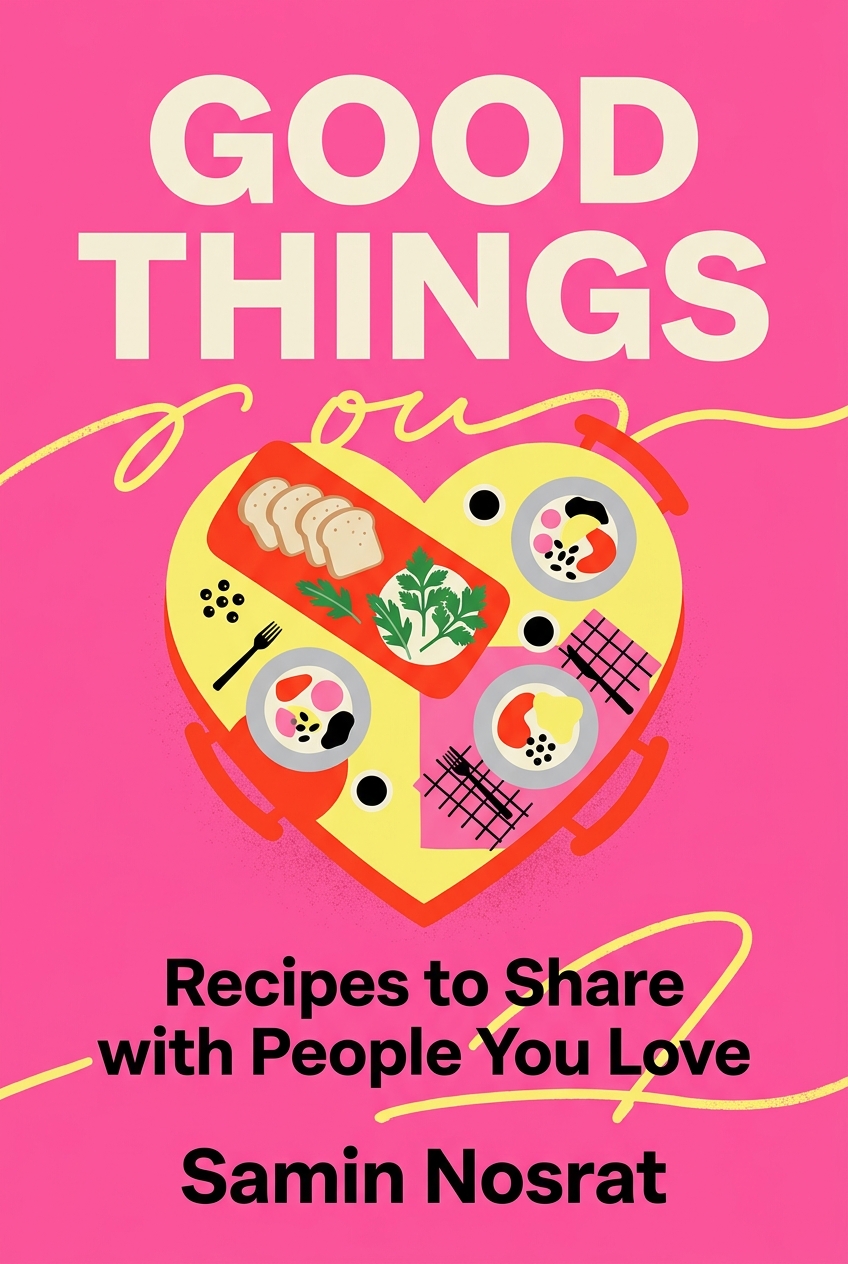
Good Things
Recipes to Share with People You Love
What's it about
Tired of complicated recipes that leave you stressed and your kitchen a mess? Discover how to make cooking for others a joyful, intuitive act of love. This guide unlocks the secret to creating delicious, shareable dishes with simple, high-quality ingredients and techniques you can master tonight. You'll learn Samin Nosrat's philosophy of "good things"—from the perfect pantry staples to seasonal produce—that form the foundation of every memorable meal. Move beyond rigid instructions and find the confidence to improvise, adapt, and cook from the heart for the people you care about most.
Meet the author
Samin Nosrat is the James Beard Award-winning author and Netflix star of Salt, Fat, Acid, Heat, celebrated for teaching millions how to cook with confidence. A student of Alice Waters at Chez Panisse, her career is built on the belief that cooking is a universal act of care. Good Things distills this philosophy into joyful, accessible recipes designed to bring people together, reaffirming that the most essential ingredient in any dish is love.
Opens the App Store to download Voxbrief

The Script
Every year, millions of cookbooks are sold, each promising a new path to a perfect meal. They are filled with rigid instructions, precise measurements, and glossy photos of a flawless final product. Yet, for many, the gap between the page and the plate remains a chasm of frustration. The kitchen, a place meant for nourishment and connection, becomes a stage for anxiety. We follow the script, buy the specific, often expensive, ingredients, and hold our breath, hoping the magic will happen. When it doesn't—when the sauce is bland, the chicken dry, or the vegetables limp—the blame feels personal. The recipe was the law, and we failed to uphold it. This cycle repeats, leaving us with a shelf of beautiful books but a persistent feeling of inadequacy, convinced that good cooking is an innate talent reserved for a select few.
This very frustration is what drove chef and writer Samin Nosrat to rethink the entire language of cooking. After years in the demanding kitchens of world-class restaurants, including the famed Chez Panisse, she noticed that the best chefs didn't rely on an endless library of recipes. Instead, they shared a deep, intuitive understanding of four key elements that made food delicious, every single time. She realized that by teaching home cooks these same core principles—the fundamentals of how to balance flavors, control temperature, and build texture—she could free them from the tyranny of the recipe. Her goal was to give people the confidence and knowledge to finally cook with joy and instinct, turning their own kitchens into places of creativity and consistently good things.
Module 1: The Philosophy of Good Things
This book is a new way of thinking about food, time, and what it means to live a good life. Nosrat argues that our most valuable resources are our time and our attention. Cooking and sharing a meal become profound ways to invest this currency.
The core idea is to prioritize meaningful experiences over productivity and perfection. Nosrat shares her own shift away from measuring self-worth by professional output. She found greater meaning in simple, shared acts, like preparing a meal for people she loves. This is about the act of giving your focus to the process and to the people at your table. The food becomes a vessel for generosity.
Building on that idea, Nosrat suggests we treat recipes as flexible guides, not rigid rules. A recipe is more like sheet music for a musician. The notes are there, but every performance is unique. Countless variables, from the brand of your olive oil to the humidity in your kitchen, will change the outcome. These differences are part of the beautiful, living process of cooking. This mindset frees you from the anxiety of getting it "wrong" and empowers you to trust your own senses.
Ultimately, this leads to a powerful realization. Cooking is a practice that creates meaning and connection. A simple cabbage slaw, shared during a difficult time, became a ritual of joy for Nosrat. A recipe for chicken soup, developed during a period of personal struggle, became a source of deep comfort. The author endorses the view that recipes are rituals promising transformation. Their true value is in the stories they carry, the memories they create, and the community they build when shared and passed down.
And here's the thing. This philosophy has a practical side. It means letting go of the pressure to perform. Nosrat describes her own home meals as extraordinarily simple. Think boiled broccoli with good olive oil, or a bowl of rice with a fried egg. This is about redefining your standards around nourishment, comfort, and personal satisfaction. True hospitality is about shared presence. The goal is to spend less time stressing in the kitchen and more time connecting with your guests.
Module 2: The Building Blocks of Flavor
Once you embrace the philosophy, the next step is understanding the practical elements that make food taste great. Nosrat breaks this down into simple, powerful components. It’s about mastering the fundamentals.
First, ingredient quality and specificity are foundational to flavor. This is about understanding how different ingredients behave. For example, the book specifies Diamond Crystal kosher salt. Why? Because its flaky texture has a different weight-to-volume ratio than other salts. Using the wrong salt without adjusting can make a dish inedible. Similarly, a good, fresh extra-virgin olive oil with a recent harvest date will taste vibrant, not rancid. Even the way you grate Parmesan matters. A fine rasp grater creates a fluffy pile that melts differently than the coarse shreds from a box grater. Paying attention to these details makes a noticeable difference.
Next up, thoughtful preparation enhances texture and visual appeal. We eat with our eyes first. The way you cut an ingredient can completely change the experience. For instance, Nosrat introduces the "roll-cut" for carrots. You cut the carrot at an angle, roll it a quarter turn, and cut again. This creates more surface area for browning and a more interesting shape. Another key insight is the power of tearing instead of cutting. Tearing bread for croutons or lettuce for a salad creates rough, craggy edges. These nooks and crannies catch dressing and provide a better texture than a clean, straight cut.
From this foundation, we learn that specialized tools can yield surprisingly superior results. You don't need a kitchen full of gadgets, but a few key items are game-changers. A rasp grater, often called a Microplane, is perfect for zesting citrus without hitting the bitter white pith. It also creates fluffy clouds of garlic or hard cheese. Another unexpected hero is nonstick cooking spray. The aerosolized fat coats baking pans more evenly than poured oil, which is a secret to preventing cakes and focaccia from sticking. These are elegant solutions to common problems.
And it doesn't stop there. Ethical and sustainable sourcing elevates the entire experience. For certain ingredients, how they are produced matters deeply. The book highlights vanilla, an intensely laborious crop threatened by climate change. It encourages sourcing from purveyors who use regenerative agriculture and support fair labor. The same applies to chocolate, an industry with a history of exploitation. Becoming mindful of where your food comes from adds another layer of meaning to the act of cooking. It connects your kitchen to a larger global story.