All Books
Self-Growth
Business & Career
Health & Wellness
Society & Culture
Money & Finance
Relationships
Science & Tech
Fiction
Topics
Blog
Download on the App Store

Ground Zero

13 minAlan Gratz

What's it about

How do you find hope when your world is shattered by tragedy? This gripping story follows two kids, separated by two decades but united by the long shadow of war. Discover how their parallel journeys through the chaos of 9/11 and the war in Afghanistan will change your perspective on courage and resilience. You'll experience the fall of the Twin Towers through the eyes of Brandon, a nine-year-old boy trapped inside, and feel the dust and fear of a war-torn Afghan village with Reshmina. As their stories intertwine in a stunning twist, you'll uncover a powerful message about how human connection can triumph over even the darkest moments in history.

Meet the author

Alan Gratz is a New York Times bestselling author renowned for his gripping, well-researched historical fiction that makes complex events accessible to young readers. His dedication to telling powerful stories stems from a deep belief that understanding the past is crucial to shaping a better future. Gratz travels extensively, speaking with students and survivors to capture the human heart of history, bringing authenticity and emotional depth to novels like Ground Zero and his many other acclaimed works.
Listen Now

Opens the App Store to download Voxbrief

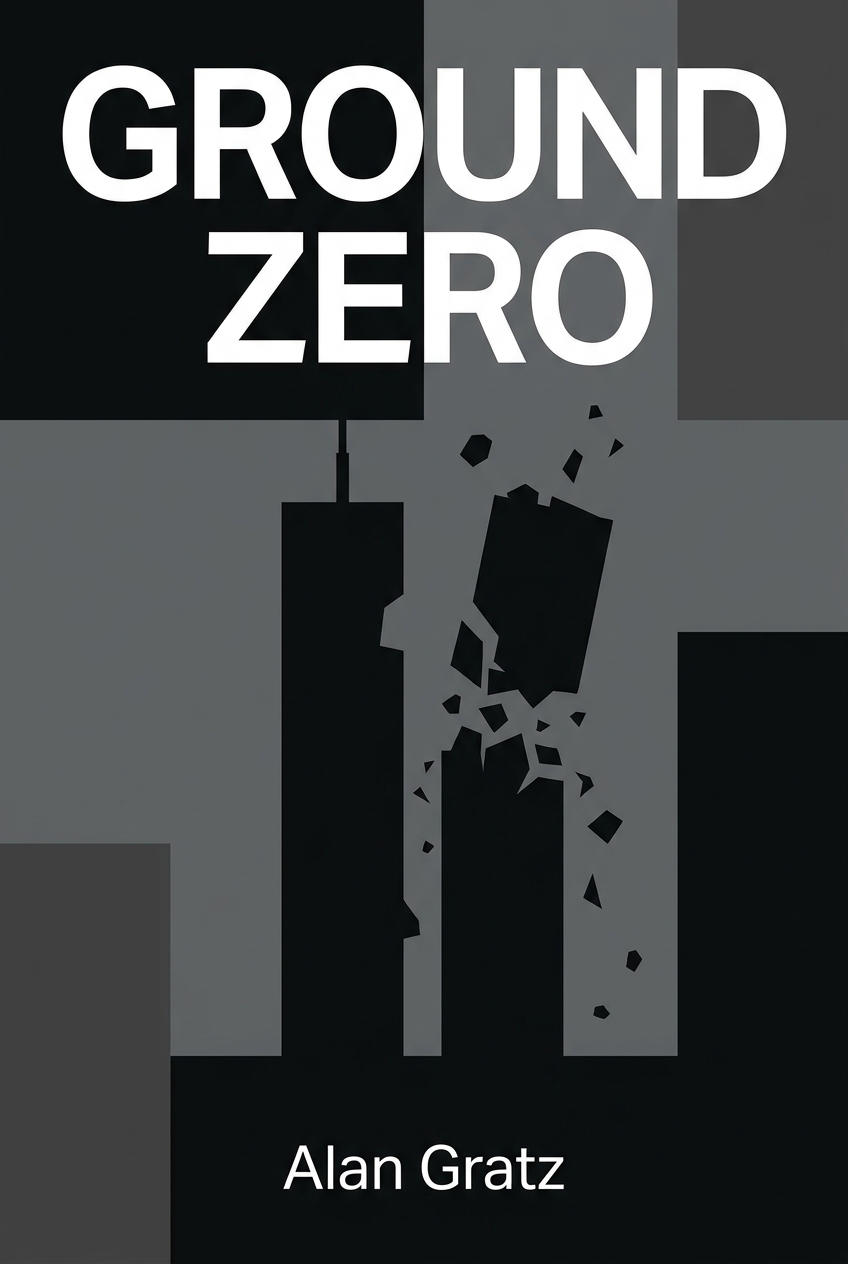
Ground Zero book cover

The Script

On a construction site, two workers stand before a pile of bricks and a stack of steel beams. One sees only the raw materials—the weight of the bricks, the sharp edges of the steel, the sheer physical effort required to lift and place them. His focus is on the next hour, the next wall, the immediate, exhausting task. The other worker sees the same pile but perceives a future hospital wing. He sees the steel as the skeleton that will support rooms where lives are saved. The bricks are the walls that will offer quiet and comfort to recovering patients. Both workers are looking at the same present, but one is trapped by the immediate physical reality, while the other is connected to a future purpose that gives the labor meaning.

This profound difference in perspective—seeing an event as either an isolated, crushing moment or as part of a longer, interconnected story—is at the heart of Alan Gratz’s work. Having written numerous historical fiction novels for young adults, Gratz noticed a gap in understanding when it came to the defining event of the 21st century. He realized that for a new generation, 9/11 was history, not memory. He wanted to write a book that connected the falling towers to the lives still being shaped by their collapse two decades later, bridging the gap between a moment of impact and its lasting, global echoes.

Module 1: The Anatomy of Crisis—Survival and Human Connection

The book opens on two seemingly ordinary days. Brandon is in New York, suspended from school and tagging along with his dad to the Windows on the World restaurant. Reshmina is in Afghanistan, doing her morning chores and dreaming of becoming a teacher. Then, chaos erupts. A plane hits the North Tower. Soldiers raid Reshmina's village. In both timelines, normalcy shatters in an instant.

The first critical insight from these moments is that in a crisis, survival depends on immediate, resourceful collaboration. When the elevator Brandon is in lurches to a halt, the strangers inside don't panic. They organize. They use damp napkins to filter smoke. They use a butter knife to pry at the drywall. It’s a messy, desperate effort, but it's a collective one. This demonstrates that when formal systems fail, informal networks of cooperation become the primary tool for survival. People who were strangers moments before become a team, united by a single, overwhelming goal.

This leads to a related point. Shared trauma creates instant, powerful bonds that override social norms. After Brandon helps rescue the group from the elevator, a woman he just met wraps him in a powerful hug. He notes that ordinarily, this would feel strange. But in that moment, it feels natural. The shared brush with death dissolves the usual barriers between people. Their collective relief forges a connection far deeper than a casual acquaintance. This pattern repeats throughout the book. Strangers offer water in a smoky stairwell. They share a working cell phone. These small acts of generosity are essential threads in the social fabric that holds people together when everything else is falling apart.

But what happens when you’re utterly alone? The book suggests that in moments of extreme isolation, the memory of human connection becomes a powerful motivator. Brandon, separated from his father, is driven by a single, powerful thought: "We’re a team." This mantra, a phrase he and his dad used after his mother’s death, becomes his reason to keep climbing the stairs, to keep moving through the smoke and debris. His father isn't physically there, but the strength of their bond fuels his resilience. He is trying to reunite his team. This shows that our connections to others provide an internal reservoir of strength, one we can draw upon even when we are physically alone.

So what does this mean for us? It suggests that the networks we build in times of stability are the very resources we will rely on in times of crisis. The strength of our teams, both personal and professional, is tested when they are impossibly hard.

Read More