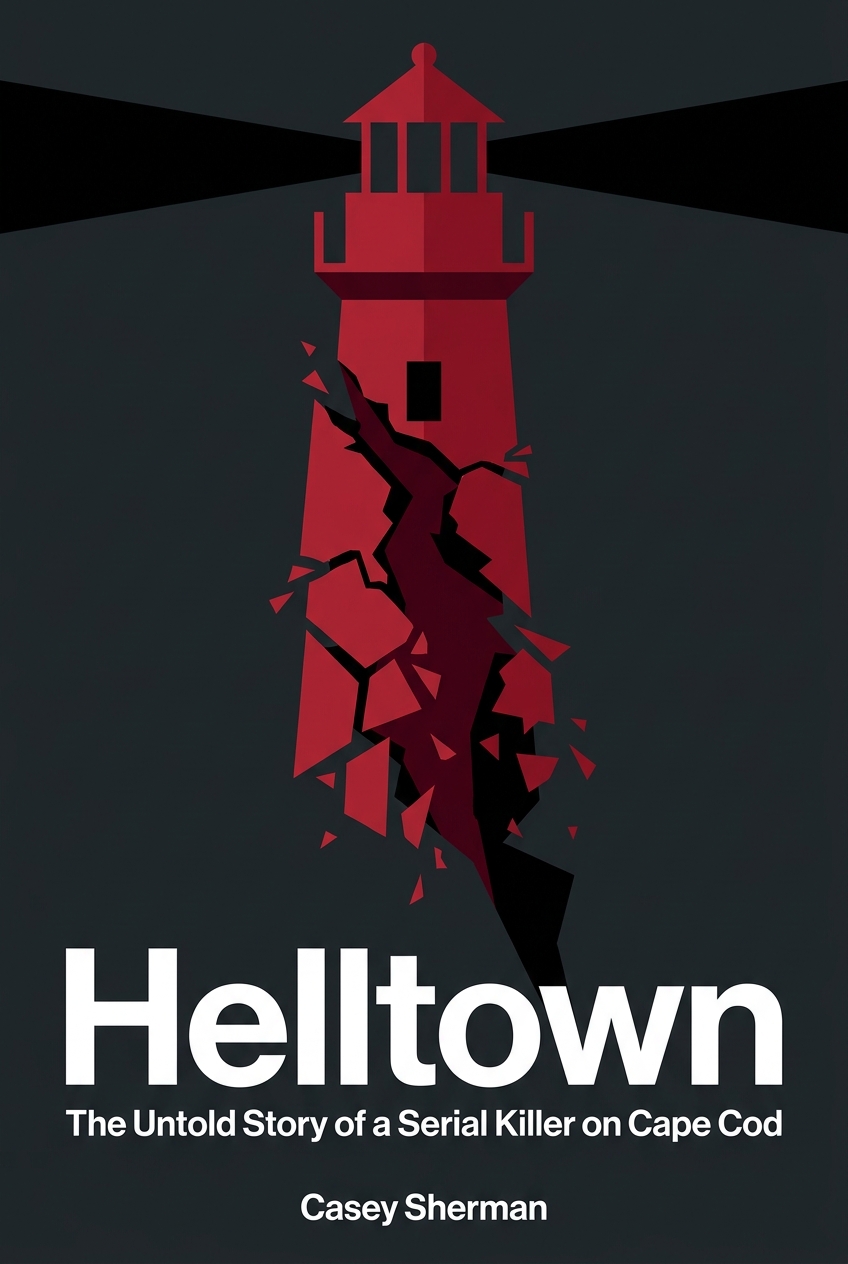
Helltown
The Untold Story of a Serial Killer on Cape Cod
What's it about
What if the idyllic paradise you call home was secretly a serial killer's hunting ground? Uncover the chilling true story of Tony Costa, a charismatic but deadly figure who turned the peaceful counter-culture scene of 1960s Cape Cod into his personal playground of horror. You'll follow the gripping investigation as two young, determined writers, Kurt Vonnegut and Norman Mailer, find themselves entangled in the race to unmask the killer. Discover how Costa's charm concealed a terrifying darkness and how a community's innocence was shattered by the gruesome secrets buried in the sand.
Meet the author
Casey Sherman is a New York Times bestselling author and award-winning journalist whose work has been adapted into major motion pictures like The Finest Hours and Patriots Day. A native of Cape Cod, Sherman grew up hearing whispers of the Tony Costa murders, a local legend that haunted the idyllic landscape of his youth. This personal connection drove him to spend years investigating the case, finally uncovering the full, terrifying story of the serial killer who turned a seaside paradise into a helltown.
Opens the App Store to download Voxbrief

The Script
The local hardware store is a town’s unofficial archive. One man buys a single, specific type of bolt, his face a mask of concentration. A woman, clutching a list, methodically fills her cart with everything needed to build a new garden bed, a project of determined hope. Then there's the other man. He doesn’t have a list. He buys a shovel. He buys rope. He buys a roll of thick plastic sheeting. Each item, on its own, is mundane, a tool for a weekend project. But together, in the same cart, they tell a story—or at least, they hint at one. The clerk who rings him up sees a transaction, a simple exchange of money for goods. He doesn’t see the dark blueprint forming in the customer's mind. He doesn’t know that these ordinary objects will soon become instruments in a story that will permanently stain the town’s idyllic reputation.
That chilling disconnect between a town’s sunny, public face and the dark projects brewing just beneath the surface is what drew veteran journalist Casey Sherman to the story of Provincetown, Massachusetts. Sherman, a bestselling author known for his immersive investigations into true crime and historical events, grew up hearing whispers about what happened on the Cape during the so-called Summer of Love. While the rest of the world saw a bohemian paradise of artists and hippies, locals remembered a season of terror. He discovered that the official narrative had smoothed over the horrifying details, leaving behind a story that was both incomplete and far less disturbing than the truth. Sherman wrote Helltown to excavate that truth, piecing together the mundane purchases, the missed signals, and the terrifying reality of a killer who turned a beautiful landscape into his personal hunting ground.
Module 1: The Predator and His Playground
The story begins in the late 1960s on Cape Cod. It was a time of immense cultural upheaval. Young people were flocking to places like Provincetown, or "Ptown," seeking freedom from their parents and the conventions of society. They were drawn to the burgeoning hippie scene, a world of art, music, drugs, and sexual liberation. But this transient, trusting environment created the perfect hunting ground for a new kind of predator.
Enter Tony Costa. He was a local carpenter, handsome, intelligent, and impossibly charismatic. To the disaffected youth of Ptown, he was a guru. They called him "Sire." He seemed to be their connection to a world of experience and philosophy they craved. Costa’s charisma was a carefully constructed mask for a budding psychopath. He was a predator using the open, unguarded nature of the counterculture to his advantage. He exploited the very freedom these young people came to find. He offered drugs, conversation, and a sense of belonging. In return, he took their trust, and for some, their lives.
So how did he operate? Costa's method was rooted in manipulation. He used sophisticated language and intellectual references, comparing himself to Cary Grant or quoting philosophers to charm his victims. He presented himself as a protector. He once told a young woman named Christine Gallant, who showed signs of abuse, that if her boyfriend ever touched her again, he would "teach him something he'll never forget." This created a powerful illusion of safety.
What makes this so chilling is how the social environment enabled him. The disappearance of young people, especially women, was often dismissed. When Sydney Monzon went missing, her boyfriend wasn't concerned. He figured she was just sleeping on someone's couch. The local police chief agreed. He believed she had probably joined a "drug-fueled trip" and would be back when the drugs ran out. The era’s cultural chaos provided perfect cover for Costa’s crimes. The authorities were overwhelmed by the drug epidemic. They were focused on busting "mangy-haired hippies" for heroin, not chasing down missing persons reports they viewed as voluntary runaways. This indifference gave Costa the time and space he needed to operate without scrutiny.
It gets darker. Costa's psychological landscape was a fractured mess. He developed a violent alter ego he named "Cory." Cory was the voice that urged him to kill. During intimate moments, Costa would have internal conversations, pleading with Cory not to harm the woman he was with. This brings us to a key insight. Costa's violence was fueled by a ritualistic blend of drugs, sexual fantasy, and a macabre obsession with taxidermy. He carried a taxidermy manual. He practiced on small animals. He saw it as a guide for his work. After murdering his victims, he would dismember their bodies with a chilling, methodical precision, as if following a set of instructions. He was collecting specimens for his own depraved project.