All Books
Self-Growth
Business & Career
Health & Wellness
Society & Culture
Money & Finance
Relationships
Science & Tech
Fiction
Topics
Blog
Download on the App Store

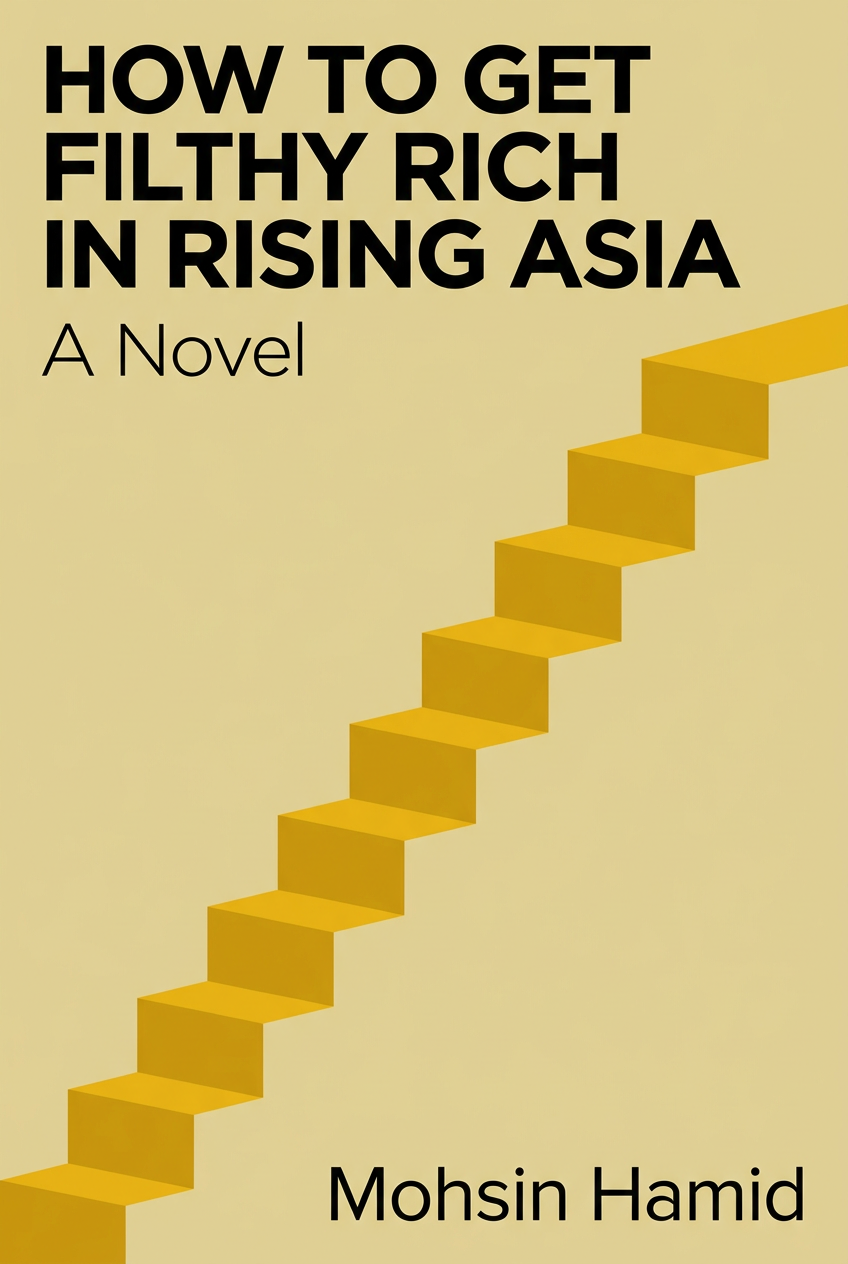
How to Get Filthy Rich in Rising Asia

A Novel

15 minMohsin Hamid

What's it about

Ever wonder how the super-rich in developing nations build their empires from scratch? This satirical guide, disguised as a novel, reveals the unwritten rules of climbing from a dirt-poor village to the pinnacle of corporate power in a rapidly changing world. You'll follow the journey of an unnamed protagonist, learning the ruthless tactics and moral compromises required for success. From boiling water to cornering markets and dealing with corrupt officials, discover the seven essential steps to acquiring immense wealth—and the personal cost that comes with it.

Meet the author

Mohsin Hamid is a Booker Prize-shortlisted novelist whose work, including The Reluctant Fundamentalist, has been translated into over thirty-five languages and adapted for film. Born in Pakistan and educated at Princeton and Harvard, his own transatlantic journey informs his sharp, satirical explorations of globalization, ambition, and identity. This unique perspective allows him to masterfully dissect the seismic social and economic shifts of modern Asia, giving his fiction a profound and authentic voice that resonates with readers worldwide.
Listen Now

Opens the App Store to download Voxbrief

How to Get Filthy Rich in Rising Asia book cover

The Script

The self-help book is a promise built on a lie. It offers a universal key—a fixed set of rules—for a lock that changes shape in your hand. We follow the seven habits, the four-hour workweeks, the subtle arts of not caring, hoping to arrive at a destination. But what if the destination itself is a mirage, and the real journey is about mastering the art of becoming, of shedding one self for another as circumstances demand? What if the most valuable skill is learning to thrive in a world where the rules are constantly being rewritten by someone else, for someone else? This reflects a deeper reality. The path to success is a series of costumes you must learn to wear, and more importantly, to discard before they become your skin.

This very tension—between the formulaic promise of the West and the fluid, often brutal, reality of the East—is what compelled Mohsin Hamid to write this book. Having lived a life split between Pakistan, the UK, and the US, Hamid witnessed firsthand how the static, self-help narrative failed to capture the dynamic, often contradictory, journey of ambition in a place like modern Asia. He chose the second-person 'you' and the structure of a self-help guide to subvert the genre. By forcing us into the shoes of an anonymous striver, he uses the architecture of a promise to reveal a more profound truth about the relentless, identity-shattering performance required to simply survive, let alone get rich.

Module 1: The Foundation — Escape and Education

The book's first lesson is stark. To get rich, you must first escape your past. For the protagonist, this means a physical journey from a poor, rural village to a chaotic, modern city.

This is a brutal transition. The village is a place of hardship. The water is contaminated. Social hierarchies are rigid and oppressive. The protagonist’s own father sees farming as "backbreaking toil." It’s a place where you trade your limited time on earth for just enough to continue living. This reality provides the powerful push for migration. The first major insight is clear: Recognize that radical change often requires a complete break from your environment. You can't build a new future while tethered to the constraints of the past. The move to the city is a leap across millennia, from mud huts to concrete jungles, and it fundamentally redefines everything, including the family unit.

Once in the city, the next critical step is education. But the education system portrayed is anything but ideal. It's corrupt, under-resourced, and violent. The protagonist's school has fifty students and only thirty stools. His teacher's main pedagogical tool is a "distracted chant" and physical punishment. This leads to a second, counterintuitive insight: True education is often a process of self-learning amidst broken systems. The protagonist's real education comes from observing, surviving, and eventually, learning to navigate the city's complex social and economic landscape. He learns more from his job delivering pirated DVDs than he does from his resentful teacher.

This brings us to a crucial point about agency. Even in a world of overwhelming constraints, small choices matter immensely. When the protagonist is sick as a boy, his father asks if he will be alright. The boy, sensing the weight of the moment, lies and says "yes." This single act of asserted will convinces his father to risk everything and move the family. And it doesn't stop there. The book argues that all reading, from dense foreign novels to pulp fiction, is a form of self-help. It’s an attempt to understand the world or simply to pass the time, which is the very stuff a self is made of. The ultimate lesson here is that personal agency begins with the stories you tell yourself and the information you consume. You must actively seek knowledge and make choices, even when your power seems insignificant. Your trajectory is a product of your responses to your circumstances.

Module 2: The Hustle — Forging an Identity in the Urban Jungle

Now we're moving into the next phase. The protagonist is in the city, educated by the streets. This is the hustle. It’s about finding your footing, building capital, and learning the unwritten rules of the game.

The first rule is about relationships. The book is unsentimental here. It suggests that in the ruthless pursuit of wealth, you must avoid idealists and understand that love can be an impediment. The protagonist falls for a "pretty girl" in his neighborhood, but their story is a case study in pragmatism. She is ambitious, using her relationships as transactional steps to escape poverty. Her involvement with a marketing manager is for cash and career promises. She views the protagonist as a friend, but her ambition comes first. He, in turn, is distracted by his infatuation, spending emotional energy that could be directed toward his goals. The lesson is brutal but clear: single-minded focus is a powerful asset. Idealism and emotional attachments can be liabilities that dilute your ambition.

So, if not love, what should you focus on? Building capital. The next insight is to leverage information and cultural knowledge as a currency. The protagonist’s job at a pirated DVD shop is a perfect example. It's an informal, precarious gig. But it gives him something invaluable: knowledge about films. This cultural capital becomes a bridge. It allows him to connect with the pretty girl and, more broadly, to understand the aspirations and desires of a class he hopes to join. He learns what people want, what they watch, and what they dream about. In a rising economy, understanding the cultural landscape is as important as understanding the financial one.

Building on that idea, the book introduces the concept of apprenticeship. Formal education failed him, so he seeks out a "master," a successful businessman. This is a pivotal step. True mastery is learned through apprenticeship. He attaches himself to a mentor. He learns by observing, by doing, by absorbing the unwritten rules of commerce. He learns how to build rapport with suppliers by speaking their dialect. He learns how to handle expired goods by remarketing them, a morally gray but pragmatic lesson in market reality. This hands-on education is far more valuable than any degree for his specific goal of getting rich. It’s about adapting to the system as it is, not as you wish it to be. The city is a place where slums and luxury apartments exist side-by-side, and success requires navigating this messy, unequal reality with open eyes.

Read More