All Books
Self-Growth
Business & Career
Health & Wellness
Society & Culture
Money & Finance
Relationships
Science & Tech
Fiction
Topics
Blog
Download on the App Store

How to Survive Your Murder

12 minDanielle Valentine

What's it about

What would you do if you were the only witness to your own murder? This isn't just a hypothetical. For high school student Alice, it's a terrifying reality. After being stabbed at a Halloween party, she wakes up in the hospital, haunted by the ghost of her murdered sister. Now, Alice has a choice: move on to the afterlife or relive the day of her murder over and over until she can identify her killer. You'll follow her desperate race against time as she navigates a web of secrets, lies, and suspects to unmask the murderer before they can strike again.

Meet the author

Danielle Valentine is the USA Today bestselling author of multiple thriller and horror novels for teens and adults, with her work translated into dozens of languages. A lifelong devotee of the slasher genre, she wrote How to Survive Your Murder as a love letter to the scary movies she has always adored. Her passion for classic horror tropes and suspenseful storytelling informs her unique ability to craft terrifying, page-turning mysteries that keep readers guessing until the very last page.
Listen Now

Opens the App Store to download Voxbrief

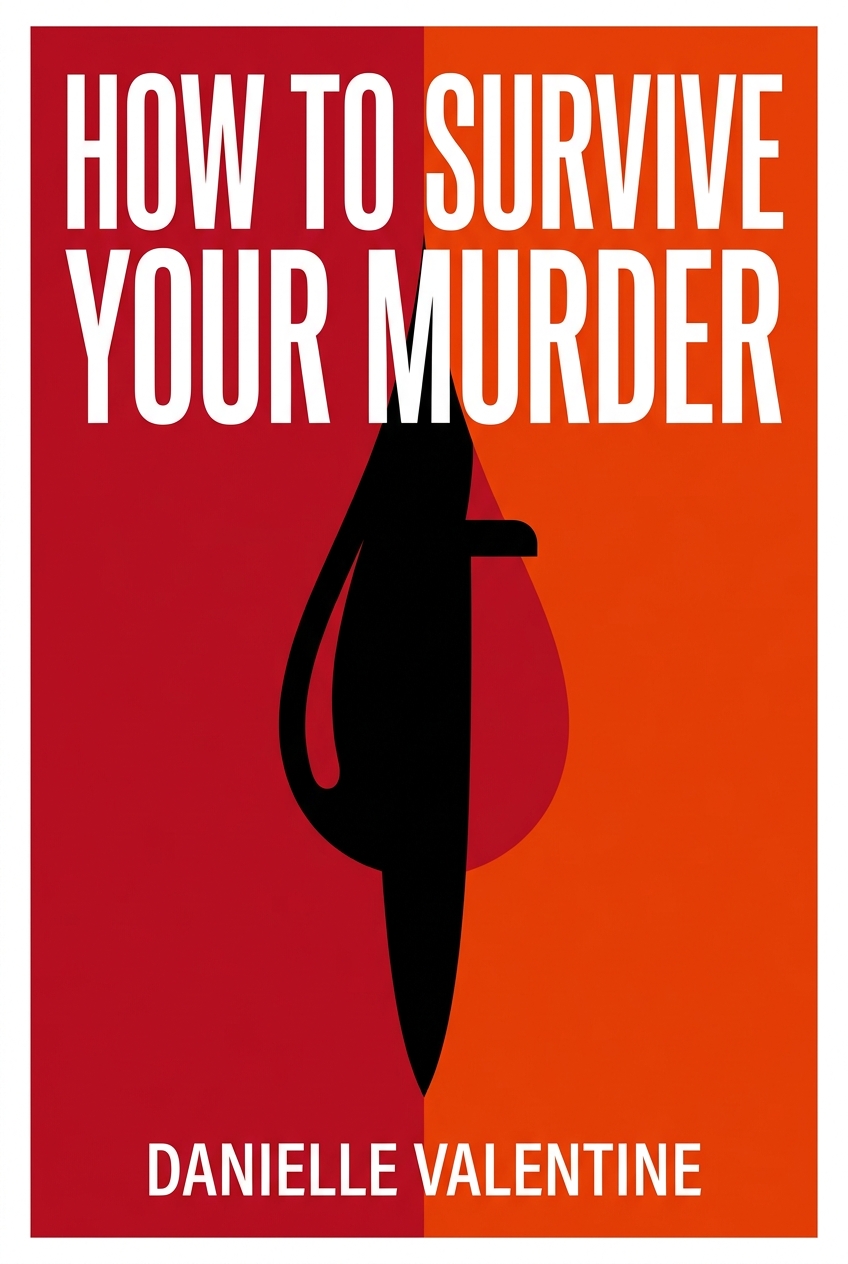
How to Survive Your Murder book cover

The Script

You wake up in the back of an ambulance, a paramedic leaning over you, the siren wailing. The first question isn’t ‘What’s your name?’ or ‘Can you hear me?’. It’s ‘Who did this to you?’. Your mind is a fog, but a single, impossible memory surfaces: the glint of a knife, the face of the person holding it, the final, searing pain. You know who killed you. You know because you were there. Now, somehow, you're back, trapped in the hours leading up to your own murder, forced to relive your last day on Earth. Every detail is a clue, every conversation a potential motive. The only person you can’t ask for help is the one person you should be able to trust: yourself. You have one day to solve your own murder, or you'll die for good this time.

This high-stakes, time-bending premise sprang from a question that haunted author Danielle Valentine. A lifelong fan of true crime and slasher films, she noticed a troubling pattern: the stories always started after the girl was dead. The victim was a ghost, a series of flashbacks, a puzzle for others to solve. Valentine wanted to flip that script, to give the victim back her voice and agency, even from beyond the grave. Drawing on her experience writing for television and her love for twisty thrillers, she crafted a narrative that puts the reader directly inside the victim's frantic race against time, turning a familiar genre on its head by asking a simple, powerful question: what if the final girl got a second chance to be the detective?

Module 1: The Horror Trope as Reality

The story opens on Halloween night at a party in a corn maze. It's a scene straight out of a slasher film, and that's intentional. The protagonist, Alice, is a horror movie aficionado. She has spent her life studying the genre, believing its rules can offer a blueprint for survival. The core idea is that a deep understanding of fictional horror can be a tool for navigating real-world danger. Alice constantly analyzes her surroundings through this lens. She categorizes people as horror movie archetypes. She avoids dark basements and isolated fields. She believes that if you watch enough bad things happen on screen, you can learn to avoid them in real life.

This framework is immediately put to the test. A partygoer, Chloe, is brutally attacked by a figure in a mask wielding a chainsaw. The attack is a "true homage to The Texas Chainsaw Massacre," a line that blurs the boundary between cinematic reference and real-world violence. But here's the crucial distinction the book makes. Real trauma shatters the intellectual comfort of genre knowledge. When Alice sees the real aftermath of violence, her analytical mind falters. She notes that the tricks she uses to distance herself from on-screen gore don't work. The blood is jarringly real. The wounds are not rubbery. The horror is inescapable. Her friends, still steeped in a world of performance and pranks, initially dismiss her warnings, unable to believe that the fictional horror they celebrate has become real.

This leads to a critical insight. Survival is about managing paralyzing fear. As the night unfolds, Alice finds that her encyclopedic knowledge of horror films doesn't prevent her own body's betrayal. When confronted with the killer, she freezes. Her voice disappears. Her survival instincts shut down. The book powerfully illustrates that observing danger is fundamentally different from experiencing it. The theoretical "Final Girl" is brave and resourceful. The real person is often just terrified. This module sets the stage by establishing Alice's worldview, only to systematically dismantle it with the brutal reality of violence.

Read More