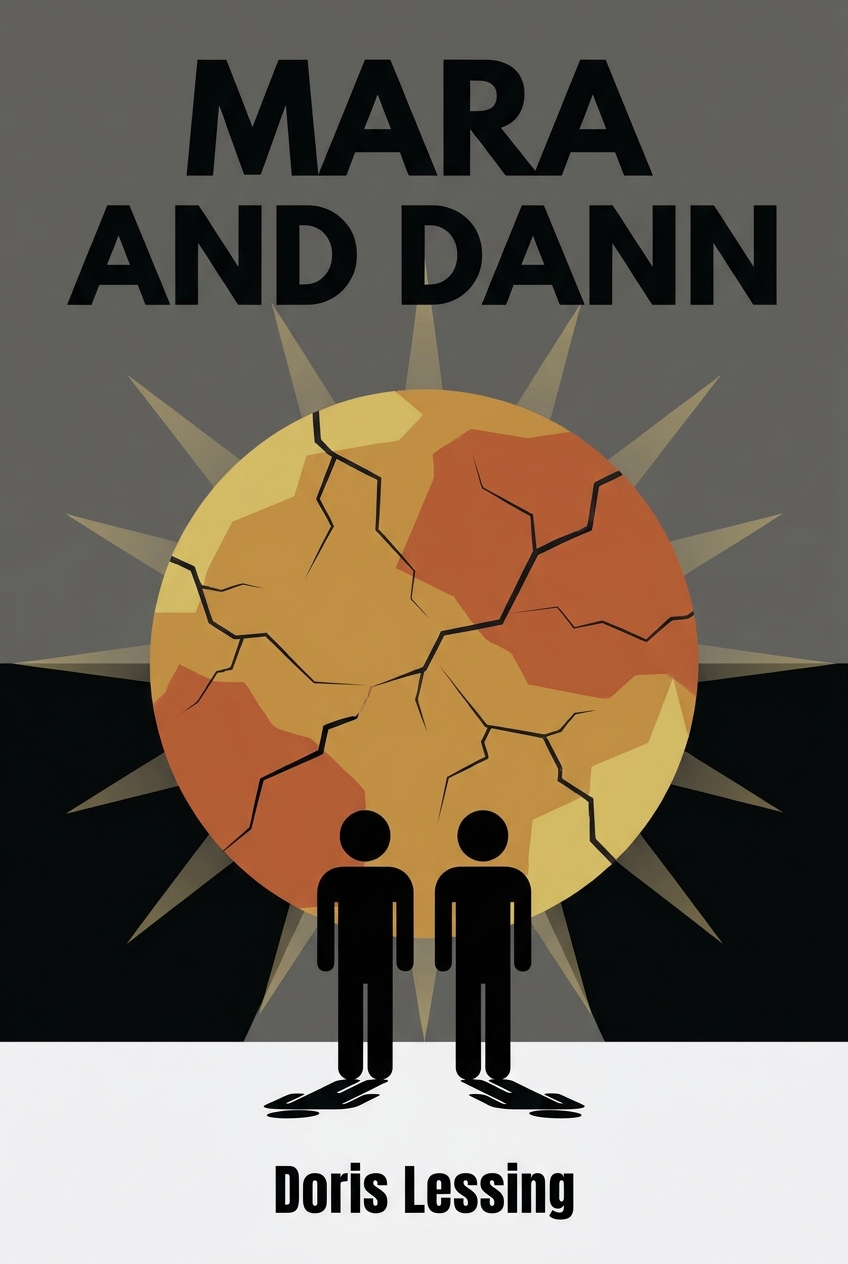
Mara and Dann
An Epic Post-Apocalyptic Adventure – Siblings' Quest Through Darkness and Drought
What's it about
What if the world you knew was gone, and your only hope was a memory you couldn't trust? Discover how two siblings, raised in isolation, navigate a future Earth ravaged by a new ice age, searching for a home they can barely remember. Join Mara and Dann on their epic journey across a parched, unrecognizable Africa. You'll learn how they survive brutal landscapes, outsmart dangerous warlords, and piece together the forgotten history of humanity's fall, all while protecting a secret that could either save them or tear them apart forever.
Meet the author
Doris Lessing, the 2007 Nobel Prize in Literature laureate, was celebrated as an epicist of the female experience who defined the 20th century with visionary power. Raised in Southern Rhodesia now Zimbabwe, her early life amidst stark landscapes and social upheaval profoundly shaped her perspective on civilization, survival, and humanity's future. This firsthand experience with cultural clashes and environmental challenges provided the fertile ground from which her speculative and deeply humanistic fiction, including Mara and Dann, would grow.
Opens the App Store to download Voxbrief

The Script
Two children stand on a parched escarpment, the sun a merciless eye in a bleached-white sky. Below them, a city of stone and mud brick is slowly being swallowed by sand. They know this place is called the Rock, and they know it is home, but the memories are thin, like heat shimmer on the horizon. An old woman, their protector, has just given them their final instructions: go north. North, she says, is where the water is, where things are green. They have a small bag of dried food, a sharpened stone, and a name for each other: Mara and Dann. They don't remember their parents, their lineage, or the cataclysm that turned their world to dust and ice. All they have is the command to walk and the fierce, instinctual need to keep the other alive.
This journey is a pilgrimage through the ruins of memory itself, set against a physical trek across a continent ravaged by a new Ice Age. As they travel, they encounter fragmented peoples, lost technologies, and echoes of forgotten histories. They are living artifacts of a collapsed civilization, carrying the ghost of a language no one else speaks and a history no one can corroborate. Their struggle to survive becomes a desperate attempt to piece together not just a future, but a past. They must learn what it means to be human when all the structures that define humanity—society, history, family—have been ground to dust.
This epic of survival and rediscovery came from the mind of Doris Lessing, a Nobel laureate who spent her life wrestling with the grand cycles of history and the intimate struggles of the individual. Having grown up in Southern Rhodesia , Lessing was no stranger to vast, unforgiving landscapes and the precariousness of civilization. She wrote "Mara and Dann" late in her career as a thought experiment about what remains when everything is taken away. It was her way of exploring the bedrock of human resilience, questioning what knowledge is essential for survival, and imagining how myths are born from the ashes of forgotten truths.
Module 1: The Psychology of Scarcity
The world of Mara and Dann is defined by what it lacks. Water, food, and safety are not givens; they are commodities to be fought for, rationed, and sometimes killed for. This constant, grinding scarcity fundamentally rewrites human psychology.
The first thing to go is sentimentality. Survival instinct overrides conventional morality. When Mara and her brother Dann are starving, they rob two travelers of their last food and water. They know it's a death sentence. But they eat. They drink. Later, on a desperate trek with other refugees, Mara watches a woman get eaten by a lizard and a child die of hunger. She feels a flicker of shock at her own cold indifference. The group simply moves on. Lessing shows us that in a world stripped to its studs, empathy becomes a luxury you can't afford. The only thing that matters is the next mouthful of water, the next calorie.
This leads to a profound shift in how people relate to each other. Trust becomes a tactical liability. In a refugee camp, Dann suggests the group huddle together for warmth and protection from predators. Most refuse. They prefer to stay in isolated family units, terrified that their neighbors will steal from them in the night. Every stranger is a potential threat. Every act of kindness is scrutinized for a hidden motive. This is a learned survival strategy. When your life is on the line, trusting the wrong person is a fatal mistake.
And here's the thing. Even when you survive, the experience leaves deep scars. Trauma becomes the currency of memory. Dann is haunted by nightmares of his past captivity. He thrashes and screams in his sleep, reliving moments of terror. Mara, in contrast, learns to numb herself. After leaving a community she had grown to care for, she describes her heart as a "bruise" but notes her eyes are dry. She has to consciously suppress her emotions to keep moving forward. For the survivors in this world, the past is a wound that never fully heals, a ghost that walks beside you every single day. The psychological toll of scarcity is about the parts of yourself you must kill to survive it.