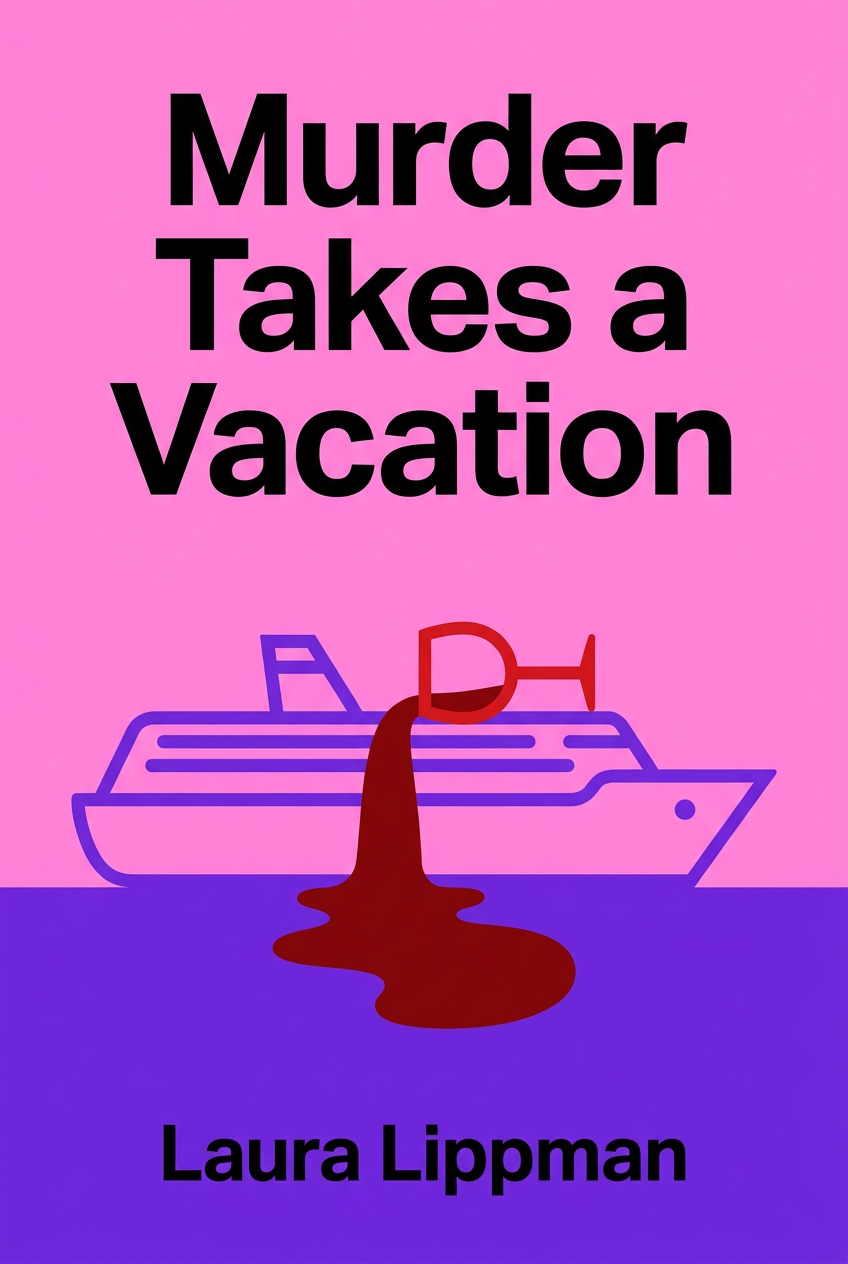
Murder Takes a Vacation
A Riveting Mystery of Deception, Art Theft, and Unexpected Romance on a Parisian Cruise—Perfect for Summer Reading
What's it about
Ready for a perfect summer escape that’s equal parts thrilling and romantic? Imagine yourself on a luxurious Parisian cruise, but instead of just sipping champagne, you're piecing together clues to a high-stakes art heist that has just turned into a murder investigation. This isn't your average vacation. You'll learn to spot the subtle tells of a master thief, navigate a web of deception among the elite passengers, and see if you can solve the murder before the ship docks. Uncover the secrets hidden beneath the glittering surface of Parisian high society.
Meet the author
Laura Lippman is a New York Times bestselling author and the winner of virtually every major prize in crime fiction, including the Edgar, Shamus, and Agatha awards. A former journalist for The Baltimore Sun, she brings two decades of experience as a reporter to her intricate plots and richly drawn characters. This deep understanding of investigation and human nature infuses her work with an unmatched realism, turning every novel into a captivating and immersive experience for her readers.
Opens the App Store to download Voxbrief

The Script
Think of two different family beach houses, sitting side-by-side on the same stretch of sand. The owners of the first house arrive with a flurry of activity. Coolers are unpacked, beach chairs are set up in a perfect line facing the waves, and a strict schedule of meals and activities is posted on the refrigerator. Their vacation is a project to be managed, a list of happy memories to be checked off. The owners of the second house arrive with a sigh of relief. They leave their sandy shoes by the door, let the kids run wild, and eat whenever they're hungry. Their vacation is an escape, a space to simply exist without a plan. Now, imagine a body washes up on the shore, right between these two properties. For the first family, the tragedy is a disruption, an infuriating variable that ruins their meticulously planned week. For the second family, it’s an intrusion, a terrifying tear in the fabric of their sanctuary. The event is the same, but the violation feels entirely different.
The murder shatters the fragile illusion of the perfect getaway, exposing the private anxieties simmering just beneath the surface of relaxation. It’s this tension—between the public performance of leisure and the private reality of human conflict—that fascinated author Laura Lippman. A former reporter for The Baltimore Sun, Lippman spent years observing how crime crashes into the middle of ordinary lives, revealing the fault lines we try to ignore. She wrote Murder Takes a Vacation to explore what happens when the carefully constructed fantasy of a holiday is confronted by the one thing no one can ever truly escape: the messy, unpredictable, and sometimes dangerous reality of other people.
Module 1: The Psychology of Invisibility
Mrs. Blossom begins her journey with a complicated relationship to being seen. As a former surveillance operative for a private investigator, she cultivated invisibility. It was her professional superpower. People just don't notice an older, unassuming woman. This is the foundation of her character.
But her journey immediately challenges this. A person's relationship with visibility is complex and often situational. One moment, Mrs. Blossom is flying business class for the first time. She feels the familiar shame of "flying while fat," expecting sighs and averted eyes. But then a kind stranger, Allan, treats her with charm and respect. He makes her feel seen. And she likes it. This simple act of kindness from a handsome stranger begins to chip away at her armor of invisibility.
This leads to a crucial insight. External validation can powerfully challenge and reshape your self-perception. In London, after a missed flight leads to a spontaneous, romantic day with Allan, Mrs. Blossom feels bolder. She starts to shed the skin of the quiet widow from Baltimore. She entertains the idea of a flirtation. She yearns for a new wardrobe, something different from the practical, floral-print clothes that have defined her. The attention from Allan makes her feel like a different person, someone exciting and new.
Yet, this newfound visibility is a double-edged sword. Soon after, Allan is found dead, having fallen from a Paris hotel balcony. Suddenly, Mrs. Blossom is no longer just a tourist. She is a person of interest. She is seen by the police. She is seen by a mysterious man named Danny, who seems to know too much. What was once a professional asset—invisibility—is now gone. And its absence leaves her exposed.
So, here's the thing. The story suggests that true agency comes from controlling when and how you are seen. Mrs. Blossom initially enjoys the attention because it’s on her terms. It feels good. But when the gaze of others becomes scrutinizing, suspicious, or even dangerous, she is forced to reclaim her old skills. She has to learn to manipulate perceptions, to hide in plain sight, and to turn the tables on those who are watching her. This dynamic—the push and pull between wanting to be seen and needing to be hidden—drives the entire narrative.
Module 2: The Currency of Trust
Now we move from visibility to a more treacherous currency: trust. On a luxury vacation surrounded by strangers, who do you trust? And how do you know when that trust is being weaponized against you?
The story starts with a simple, yet profound, act of misplaced trust. On the flight, Allan gives Mrs. Blossom what he claims is a melatonin gummy to help her sleep. She takes it. She trusts him. He's been kind and helpful. Later, he confesses it was actually a THC gummy. He drugged her. He claims it was to help with her anxiety, but the action shatters her initial faith. This brings us to our first point. Kindness can be a tool for manipulation. Allan's charm, his helpfulness—it was all a performance designed to gain her trust.
From this foundation, the narrative explores how quickly we form and break trust in unfamiliar environments. After Allan's death, Mrs. Blossom is adrift in Paris. She is then approached by Danny Johnson, a stylish, fast-talking man who claims to be a fashion stylist. He is witty and observant. He helps her navigate the police and offers to give her a makeover. He seems helpful. But Mrs. Blossom's instincts, honed by years of investigative work, are screaming. Her old boss, Tess Monaghan, had warned her after her lottery win: "Trust may be the one thing you can no longer afford."
This leads to a critical realization. In high-stakes situations, you must trust your skepticism over your desire for comfort. Mrs. Blossom wants to believe Danny is just a kind, flamboyant new friend. It would make her life easier. But she can't ignore the red flags. He lies to the police, claiming to be her son. He asks too many questions. His offer of a free styling session feels too good to be true. She recalls her mother’s advice: "If something is too good to be true, Muriel, then it is." She wisely chooses to be wary.
But flip the coin. The story also shows that sometimes, you have to extend trust to survive. Later, Danny reveals his true identity. He is a stylist, but he is also an FBI agent, unofficially investigating the theft of a priceless artifact. He admits to surveilling her. He admits to planting a tracker on her. Every reason she had to distrust him was valid. And yet, she is now entangled in a criminal plot far beyond her control. She has a choice: continue to go it alone, or form a reluctant alliance with the man who has been lying to her from the start.
And it doesn't stop there. This principle extends to every interaction on the cruise ship she boards next. Every relationship formed in a closed environment is an accelerated, high-stakes version of trust. She befriends the wealthy Pat Siemen and her handsome brother Marko. She reconnects with her lifelong friend, Elinor. She even has a budding romance with a man named Paul. But beneath the surface of cocktail parties and fine dining, everyone has a secret. Her room is searched. People disappear. And Mrs. Blossom learns that on this trip, trusting the wrong person could be a fatal mistake.