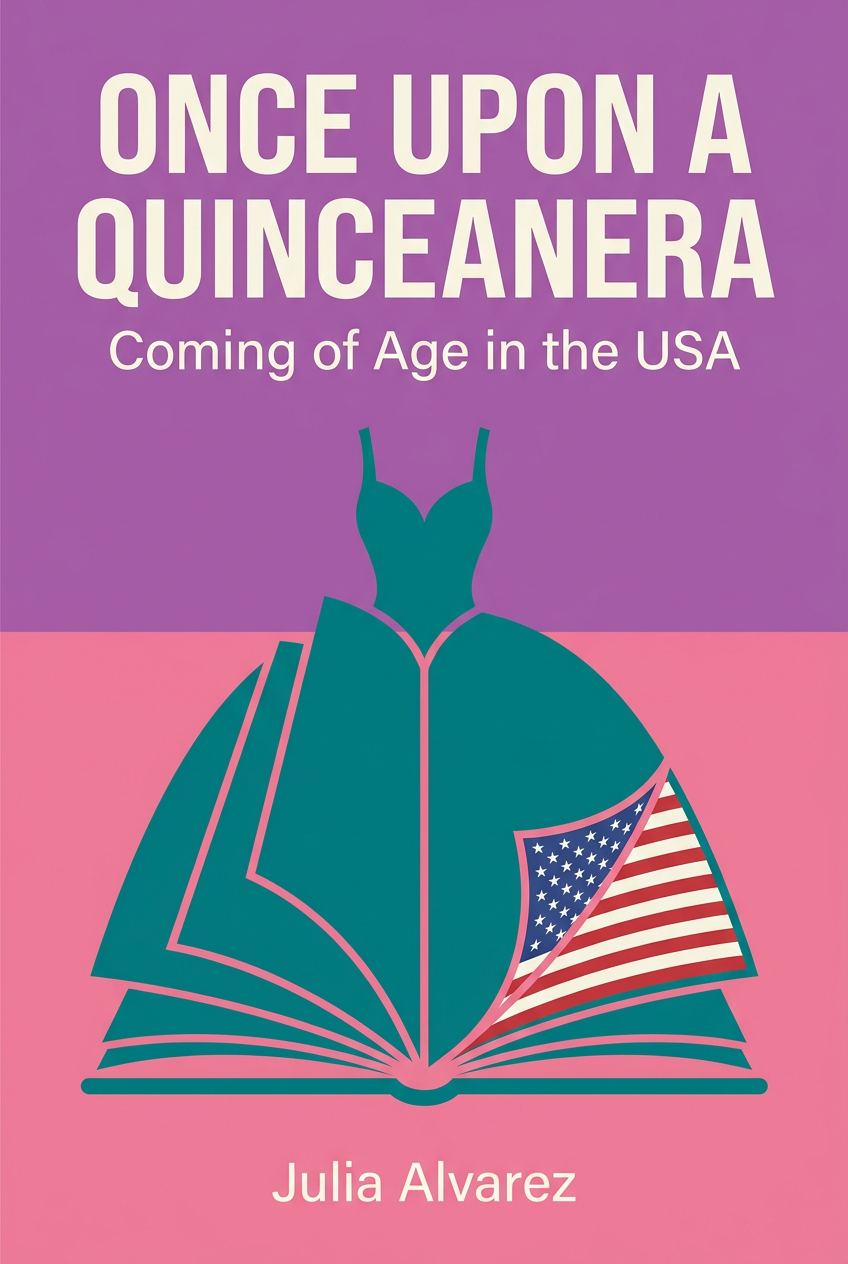
Once Upon a Quinceanera
Coming of Age in the USA
What's it about
Ever wonder what it truly means to come of age in a country of blended cultures? Explore the vibrant, complex world of the quinceañera and discover how this single tradition reveals the dreams, pressures, and identities of young Latinas navigating life in the USA. You'll go beyond the party to understand the heart of this rite of passage. Through personal stories and cultural analysis, Julia Alvarez uncovers the push and pull between tradition and modern life, showing how the quinceañera shapes family dynamics, community, and a new generation's American dream.
Meet the author
Julia Alvarez is one of the most critically acclaimed and commercially successful Latina writers of her time, celebrated for her novels like How the García Girls Lost Their Accents. Born in New York but raised in the Dominican Republic until her family fled a dictatorship, her work masterfully explores the complexities of bicultural identity. This unique personal history of navigating two worlds gives her a profound and authentic lens through which to examine the coming-of-age rituals that shape young women in the United States today.
Opens the App Store to download Voxbrief

The Script
Every family has its sacred rites, and for many, the pinnacle of a young woman's journey is the wedding day. But what about the ritual that comes before? The one that marks the passage from girl to woman, a practice steeped in tradition, expense, and a mountain of expectations. Consider two identical gowns, both shimmering satin, both adorned with lace and seed pearls. One is a wedding dress, a symbol of a future being built with a partner. The other is a quinceañera dress, a symbol of a past being honored and a family's dreams being projected onto a fifteen-year-old girl. While the wedding dress speaks of a beginning, the quinceañera dress often carries the weight of an entire community's history, a complex performance of heritage, faith, and social status that the wearer must navigate, often before she even knows who she is.
This vibrant, complicated world of tulle, tiaras, and tradition is precisely what fascinated Julia Alvarez. As a Dominican-American writer who has spent her career exploring the spaces between cultures, she saw the quinceañera as a cultural crossroads. It’s a moment where immigrant parents try to pass down traditions to their Americanized daughters, where ancient customs meet modern realities, and where the high cost—both financial and emotional—raises questions about what we celebrate and why. Having navigated her own journey between two worlds, Alvarez turned her keen observational eye to this unique coming-of-age ritual, traveling across the country to uncover the stories behind the spectacle. She wanted to understand what this tradition truly means today for the girls at the center of it, and for the families and communities shaping their path into womanhood.
Module 1: The Quinceañera as a Cultural Crossroads
The quinceañera is a powerful symbol of identity, family, and community. For many immigrant families, it represents a deep cultural anchor in a new country. But it's also a site of intense negotiation.
First, the quinceañera is a public declaration of cultural pride and family status. It’s a way for families to show they are decentes—respectable and hardworking. They might save for years or even mortgage their homes. This is about investing in cultural capital. Professor Eduardo Béjar explains that this lavish celebration is a non-monetary asset. It confers honor and status within the community. The enormous financial sacrifice is a testament to the tradition's value. It’s a choice to prioritize cultural continuity over other practical expenses.
Building on that idea, the tradition has become a pan-Hispanic phenomenon in the U.S. Originally, the quinceañera was an upper-class tradition in Latin America. In the United States, it has transformed. It's now celebrated by families across the economic spectrum. It also mixes customs from different countries. You might see Mexican mariachis at a Dominican party. Or a Puerto Rican shoe-changing ceremony at a Cuban celebration. This blending creates a new, distinctly American "Latino" identity. It’s a tradition that is, as Alvarez puts it, "MADE IN THE USA." It helps build community by connecting people to their roots while adapting to a new home.
Finally, the quinceañera forces a difficult negotiation between generations. Immigrant parents often hold onto an "old-country map." They want to pass down traditions to protect their children. But their American-born daughters are navigating a completely different world. Monica Ramos, a central figure in the book, celebrates a "quinceañera sort of" sweet sixteen. This shows how the tradition adapts. Yet, the core tension remains. The author herself recalls this "double bind." She felt torn between her parents' strict Dominican expectations and the freedoms of 1960s America. The quinceañera becomes the stage where these generational and cultural conflicts play out.
Module 2: The Princess and the Price Tag
While the quinceañera is rich in cultural meaning, it’s also a massive industry. The princess fantasy is powerful. But it comes with a steep price, both financially and culturally.
The most visible aspect is that the tradition has been supersized by American consumerism. The average cost can run from five thousand to over fifteen thousand dollars. Quinceañera expos feature vendors selling everything from custom gowns to DJ packages. Financial advisors like Sunita Trevino even hold seminars. She warns families about the dangers of going into debt for the party. She has seen women still paying off second mortgages decades later. This commercialization creates immense pressure. It can turn a meaningful ritual into a source of financial ruin.
So what happens next? The princess narrative reinforces a narrow, gendered script. The quinceañera often looks like a wedding rehearsal. The girl wears a white, princess-style gown. Her father symbolically passes her to other male relatives during the waltz. The rituals—the changing of shoes, the crowning with a tiara—all point toward a future focused on marriage and motherhood. The author contrasts this with her own experience at an all-girls boarding school. There, she was encouraged to become a "smart, resourceful, independent woman." The quinceañera script, she argues, can limit a young woman's sense of possibility. It offers "mythic power" as a substitute for real-world sociopolitical power.
But flip the coin. Despite its flaws, the ritual can be a source of profound self-esteem and family bonding. For many girls, the quinceañera is the first time they feel truly seen and celebrated. Isabella Martínez Wall, founder of a quinceañera website, argues the tradition creates a vital support system. The planning process brings mothers and daughters closer. It involves the entire family. Isabella credits her own quinceañera with turning her life around. She says it made her feel like the "queen of her life." For all the commercialism and patriarchal baggage, the core experience of being celebrated can be deeply empowering. It meets a universal human need to mark life's important transitions.