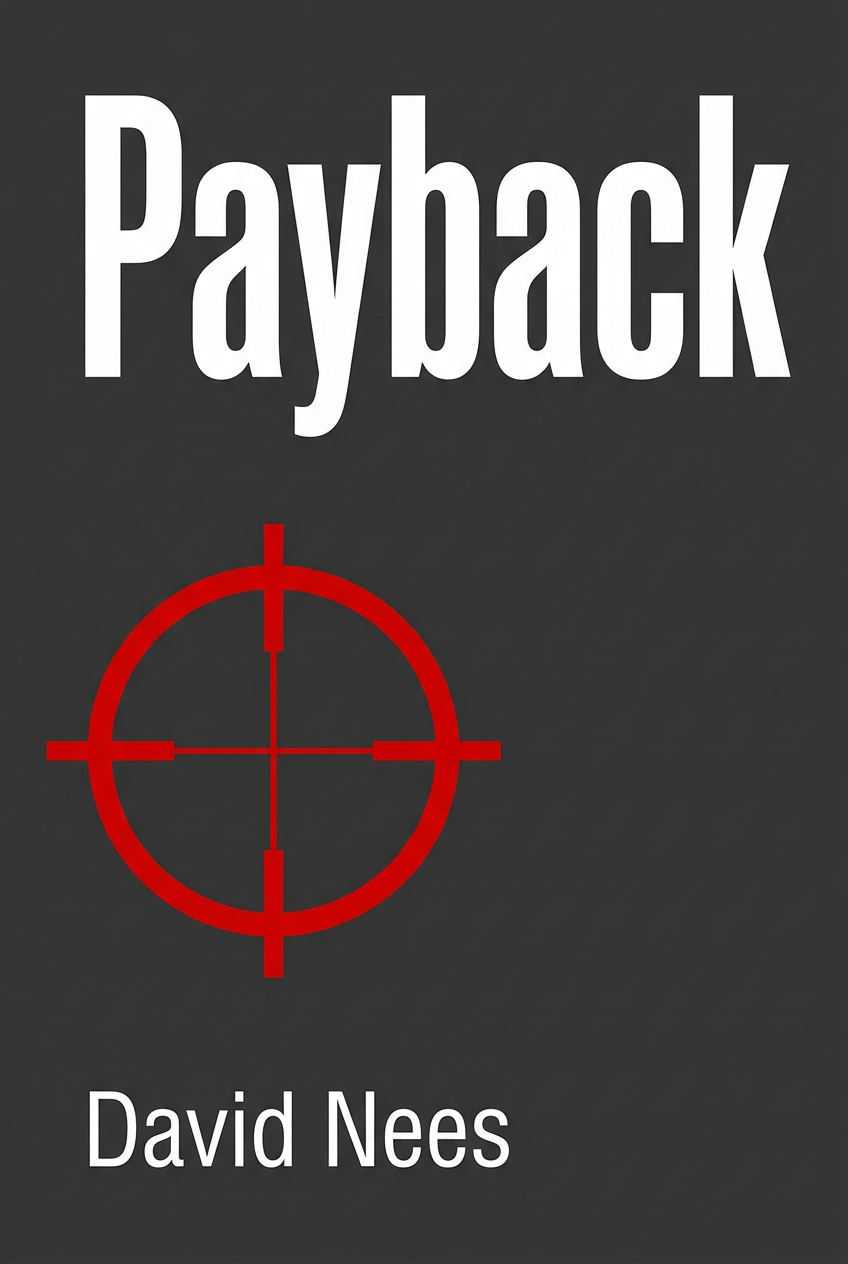
Payback
A sniper seeking revenge terrorizes the mob (Assassin Series Book 1)
What's it about
Ever wonder what happens when a trained killer has nothing left to lose? Imagine turning the tables on the mob, using their own brutal tactics against them. This is your chance to step into the mind of a master sniper on a relentless quest for vengeance. You'll discover the chillingly precise methods of a former military assassin as he dismantles a powerful crime family, one high-stakes kill at a time. Learn how he evades capture, outsmarts seasoned gangsters, and turns an entire city into his personal hunting ground. This is a masterclass in calculated revenge.
Meet the author
David Nees is a decorated Marine Corps veteran and former law enforcement sniper whose real-world experience provides unparalleled authenticity to his pulse-pounding thrillers. His distinguished career in high-stakes tactical operations gave him a firsthand understanding of the discipline, precision, and psychology required of an elite marksman. This deep-seated knowledge of covert operations and the criminal underworld inspired him to create the gripping and technically accurate world of the Assassin Series, beginning with his explosive debut novel, Payback.
Opens the App Store to download Voxbrief

The Script
We treat resentment like a poison, a toxic emotion to be purged for our own good. We’re told that holding a grudge is like drinking poison and expecting the other person to die. But what if this conventional wisdom is wrong? What if resentment is a finely tuned biological instrument? Consider it a form of emotional accounting, a ledger that meticulously tracks debts of injustice and betrayal. When someone wrongs us, this system doesn’t just register pain; it generates a powerful, motivating energy. This energy is a biological demand for balance, a deep-seated instinct to see the scales of justice leveled. Reframing resentment this way changes everything. It becomes a primal call to action, a mechanism that ensures we don’t allow ourselves to be victimized repeatedly. The real poison isn’t the feeling itself, but the paralysis that comes from believing we shouldn’t feel it at all.
This exact idea—that payback is a fundamental human drive—is what captivated David Nees. As a clinical psychologist specializing in the rehabilitation of violent offenders, he spent years working with individuals whose lives had been consumed by the need for revenge. He saw firsthand that the simplistic advice to 'forgive and forget' was not only ineffective but often insulting to those who had suffered profound harm. Nees realized that the desire for payback was something to be understood and channeled. He wrote Payback to decode this powerful impulse, offering a framework for resolving these deep-seated urges in a way that restores a sense of justice without leading to self-destruction.
Module 1: The Catalyst — When Grief Becomes a Mission
Grief is often portrayed as a passive state. A period of mourning and slow recovery. But "Payback" argues that for some, profound loss becomes an engine for action. The story begins with Dan Stone, a former Army sniper. He and his wife, Rita, run a successful restaurant. They refuse to pay protection money to the local mob. This refusal sets off a chain of events. The mob retaliates. They firebomb the restaurant. Rita, who was pregnant, is killed in the fire.
This is the event that shatters Dan's world. But instead of collapsing, his grief crystallizes into a singular purpose. Your personal history and skills define your response to trauma. Dan is a trained sniper. His military background gives him the discipline and lethal capability to act on his rage. He tells his friend, "I'm not going to let them get away with this." This is the declaration of a new mission.
And here's the thing. The system offers him no recourse. The police investigation into the fire stalls. It's dismissed as "vandalism gone wrong." This institutional failure is critical. It closes the door on conventional justice. It forces Dan to rely on his own abilities. Systemic failure can motivate personal, extra-legal action. Dan concludes the police won't act. He sees no path to accountability through official channels. So he decides to create his own. He tells his sister, "I have no life. They took that away. I can’t just walk away from that." His life now has one objective: payback.
This leads to a complete transformation. Dan methodically erases his old identity. He travels the country, acquiring false documents and untraceable assets. He becomes a ghost. Achieving operational security requires meticulous, multi-layered preparation. He uses cash. He buys prepaid phones. He abandons his old car. He is preparing for a sustained campaign. He is turning his grief into a structured, deliberate, and deadly operation.
Module 2: The Enemy — Anatomy of a Criminal Enterprise
To understand Dan's mission, we need to understand his target. The criminal organization in "Payback" is a business. It's structured. It's pragmatic. And that's what makes it so dangerous.
The mob operates like a corporation with a very clear hierarchy. At the local level, you have Capo Vincent Salvatore. He runs his crew from a neighborhood restaurant. He answers to an Underboss, who answers to the Don. Money flows up the chain. Each member has a quota. It’s a franchise model for crime. Organized crime operates as a rigid, hierarchical, and pragmatic business. Vincent is described as "old school." He prefers peace because violence is bad for business. It interrupts cash flow. The threat of violence is usually enough.
So what happens next? This organization embeds itself into the community. It rules through favors and debt. The mob exerts control through a web of indebtedness and local influence. Vincent holds court at his restaurant. People from the neighborhood come to him to solve problems. He grants a favor. Now they owe him. This network extends everywhere, even to some police officers. It creates a parallel system of power. Official justice is weakened. The mob's justice becomes the only one that matters.
But flip the coin. What happens when someone defies this system? Dan Stone finds out. He refuses to pay protection money. He even physically defends himself against the collectors. This becomes a challenge to the mob's authority. Resistance to extortion is met with escalating coercion and retribution. The response is calculated. First, harassment to scare off customers. Then, a direct physical confrontation. Finally, when that fails, economic destruction. Vincent orders his men to arrange "a little accident" at Dan's restaurant. The goal is to inflict just enough pain to force compliance. But the plan goes wrong. The "accident" becomes a firebombing. And that firebombing kills Dan's wife. This single act of miscalculation is what ignites the entire conflict. It transforms a business dispute into a blood feud.