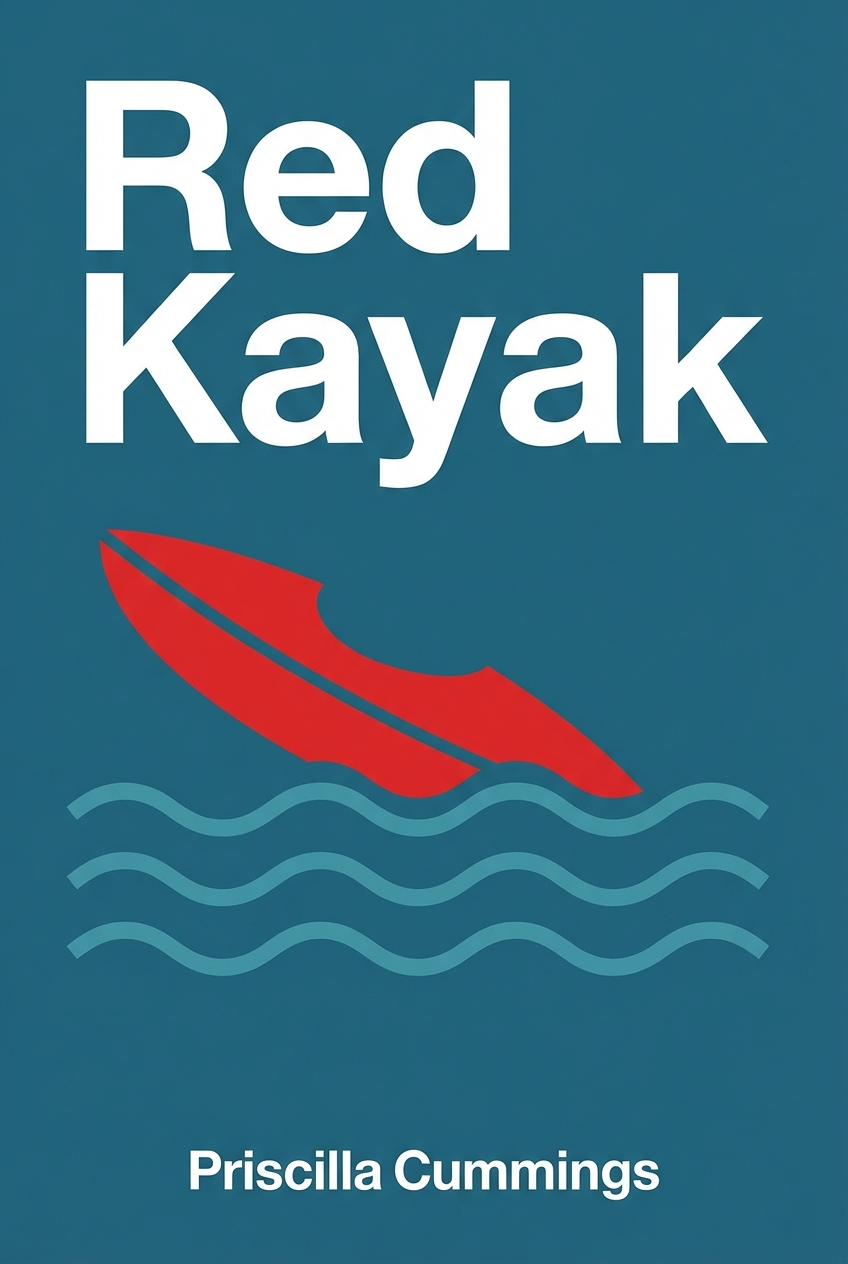
Red Kayak
What's it about
How do you handle a terrible secret that could destroy your best friends and tear your family apart? For thirteen-year-old Brady, a single moment of anger and a seemingly harmless prank have led to a devastating tragedy, and now he's caught in an impossible choice. You'll discover the crushing weight of guilt and the power of doing the right thing, even when it costs you everything. This gripping story explores the complex web of loyalty, responsibility, and the gut-wrenching decision to speak the truth when silence seems like the only option to protect the people you love.
Meet the author
Priscilla Cummings is an award-winning author whose acclaimed novel, Red Kayak, has been adopted into school curricula nationwide for its powerful exploration of ethics and consequences. A former journalist living on the Chesapeake Bay, Cummings drew inspiration from her local community and the waterway's culture to craft this compelling and realistic story. Her background in reporting and her deep connection to the setting lend an authentic voice to the moral dilemmas her characters face, making her work both relatable and thought-provoking for young readers.
The Script
The water on a river has no memory. It doesn’t hold a grudge or keep a record. It simply flows, carrying away whatever falls into it—a stray leaf, a fishing lure, a secret. For a kid growing up on the Chesapeake Bay, the river is everything: a playground, a workplace, a highway. You learn its moods, its tides, its hidden sandbars. You learn to respect it. But what happens when the river carries a secret you can’t let go of? What happens when a foolish prank, fueled by resentment and meant to be harmless, goes horribly wrong, and the churning water swallows up the evidence, leaving you as the only witness?
The weight of a secret like that can feel like drowning, even on dry land. It pulls you under, isolates you from your friends, your family, from everything you thought you knew was right. You start to see the world through a murky film, where loyalty to your friends clashes with the crushing need to tell the truth. Every quiet moment is filled with the echo of what happened, a silent accusation that the river can’t wash away. The choice is about deciding who you are going to be for the rest of your life.
That suffocating choice is the one Priscilla Cummings wanted to explore. As a longtime resident of Annapolis, Maryland, she lived and breathed the culture of the Chesapeake Bay, observing the tensions that could simmer just beneath the surface of a tight-knit watermen’s community. She saw how easily a moment of anger could ripple outward with devastating consequences. Cummings, a former journalist, crafted "Red Kayak" as a deep dive into the turbulent waters of adolescent morality, friendship, and the gut-wrenching process of taking responsibility when no one else can see the truth.
Module 1: The Anatomy of a Bad Decision
The tragedy in Red Kayak doesn't happen in a vacuum. It’s the result of several pressures converging on three teenage boys: Brady, J.T., and Digger. Understanding these forces is key to seeing how small grievances can escalate into catastrophic actions.
First, socioeconomic resentment creates a foundation for hostility. The story is set in a community of watermen on the Chesapeake Bay. Their livelihoods are threatened by pollution and regulations. They watch wealthy newcomers, like the DiAngelo family, build mansions on land that once belonged to local families. Digger, one of the boys, is especially bitter. The DiAngelos bought his grandfather's farm and tore down the old house. For him, this is a symbol of displacement and disrespect. When he sees Mr. DiAngelo, he doesn't just see a neighbor. He sees an intruder who represents everything threatening his way of life. This deep-seated anger primes him for conflict.
Next, peer pressure and the fear of social isolation override individual conscience. When the boys see Mr. DiAngelo heading out in his red kayak on a dangerously cold day, Brady’s instinct is to shout a warning. He knows the river. He understands the hidden currents and the life-threatening temperature of the April water. But Digger, fueled by his resentment, says Mr. DiAngelo "deserves it." J.T., caught in the middle, sides with Digger by laughing. Brady is left alone. In that moment, the desire to maintain group cohesion is stronger than the impulse to help a stranger. So, they say nothing. This collective inaction is the first critical failure. It’s a choice made out of social weakness.
Finally, a misguided idea for revenge, once planted, can take root and grow. Months before the accident, Brady had jokingly suggested a way to get back at Mr. DiAngelo. He mentioned using his father’s drill to sabotage the kayak. It was an idle, angry thought, forgotten almost immediately. But the idea didn't disappear. For Digger, stewing in his anger, this joke became a blueprint. The final decision to drill holes in the kayak was an impulsive act of revenge. Digger and J.T. didn't want to kill anyone. They just wanted to sink the boat and humiliate the man they resented. They never considered that Mrs. DiAngelo and her three-year-old son, Ben, would be the ones to take the damaged kayak out on the water. This highlights a terrifying truth. The gap between intending minor harm and causing a fatal accident can be tragically small.