All Books
Self-Growth
Business & Career
Health & Wellness
Society & Culture
Money & Finance
Relationships
Science & Tech
Fiction
Topics
Blog
Download on the App Store

Rumble

14 minEllen Hopkins

What's it about

Have you ever felt like a ghost in your own life, haunted by a past you can't escape? This summary explores the crushing weight of grief and the desperate search for identity when everything you thought you knew about your family—and yourself—is built on a lie. You'll follow Matt as he grapples with his brother's suicide and a shocking family secret that shatters his world. Discover how he navigates the treacherous path of anger, faith, and forgiveness, and learn how confronting the darkest truths can be the only way to find your own voice and finally feel seen.

Meet the author

Ellen Hopkins is a 1 New York Times bestselling author celebrated for her unflinching verse novels that tackle the complex and often harsh realities of teen life. A poet and former journalist, Hopkins draws from both personal experiences and extensive research to give an authentic voice to young adults navigating difficult issues. Her unique background allows her to craft stories like Rumble with raw honesty and profound empathy, resonating deeply with readers who feel unheard or misunderstood in their own struggles.
Listen Now

Opens the App Store to download Voxbrief

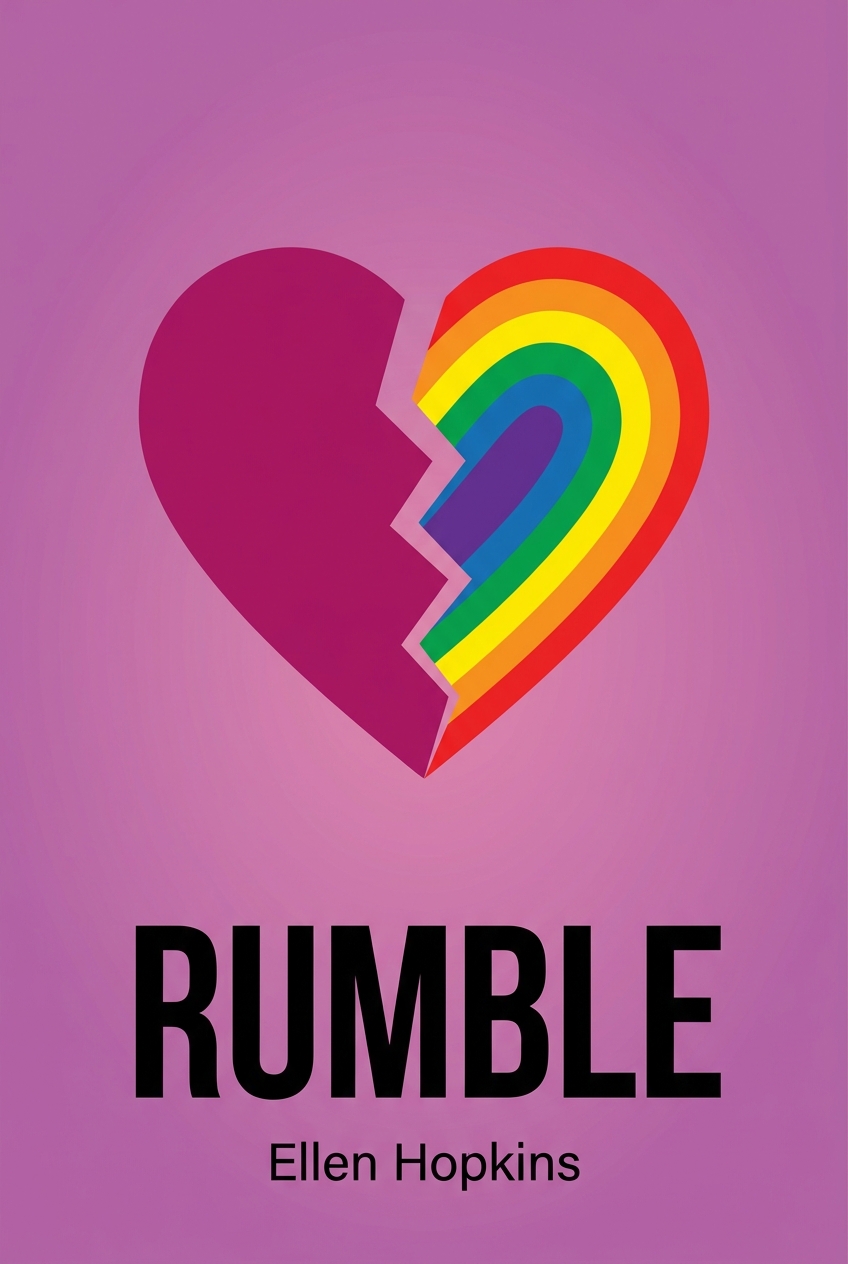
Rumble book cover

The Script

In a hospital chapel, a parent prays for their child's recovery, their words a desperate bargain with a God they aren't sure they believe in. Down the hall, another parent sits beside an empty bed, their silent screams directed at a God they are certain has betrayed them. Both are experiencing the same catastrophic loss, the same hollowing out of their world. Yet one clings to the possibility of meaning, while the other is consumed by the certainty of its absence. Their grief is a shared language, but their faith—or lack thereof—translates it into two entirely different realities. The world doesn't just look different to them; it is different. One sees a test, the other a punishment. For one, the silence from the heavens is a space for hope to grow; for the other, it's the final, damning evidence of a vacant throne.

This chasm between faith and fury is the landscape Ellen Hopkins explores in "Rumble." She wrote the book after a young man, a close friend of her son's, took his own life. Hopkins watched her son and his friends grapple with the unanswerable questions left in the wake of the tragedy—questions about God, blame, and the search for solace in a world suddenly stripped of its foundations. As a bestselling author known for her unflinching verse novels that tackle difficult adolescent experiences, Hopkins felt compelled to give voice to that specific, shattering rumble of a teenager's faith crisis. She channels that raw grief and confusion into the story of Matthew, a boy trying to find his footing on ground that will not stop shaking.

Module 1: The Anatomy of Rage and Grief

At its core, Rumble is a masterclass in the psychology of unprocessed trauma. The protagonist, Matthew Turner, is incandescent with rage about his brother Luke's suicide. This is an active, destructive force that colors every interaction and thought.

The first major insight here is that unresolved grief often manifests as anger, creating a protective shield against vulnerability. Matt’s fury is a constant presence. He describes it as a "curtain of fury" he must actively push down. When his counselor suggests it's time to "move on," Matt explodes. He shouts, "I have fucking moved on... But if you mean I should accept what happened, you’re out of your mind! I never will." This is the desperate roar of someone terrified of the pain that lies beneath the anger. The anger is a fortress. If he lets it down, he fears the grief will drown him.

This leads to a second critical point. To cope with overwhelming internal pain, we often adopt performative personas to control social situations and keep others at a distance. Matt is a master of this. He uses sarcasm, deflection, and even outright hostility to manage his environment. When a teacher summons him, he puts on a mask of feigned respect while internally seething. After an intense, private moment of anguish in the hallway, he turns, yells "Boo!" at his classmates, and flips them off. It's a calculated performance designed to "keep 'em guessing." He would rather be seen as a defiant enigma than a grieving brother. For professionals, this is a powerful mirror. How often do we use a persona—the unflappable leader, the cynical critic—to mask our own uncertainties or anxieties?

Finally, the book shows how this internal turmoil poisons our closest relationships, especially when core values clash. Matt’s relationship with his girlfriend, Hayden, is his primary source of comfort. Yet, her devout Christian faith is a major point of friction. He loves her deeply, but he resents her involvement in the very religious structures he blames for the world's cruelty. When he remembers she’s at a Youth Ministry meeting, his affection curdles into a "red hot / white hot / silvery hot" anger. This tension is central. The one person who brings him solace is also a constant reminder of the ideological divide that torments him. It forces us to ask: where in our own lives do we allow fundamental differences to fester, creating unspoken resentment in relationships we claim to value?

Read More