All Books
Self-Growth
Business & Career
Health & Wellness
Society & Culture
Money & Finance
Relationships
Science & Tech
Fiction
Topics
Blog
Download on the App Store

The Book Club for Troublesome Women

A Novel

14 minMarie Bostwick

What's it about

Ever felt like you're too much for some people and not enough for yourself? Discover how a group of so-called "troublesome" women found their power not by changing who they are, but by embracing their authentic, complicated selves in a small, judgmental town. You'll join Mary, a pastor's wife suffocating under expectations, as she secretly forms a book club that becomes a lifeline. Through the stories they read and the truths they share, you'll learn how sisterhood, courage, and a little rebellion can help you rewrite your own story.

Meet the author

Marie Bostwick is a New York Times and USA Today bestselling author whose beloved novels, celebrated for their heartfelt portrayals of female friendship, have sold more than 2.5 million copies. A lifelong quilter and storyteller, she draws inspiration from the tight-knit communities and resilient women she's encountered throughout her life. Her experiences moving across the country have deeply informed her writing, allowing her to craft authentic stories about women finding their strength and creating their own chosen families, just like the characters in her books.
Listen Now

Opens the App Store to download Voxbrief

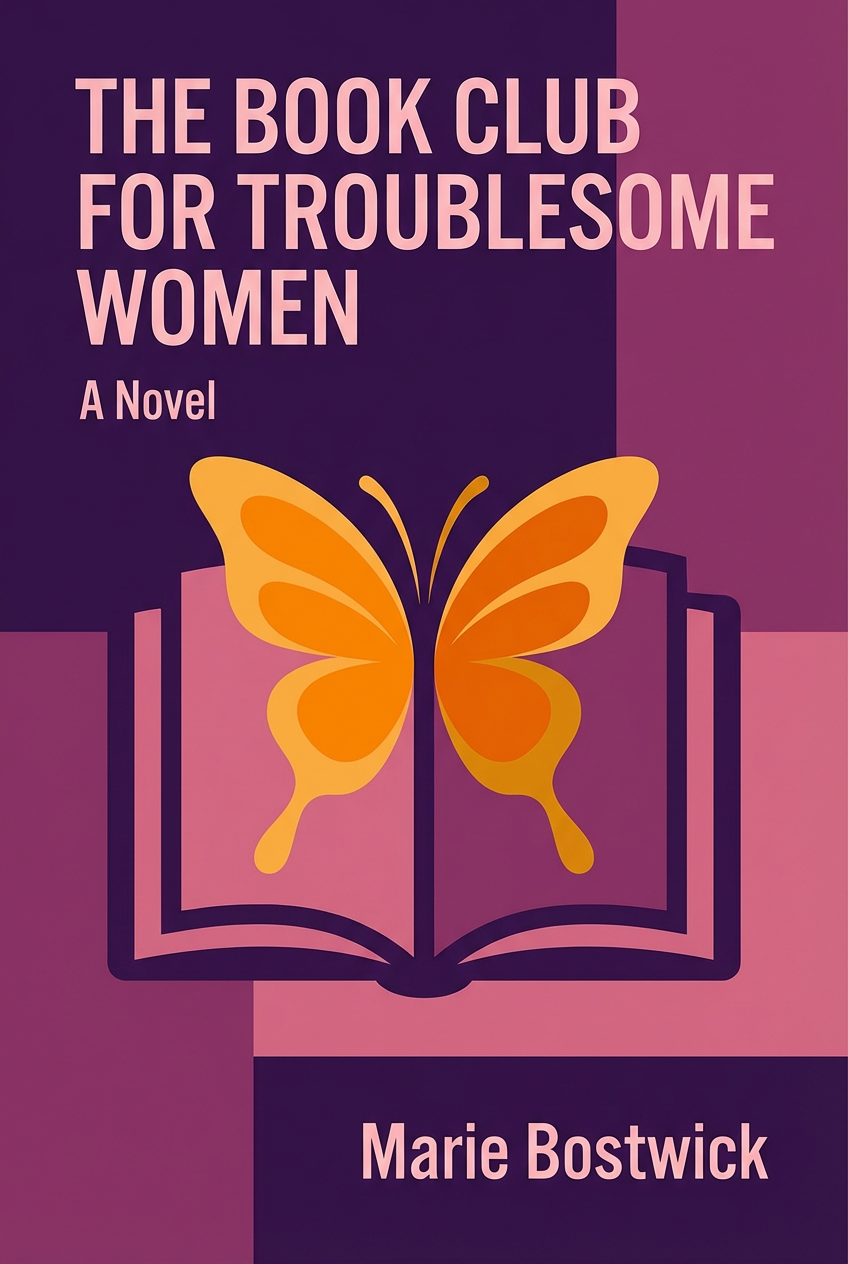
The Book Club for Troublesome Women book cover

The Script

Two women stand before identical, blank canvases in a community art class. The instructor has laid out the same set of acrylics for each. The first woman, methodical and precise, begins sketching a perfect, symmetrical landscape—a placid lake, a neat row of trees. She’s following the lesson plan, aiming for technical correctness. The second woman, however, seems to ignore the instructor. She grabs a tube of fiery red and squeezes a chaotic line across the canvas. Then a deep, mournful blue. Her strokes are about releasing a feeling—the jagged anger, the quiet sorrow, the messy, vibrant story of her own life that refuses to fit within neat lines. One canvas will look like a painting; the other will feel like a confession.

This difference—between the life we’re told to paint and the one that bursts forth when we’re finally handed a brush—is the space Marie Bostwick has explored for years. As a bestselling novelist, she’s known for creating characters who don't just mend quilts but mend lives, weaving together the frayed edges of their communities. Bostwick wrote The Book Club for Troublesome Women after observing how often women's stories are confined to expected patterns. She wanted to explore what happens when a group of women, each with a past that doesn't fit the mold, decide to stop following the instructions and start telling their own, unapologetically honest stories.

Module 1: The Problem with No Name

The story opens in 1962. We meet Margaret, a suburban housewife in a planned community where even the color of your shutters is dictated by a homeowner's association. She has a loving husband, healthy kids, and a new house. By all measures, she has the American dream. Yet, she feels a "hole open up inside her." She reads a magazine survey where 96% of wives report being happy. She wonders, "What is wrong with me?"

This is what Betty Friedan famously called "the problem with no name." It’s a vague, pervasive sense of unfulfillment that women weren't supposed to feel, let alone discuss. The novel brilliantly illustrates this through Margaret’s small, secret acts of rebellion.

First, creative aspirations must often be hidden when they conflict with expected roles. Margaret secretly rents a typewriter, which she names Sylvia. She hides it in the linen closet, pulling it out to write an essay for a contest while her family is away. This is about reclaiming a part of herself that has been dormant since college, a time when professors praised her talent. The typewriter in the closet is a perfect symbol. It represents a private, almost illicit, desire for a life of the mind that exists outside her duties as a wife and mother.

This leads to the next point. The pursuit of an idealized family experience can become a source of profound stress. Margaret meticulously plans a "magical" Christmas. She wants to recreate the feeling of a perfect holiday from her childhood. Her husband, Walt, cautions her against building up such high expectations. He’s right. The flu derails her plans, and the holiday ends in disappointment. This shows how the pressure to manufacture perfect moments, often driven by nostalgia and societal expectations, can backfire. It sets an impossibly high bar that real life can rarely meet.

And here's the thing. External validation for domestic labor is often nonexistent, leading to feelings of invisibility. After a long day of preparing an elaborate spread for her new book club, Margaret's husband comes home. He dismisses her day's work as not "actually working." This single comment captures the immense, invisible labor of homemaking. Her creativity, her effort, her exhaustion—it all goes unseen and unvalued. This is about her entire contribution being rendered insignificant.

Module 2: The Spark of Connection

So what happens next? Margaret feels isolated in her quiet dissatisfaction. But she soon realizes she isn't alone. This module explores how community and honest dialogue become the catalysts for change. It all starts with the formation of a book club, but not just any book club.

It begins with Charlotte, a new neighbor who is everything the other women in the conformist suburb of Concordia are not. She’s an artist. She’s outspoken. She wears a full-length mink coat in the daytime. She's labeled an "oddball" and a troublemaker. When Margaret suggests reading a nostalgic classic for their first meeting, Charlotte dismisses it. She proposes a book that is "groundbreakingly, earth-shatteringly brilliant." That book is The Feminine Mystique.

This is the first crucial insight. Shared inquiry around a provocative idea can ignite a revolution, personal or otherwise. The book club becomes a space for the women to discuss their lives. Fueled by vodka stingers they jokingly call "truth serum," the carefully constructed facades begin to crumble. The polite, superficial conversations of the neighborhood coffee klatch are replaced by raw, honest confessions.

This honesty forges powerful bonds. Viv, Margaret’s best friend, admits she’s in a mess. A doctor refused to prescribe her birth control without her husband’s permission, and now she's facing an unwanted pregnancy that derails her dream of returning to nursing. Bitsy, the youngest member, reveals her husband blames her for their infertility. He refuses to see a doctor himself. These are secrets they have carried alone.

And this brings us to the next key point. Vulnerability, when met with empathy, transforms isolation into solidarity. As the women share their stories, something shifts. They stop seeing their problems as individual failings. Instead, they recognize them as shared struggles. When Bitsy confesses her shame, Margaret doesn't offer platitudes. She looks her in the eye and says, "You are not a failure!" This simple, powerful act of validation is something Bitsy desperately needed to hear. The book club becomes a space where these women can finally be seen and heard, not as perfect housewives, but as complex, struggling individuals.

From this foundation, we see that friendship provides the practical and emotional scaffolding needed to take risks. This is about tangible action. When Margaret gets a chance to pitch a column to a New York magazine, her friends mobilize. Charlotte offers to drive her. Viv and Bitsy volunteer to watch her kids. They form a network of mutual aid that allows Margaret to chase an opportunity she couldn't have managed alone. They become, as Charlotte dubs them, "The Bettys," a true group united in purpose.

Read More