All Books
Self-Growth
Business & Career
Health & Wellness
Society & Culture
Money & Finance
Relationships
Science & Tech
Fiction
Topics
Blog
Download on the App Store

The Dead of Summer

15 minRyan La Sala

What's it about

Ever feel like your hometown is hiding a dark secret? For Elijah, that feeling is all too real. He returns to the suffocatingly traditional town of Bethel, Florida, to find his cousin has died under mysterious circumstances, pulling him into a sinister world just beneath the surface. You'll follow Elijah as he navigates a town obsessed with a disturbing folklore festival and uncovers a conspiracy far more dangerous than he ever imagined. This chilling story blends psychological horror with a high-stakes mystery, forcing you to question who you can trust when everyone is hiding something.

Meet the author

Ryan La Sala is the bestselling and award-winning author of books about surreal things happening to queer people, including The Honeys and Reverie. A graduate of Northeastern University's screenwriting program, he draws from his expertise in crafting thrilling narratives to bring the chilling world of The Dead of Summer to life. His work is celebrated for its wit, imagination, and unapologetically queer characters, making him a powerful voice in young adult fiction.
Listen Now

Opens the App Store to download Voxbrief

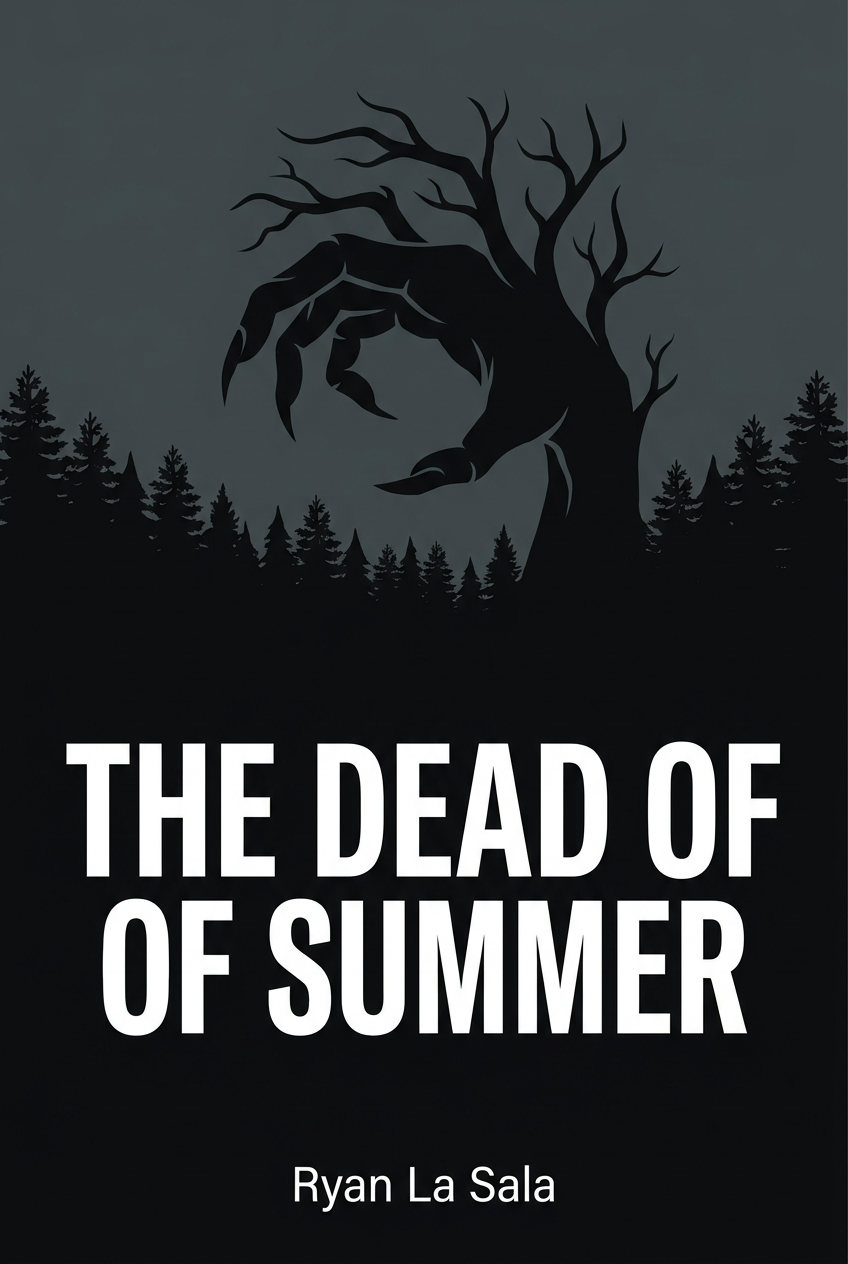
The Dead of Summer book cover

The Script

Every family has a ghost story, even if they don’t call it that. It’s the story of the one who got away, the one who came back changed, or the one whose name is never spoken at the dinner table. It’s a story told with sudden silences, with glances that linger a second too long, with a carefully preserved bedroom that no one ever enters. These stories are the emotional equivalent of a cold spot in the house—a place where the warmth of the present can’t quite reach, chilled by a draft from the past. You can try to wallpaper over it with new memories or blast the heat of denial, but the cold remains, a constant, low-grade haunting that shapes the lives of everyone who lives there.

What happens when that cold spot isn't just a metaphor, but a literal, terrifying reality? What if the ghost is something with a hunger, something that can be reawakened by grief and a desperate longing for what was lost? This is the chilling territory explored in The Dead of Summer. Ryan La Sala, known for his masterful blending of queer identity with horror and fantasy, draws from the deep well of personal and familial grief to craft this story. He was fascinated by the way loss can become a presence in a household, an active entity that demands tribute and attention. La Sala wanted to take that quiet, internal haunting and give it teeth, transforming the familiar landscape of a summer home into a battleground against a sorrow that has become monstrously, terrifyingly real.

Module 1: The Island's Paradox—Beauty and Sickness

Anchor’s Mercy is introduced as a place of contradictions. It's a pristine, beautiful island famous for its clean water and world-class oysters. Yet, it carries a dark reputation. The locals get sick, and no one can explain why. This sets up the core tension of the story. It’s a place where appearance and reality are in constant conflict.

The protagonist, Ollie, returns to the island with his mother, Gracie, after she survives a brutal battle with cancer. For Ollie, this return is fraught with anxiety. He remembers the "old stories" about the island making people sick, stories his mother used to dismiss. Now, those stories feel terrifyingly real. This initial setup establishes a critical insight: Unacknowledged community trauma festers beneath the surface. The island’s sickness is a psychological poison, a collective secret that everyone is complicit in keeping. The refusal to name the problem doesn't make it go away. It only allows the dread to grow stronger in the shadows.

This dynamic is mirrored in Ollie’s own family. Gracie’s recovery isn't a simple return to normal. She reinvents herself with a "diabolically bubbly persona," insisting on being called by her first name and plastering over their shared trauma with aggressive positivity. Ollie is grateful she’s alive, but he feels a profound loss. He wants his mom back, not this stranger who uses cheerfulness as a weapon. This leads to the next key idea: Forced positivity is a form of denial that isolates people. When we refuse to acknowledge pain, we create a barrier. Gracie’s relentless optimism makes it impossible for Ollie to share his own fear and grief. He feels pressured to perform happiness, which only deepens his sense of isolation. This is a powerful lesson for any team or family. A culture that only celebrates wins and suppresses talk of failure or struggle is fragile.

Adding another layer is the island's rigid social structure. There’s a sharp divide between the year-round residents, the "townies," and the wealthy seasonal visitors. This is a cultural chasm. Townies view seasonals with a mix of resentment and intrusive curiosity. Seasonals, in turn, often seem oblivious to the realities of year-round life on the island. This social friction underscores a vital point: Fractured communities are more vulnerable to hidden threats. The lack of trust and communication between these groups means there is no unified front. When a crisis hits, they are a collection of factions, each with its own agenda and blind spots. This division makes it easier for secrets to be kept and for dangers to go unaddressed until it’s too late.

Finally, the narrative structure itself reflects the island's fractured nature. The story is told through non-linear timelines and epistolary elements, like interview transcripts and official reports. We jump between "Two Days Before" and "Four Days After" a central, mysterious event. This forces us, the audience, to piece together the truth from scattered fragments. This narrative choice reinforces the final insight of this module: Understanding a complex problem requires assembling fragmented truths. There is no single, straightforward narrative. To get to the bottom of what’s wrong with Anchor’s Mercy, you have to collect clues, connect disparate events, and read between the lines of the official story. It requires active investigation. This is true for any complex challenge, whether it’s a market disruption, a team dysfunction, or a hidden sickness in a community.

Module 2: The Infection—From Metaphor to Monstrous Reality

The island's sickness doesn't stay a metaphor for long. It erupts into a horrifying, tangible reality. The story shifts from psychological dread to biological horror, centered on a mysterious contagion linked to a strange, coral-like organism, Cnidaria imperia. This is where the book’s central horror takes shape.

The infection is terrifying because it transforms. Victims are colonized by grotesque, coral-like growths that fuse their bodies into monstrous, living reefs. One of the first and most chilling examples is the discovery of Dr. Shelly Romero. Her body has become a "bone gray" growth that fills the corner of her lab, incorporating her face and hands, all frozen in silent screams. This horrifying imagery drives home a stark principle: The most terrifying threats are those that corrupt and repurpose what we know. The infection takes the familiar—a human body—and twists it into something alien and unrecognizable. It is a violation of identity. This is a powerful metaphor for how toxic ideas or systems can take hold, twisting individuals and organizations into something they were never meant to be.

But here’s the thing. The infection’s horror is amplified by a deeply unsettling psychological component. The initial stage of infection, dubbed "Drowning," floods the host’s brain with serotonin and dopamine. Victims experience a state of false euphoria even as their bodies decay. An infected woman with horrific blisters sighs that the sunlight "tastes... goooood." This reveals a deeply disturbing truth: Destructive forces can disguise themselves as sources of joy. The pathogen anesthetizes its victims to their own destruction. This is a chilling parallel to real-world situations where people can be trapped in harmful systems or relationships that provide short-term pleasure or a sense of belonging, all while slowly eroding their true selves. It’s a reminder to be skeptical of anything that demands your blissful ignorance.

As the outbreak escalates, the story introduces the USNS Embrace, a Navy hospital ship that becomes the center of a covert and unethical experiment. We learn that the ship was circling the island before the outbreak was officially declared. This is an observation. The director of the local oceanographic institute, Imogen Pfaff, is running a secret study on the contagion. This brings us to a critical point about power and crisis: In a catastrophe, look for who was positioned to benefit. Pfaff and her organization were prepared for the crisis. They see the infected as test subjects. This cynical worldview is a warning. In any chaotic situation, it’s crucial to question the motives of those in power. Are they there to help, or are they there to exploit the situation for their own gain?

The investigation into this conspiracy is pieced together through found documents, primarily the "Slow Water Report" by Elisa's mother, Doro D’Oliveira. Her research connects the current outbreak to a covered-up nuclear spill from the 1960s by a company called Easter Energy. Doro’s work was suppressed, and she was discredited. This unearthing of a hidden history reveals a final, powerful insight. Present-day crises are often the echoes of past, unresolved sins. The sickness on Anchor's Mercy is the result of a decades-old corporate cover-up, a poison left to seep into the island's foundations. The community’s willful ignorance, driven by economic necessity, allowed this poison to fester. The outbreak is an inevitability. It teaches us that you cannot build a sustainable future on a toxic past. Eventually, the bill comes due.

Read More