All Books
Self-Growth
Business & Career
Health & Wellness
Society & Culture
Money & Finance
Relationships
Science & Tech
Fiction
Topics
Blog
Download on the App Store

The Devil's Arithmetic

14 minJane Yolen

What's it about

Ever felt disconnected from your family's history or taken your freedom for granted? What if you were suddenly forced to live through your ancestors' most harrowing experiences? This summary explores one girl's journey into the past, confronting a reality more terrifying than she could ever imagine. You'll discover how a modern, uninterested teenager is transported back to a 1940s Polish village during the Holocaust. Through her eyes, you'll learn the brutal truths of the concentration camps and witness the incredible power of memory, hope, and sacrifice in the face of unimaginable horror.

Meet the author

Jane Yolen is a revered author of over 400 books who has been called the "Hans Christian Andersen of America" and has won the most prestigious awards in children's literature. A master storyteller and poet, her Jewish heritage and a deep commitment to remembering history inspired her to write The Devil's Arithmetic. Yolen crafted the novel to pass down the difficult truths of the Holocaust to a new generation, blending stark reality with profound hope in a way that continues to resonate with readers worldwide.
Listen Now

Opens the App Store to download Voxbrief

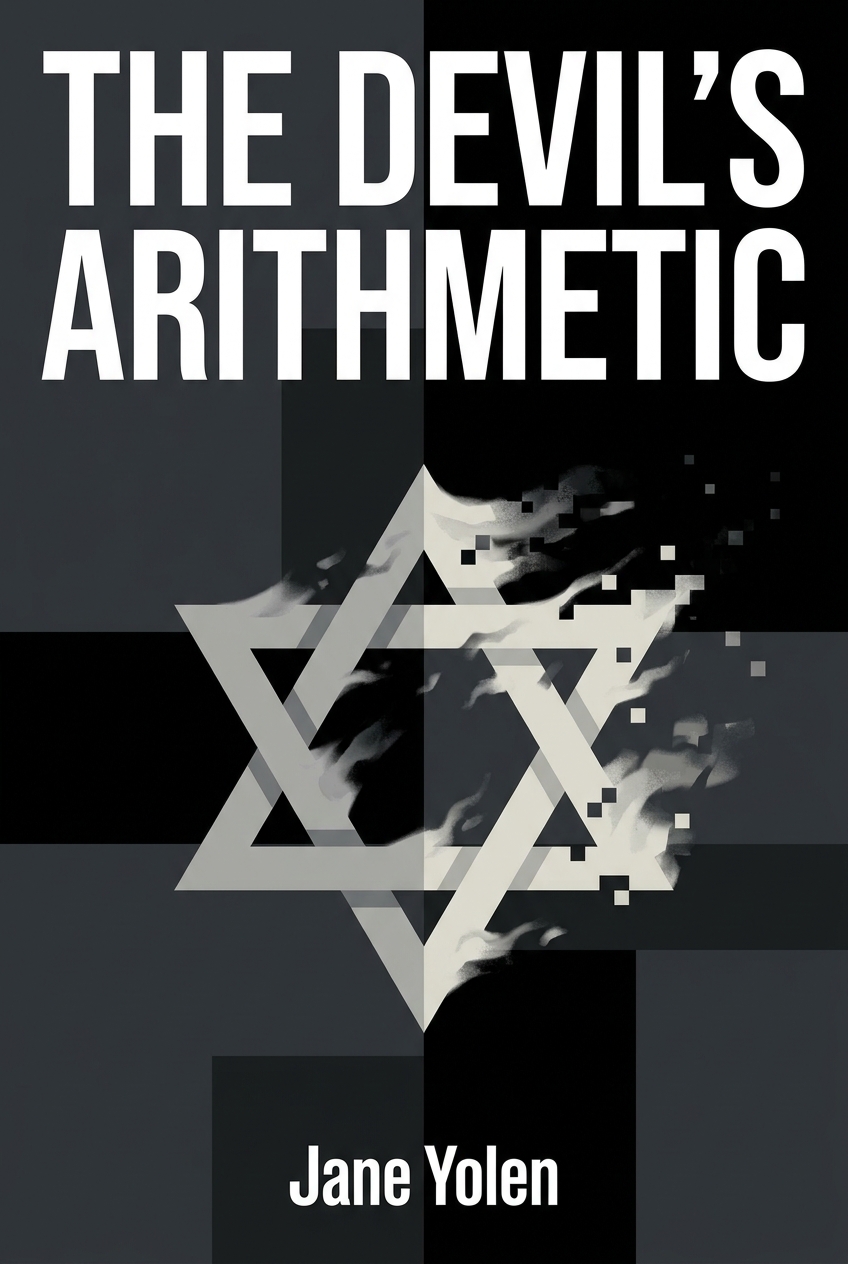
The Devil's Arithmetic book cover

The Script

A grandmother carefully sets a place at the dinner table for a guest who will never arrive, a ghost from a life she will not speak of. A grandson, tracing the faded blue numbers tattooed on her arm, asks a question she cannot answer. For her, the past is a locked room, its horrors too immense to share. For him, it’s a collection of whispers and missing pieces, a history he feels disconnected from, like a story about someone else’s family. The grandmother’s silence is a shield, meant to protect the young from a pain they can’t possibly comprehend. But that same silence builds a wall, leaving the new generation stranded, unable to feel the weight of their own history or understand the sacrifices that allow them to sit at a peaceful holiday table.

This gap between those who carry the burden of memory and those who are shielded from it is the space Jane Yolen wanted to bridge. A prolific and celebrated author of children’s literature, Yolen noticed a troubling silence from survivors in her own community. She was also deeply concerned by a survey revealing that a shocking number of high school students didn't know what the Holocaust was. She wrote The Devil's Arithmetic as an answer to a question her own daughter asked: what would it have been like? By creating a story that literally transports a modern, complaining teenager into the heart of that locked room, Yolen aimed to forge an emotional, visceral connection to a past that was quickly fading from living memory.

Module 1: The Burden of Memory

We begin with Hannah Stern. She's a modern Jewish girl living in New Rochelle, New York. And she's bored. She's tired of remembering. At her family's Passover Seder, she complains about the repetitive stories and rituals. Her grandfather's emotional outbursts over old Holocaust footage embarrass her. She sees her family's obsession with the past as a heavy, pointless burden. This sets up a core tension. For those who have not lived through trauma, the duty to remember can feel like an unfair obligation.

Hannah's world is one of school, friends, and movies. She compares the bitter herbs of the Seder to her friend's Easter jelly beans and thinks, "It isn't fair." She sees the ritual of opening the door for the prophet Elijah as a "baby story." Her perspective is entirely rooted in the present. She represents a generation for whom history is a distant echo, not a living presence. This disconnect is a source of conflict. Hannah loves her family, but she doesn't understand their pain. She wants to be a normal American kid, not someone constantly tethered to a tragic past she never experienced.

This leads to a crucial insight about how we transmit history. When memory becomes ritual without understanding, it loses its power. For Hannah, the Seder is a social chore, not a connection to thousands of years of history and resilience. Her grandfather’s tattooed number is just an embarrassing mark, not a symbol of survival. The stories are just words. Yolen uses Hannah’s indifference to show what happens when the "why" behind our traditions gets lost. The emotional weight is gone, leaving only the empty shell of obligation.

So, what happens next? Hannah is chosen for the symbolic task of opening the apartment door for the prophet Elijah. She does it with cynical reluctance. But when she opens the door, the familiar hallway of her New Rochelle apartment building is gone. In its place is a green field under a gray sky. A man with a hoe is singing in the distance. The past is no longer a story. It has just swallowed her whole.

Module 2: The Shock of Dislocation

We've just seen Hannah get pulled from her world. Now we're entering the second phase of the book, where she grapples with this new reality. Let's explore what happens when the present is violently replaced by the past.

Hannah is no longer Hannah. She is in a Polish shtetl, a small Jewish village, in the year 1942. Everyone calls her Chaya. They tell her she's an orphan, recovering from a fever that took her parents. Her aunt and uncle, Gitl and Shmuel, are caring for her. Hannah insists she's from New Rochelle. She talks about America, New York, and movies. They dismiss her words as fever dreams or jokes. This immediate, jarring displacement forces a critical realization: Identity is fragile and can be redefined by one's environment.

Hannah knows who she is. She remembers her family, her home, her life. But in this world, that identity has no currency. No one knows New Rochelle. No one understands her references. To them, she is Chaya. She is forced to "play along" to survive, caught between two realities. This creates a powerful internal conflict. She fears that if she fully accepts being Chaya, she will forget being Hannah. Memory, which was once a burden, now becomes her only lifeline to her true self.

As she navigates this world, Hannah’s modern perspective clashes with the historical reality. She's shocked by the lack of indoor plumbing and the villagers' insular views. The local girls are horrified that her best friend is Catholic. School is only for boys. These details highlight a fundamental principle. Our perception of normalcy is entirely dependent on our context. What Hannah took for granted—education, religious diversity, basic comforts—are unimaginable luxuries here. Conversely, the villagers' deep faith and communal bonds are foreign to her.

And here's the thing. Hannah’s initial reaction is to treat this all as a strange, elaborate dream. She even tries pinching herself. But the sensory details are too real. The taste of the soup, the feel of the rough fabric, the genuine affection from Gitl and Shmuel. The experience is not a dream. The narrative makes it clear. The past is a tangible, demanding reality. Yolen doesn't allow us, or Hannah, the comfort of fantasy. The stakes are real, and they are about to become terrifyingly clear.

Read More