The Boy in the Striped Pajamas
What's it about
What if the world you knew was a lie, and the friend you weren't supposed to have was the only person who saw the real you? This powerful story explores the innocence of childhood colliding with one of history's darkest chapters, forcing you to question everything. Through the eyes of a naive young boy, you'll discover the devastating reality of the Holocaust from a perspective you've never imagined. This summary unpacks the profound themes of friendship, ignorance, and the fences, both real and invisible, that divide us, leaving you with a haunting lesson about humanity.
Meet the author
John Boyne is the acclaimed Irish author of the global phenomenon, The Boy in the Striped Pajamas, which has sold over 11 million copies worldwide. A lifelong passion for historical fiction and a profound interest in the Holocaust's impact on ordinary people compelled him to write this powerful story. Boyne is a masterful storyteller dedicated to exploring complex human themes through the innocent eyes of his young protagonists, creating narratives that resonate deeply with readers of all ages and backgrounds.
Opens the App Store to download Voxbrief

The Script
Imagine a child's bedroom. It's a kingdom built from imagination, where a wooden chair can be a fortress and a window frame can be a television screen showing a world of green fields and other children playing. For the child, this is the whole truth. The chair is a fortress because they say it is. The window shows a game because that's what games look like. The logic is simple, direct, and self-contained. Now, imagine a fence is built, bisecting that view. The child doesn’t see a political statement or a historical turning point. They see a line on their screen. They see the other children are now wearing the same striped clothes, which must be some kind of uniform for a new game they don't understand. The child's innocent, literal interpretation of the world doesn't break; it simply stretches to accommodate the new, strange facts. The people in the striped pajamas are just people, like them. The fence is just a fence. This unwavering lens of childhood innocence, when placed against a backdrop of unimaginable adult horror, creates a gap, a profound and terrifying dissonance between what is seen and what is truly happening.
This exact gap is the space Irish novelist John Boyne wanted to explore. He was setting out to write a fable. The initial idea for the story arrived as a single, stark image: two young boys, separated by a fence, trying to understand their opposing worlds through the simple, flawed logic of childhood friendship. Boyne, a prolific writer of fiction for both adults and young adults, has spoken about how this image was so powerful that he wrote the first draft of the novel in a feverish two and a half days, driven by the urgency to see this fable through to its heartbreaking conclusion. He aimed to use the naive perspective of his protagonist, Bruno, to reveal the chilling absurdity of the hatred that fueled the Holocaust, as seen through eyes that were simply not yet capable of understanding it.
Module 1: The Lens of Innocence
The entire story is built on a powerful narrative device. A child's innocent perspective filters horrific realities, exposing their inherent absurdity. Bruno, a nine-year-old boy, doesn't see a world of political ideology and systemic persecution. He sees a world of personal inconveniences and confusing adult behavior. When his family abruptly moves from their grand Berlin home, he doesn’t understand it’s because his father was promoted within the Nazi regime. He thinks he must have done something wrong. He worries about leaving his friends and the good banister for sliding down. His concerns are pure childhood.
This innocence is most apparent in his language. He doesn't hear "the Führer," the title for Adolf Hitler. He hears "the Fury," a word that accidentally captures the menacing anger of the man without Bruno ever grasping his identity. This is a recurring theme. The concentration camp, Auschwitz, becomes "Out-With." For Bruno, this name makes perfect sense. His sister, Gretel, even explains it with childlike logic: "Out with the people who lived here before us." It’s a simple, literal interpretation of a name that holds unimaginable horror.
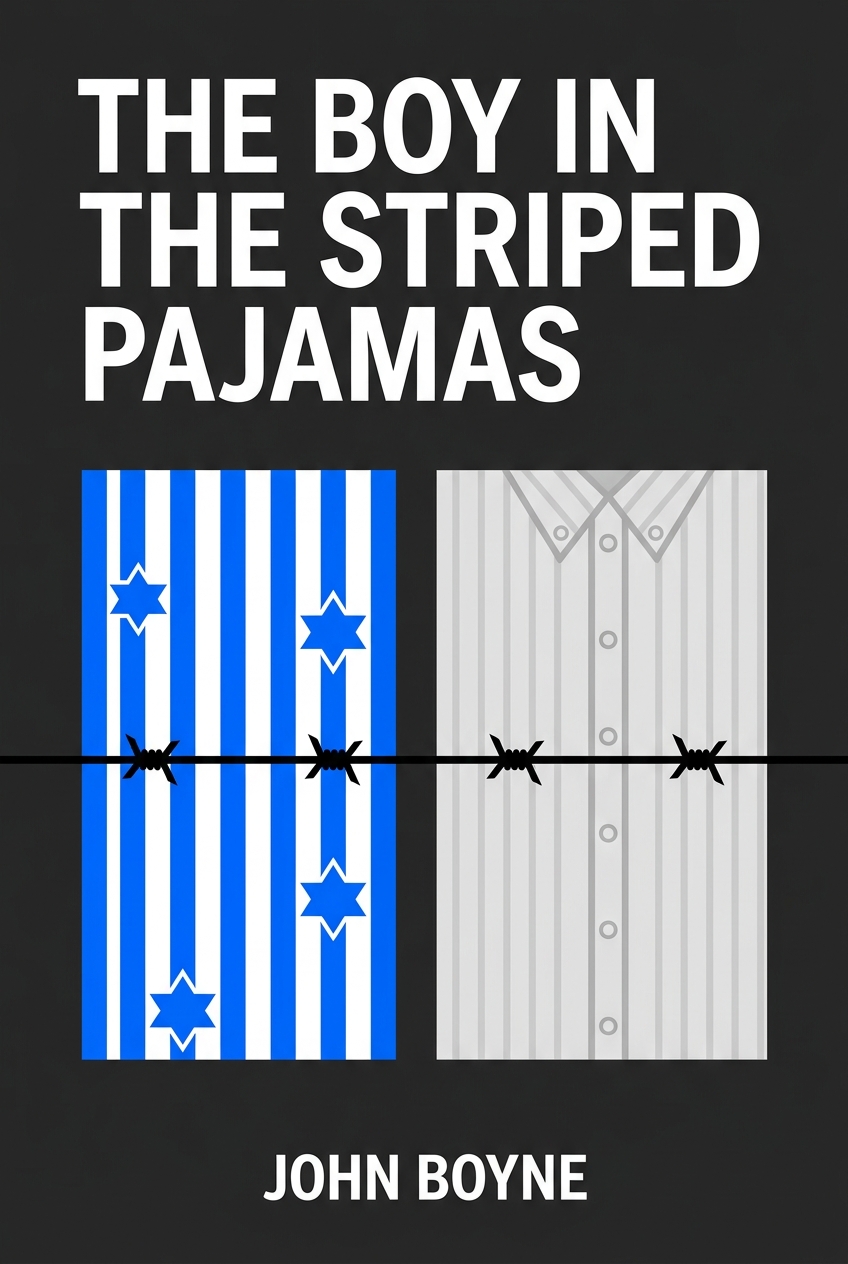
And what about the people inside Out-With? Bruno sees them from his window. They are all wearing the same thing. To him, it's a strange fashion choice. He describes them as wearing "a pair of grey striped pajamas." This observation is the core of the book's title and its central metaphor. Innocence re-frames symbols of oppression into objects of simple curiosity.
This viewpoint forces us, the readers, into an uncomfortable position. We know what "the Fury" means. We know what "Out-With" is. We know what the striped pajamas represent. By filtering these horrors through Bruno’s naive consciousness, Boyne makes them feel alien and irrational all over again. It strips away the historical distance and forces us to see the madness of it as if for the first time. For a professional who deals with complex systems, this is a powerful reminder. Often, the most direct path to understanding a broken system is to see it through the eyes of someone who doesn't accept its "rules" as normal.
Module 2: The Fence as a Dividing Line
The central symbol of the story is the fence. It's a physical barrier separating Bruno's house from the camp. It represents every artificial division humans create: social, political, and ideological. To the adults, the fence is a necessary tool of order and control. To Bruno, it's just an obstacle to exploration.
When Bruno first meets Shmuel, a Jewish boy on the other side of the fence, their interaction is between two lonely boys. They discover they share the same birthday. Bruno exclaims, "We're like twins!" In that moment, their shared humanity completely erases the fence's intended purpose. Their friendship blossoms through conversation, day after day, sitting on opposite sides of the wire. This brings us to a crucial insight: Genuine human connection can transcend artificial and ideological divides. Their bond is built on personal commonalities, not the social categories imposed upon them.
However, Bruno’s privilege constantly blinds him to Shmuel’s reality. He complains about his own boredom while Shmuel is starving. He sees Shmuel’s shaved head and, after getting his own head shaved for lice, thinks they look alike, wondering if that’s why everyone in the camp has the same haircut. He even feels jealous that Shmuel has hundreds of other boys to "play with" on his side. He cannot comprehend that Shmuel's world is one of terror.
This contrast reveals another key point. Privilege can create a profound and dangerous ignorance of others' suffering. Bruno isn't malicious. He's just sheltered. He offers to bring Shmuel chocolate or have him over for dinner, completely unaware of the mortal danger such an act would pose. He lives in a world of solutions, while Shmuel lives in a world of survival. The fence, for Bruno, is a mystery to be solved. For Shmuel, it's the unchangeable, brutal wall of his reality. It’s a stark lesson in perspective. We often assume our reality is the reality, failing to see the invisible fences that shape the lives of others.