All Books
Self-Growth
Business & Career
Health & Wellness
Society & Culture
Money & Finance
Relationships
Science & Tech
Fiction
Topics
Blog
Download on the App Store

The Divines

A Gripping Elite Boarding School Coming of Age Story – Violent Secret, Teenage Girls

12 minEllie Eaton

What's it about

Have you ever wondered if you could truly escape your past? For Josephine, a violent secret from her elite boarding school days still haunts her adult life. Now, she must confront the toxic friendships and dangerous rituals of the past to understand who she really is. This gripping summary of The Divines unpacks the destructive nature of teenage girlhood and the secrets we keep. You'll explore how unchecked privilege and a yearning for belonging can lead to devastating consequences, forcing you to question the memories you thought you could trust.

Meet the author

Ellie Eaton is a graduate of the prestigious creative writing program at the University of East Anglia, where she was awarded the Malcolm Bradbury Scholarship. Her own experiences attending a traditional English boarding school provided the complex, authentic foundation for her bestselling debut novel, The Divines. Eaton drew upon her memories of intense female friendships and the pressures of elite institutions to explore the lasting power of our teenage years, bringing a uniquely personal insight to this gripping story.
Listen Now

Opens the App Store to download Voxbrief

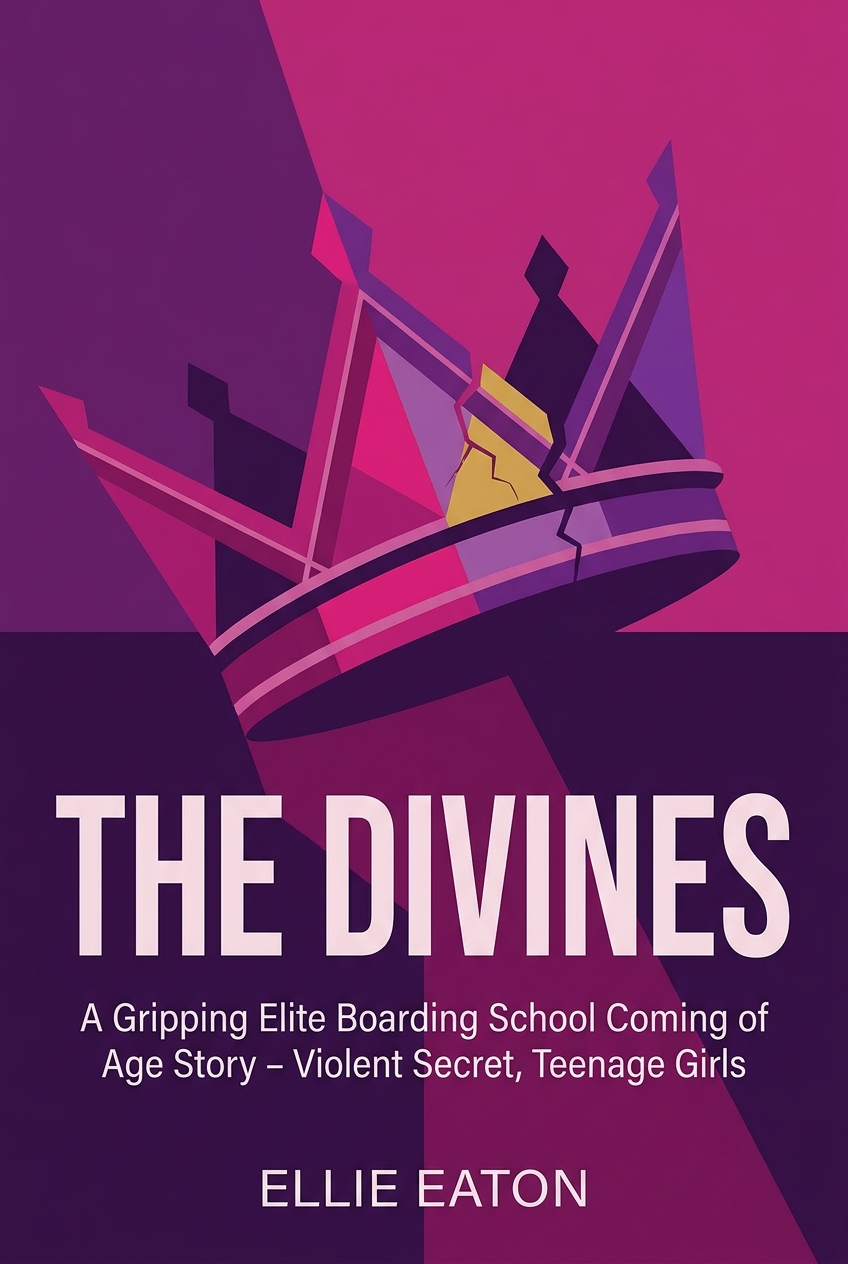
The Divines book cover

The Script

Think of two young women, best friends, attending the same elite boarding school. They share inside jokes, whispered secrets, identical uniforms, and a fierce, insular loyalty. To an outsider, they are a unit, two halves of a whole, defined by their shared world. But inside that shared world, their experiences diverge. One is a native, born into the rarefied air of privilege and belonging. The other is a scholarship kid, a transplant, perpetually aware of the subtle codes she must crack just to survive. Though they stand side-by-side, they are looking at the same gilded cage from two entirely different perspectives—one from the inside out, the other from the outside in.

This gap between a shared past and its fractured, private interpretations is exactly what obsessed author Ellie Eaton. She was fascinated by the way memory can feel like a collective story, yet be experienced in profoundly different, even contradictory, ways by the people who lived it. Eaton, who worked for a time as a welfare officer in a boarding school, drew from her observations of these intense, hierarchical environments. She wanted to write a story that peels back the polished veneer of a formative friendship to expose the unsettling truths and unequal power dynamics that were lurking beneath the surface all along, forcing a woman to confront not just what happened, but her own complicity in it.

Module 1: The Anatomy of a Closed World

The world of St. John the Divine, or "The Divines," is a pressure cooker. It’s an institution built on exclusion, both literally and psychologically. A massive metal bridge separates the school from the local town, a physical symbol of the "us versus them" mentality that defines the students' existence. Inside this bubble, life is governed by a rigid set of rituals and unwritten rules.

This leads to the first core idea. In closed systems, identity is performed, not discovered. The girls at St. John's don't just attend school; they perform the role of a "Divine." This performance includes a specific way of dressing, like wearing penny loafers with a Hong Kong ten-cent coin. It involves a shared physical mannerism, like the signature "flick" of their hair into a side quiff. Even their language is coded, using boys' nicknames like Joe, Skipper, and George. This shared identity is a shield. It provides a sense of belonging and superiority over the "townies," the local kids they are trained to despise. But this collective identity comes at a cost. It erases individuality. The narrator, Josephine, later called Sephine, feels like a "fraud" because her inner self doesn't match the confident exterior she projects. She’s riddled with insecurity but performs the role required to survive.

Furthermore, the strength of the group depends on the weakness of the individual. A Divine is powerful only when surrounded by other Divines. They walk through town taking up the whole pavement, their confidence amplified by their numbers. But when a Divine is alone, she becomes vulnerable. The narrator feels "limbless and exposed" when confronted by a townie girl without her friends. Her confidence evaporates. This dependency creates a powerful incentive to conform. Any deviation risks ostracism, which is social death in this environment. The group’s power is directly proportional to the individual’s fear of being cast out.

This dynamic naturally creates a brutal social hierarchy. So here's what that means. Social survival requires constant negotiation of status and loyalty. Friendships become strategic alliances. The narrator’s relationship with Skipper, the popular and confident leader of their clique, is a prime example. Josephine feels her own social value is tied directly to Skipper’s approval. She obsesses over small slights and fears being abandoned. This anxiety is fueled by the constant threat of becoming an outcast, like Gerry Lake. Gerry is the "least popular girl in our year," a social pariah who eats alone. The fear of becoming Gerry forces everyone to police their own behavior and the behavior of others, reinforcing the cruel logic of the system.

Read More