All Books
Self-Growth
Business & Career
Health & Wellness
Society & Culture
Money & Finance
Relationships
Science & Tech
Fiction
Topics
Blog
Download on the App Store

The Examined Life

How We Lose and Find Ourselves

13 minStephen Grosz

What's it about

Ever wonder why you keep making the same mistakes or feel stuck in patterns you can't explain? Discover the hidden stories that shape your daily life and learn how to finally understand the person you are, not just the person you think you should be. Drawing on decades of experience as a psychoanalyst, Stephen Grosz shares profound, real-life patient stories that act like mirrors to your own soul. You'll explore the subtle ways we deceive ourselves, the surprising reasons behind our anxieties, and the simple truths that can help you find your way back to yourself.

Meet the author

Stephen Grosz is a practicing psychoanalyst who has spent more than twenty-five years listening to the stories people tell about themselves to understand how they become who they are. Born in America and educated at Berkeley and Oxford, he now lives and works in London. His extensive clinical experience, distilled from over fifty thousand hours of conversation, forms the basis for the profound and compassionate insights he shares in The Examined Life.
Listen Now

Opens the App Store to download Voxbrief

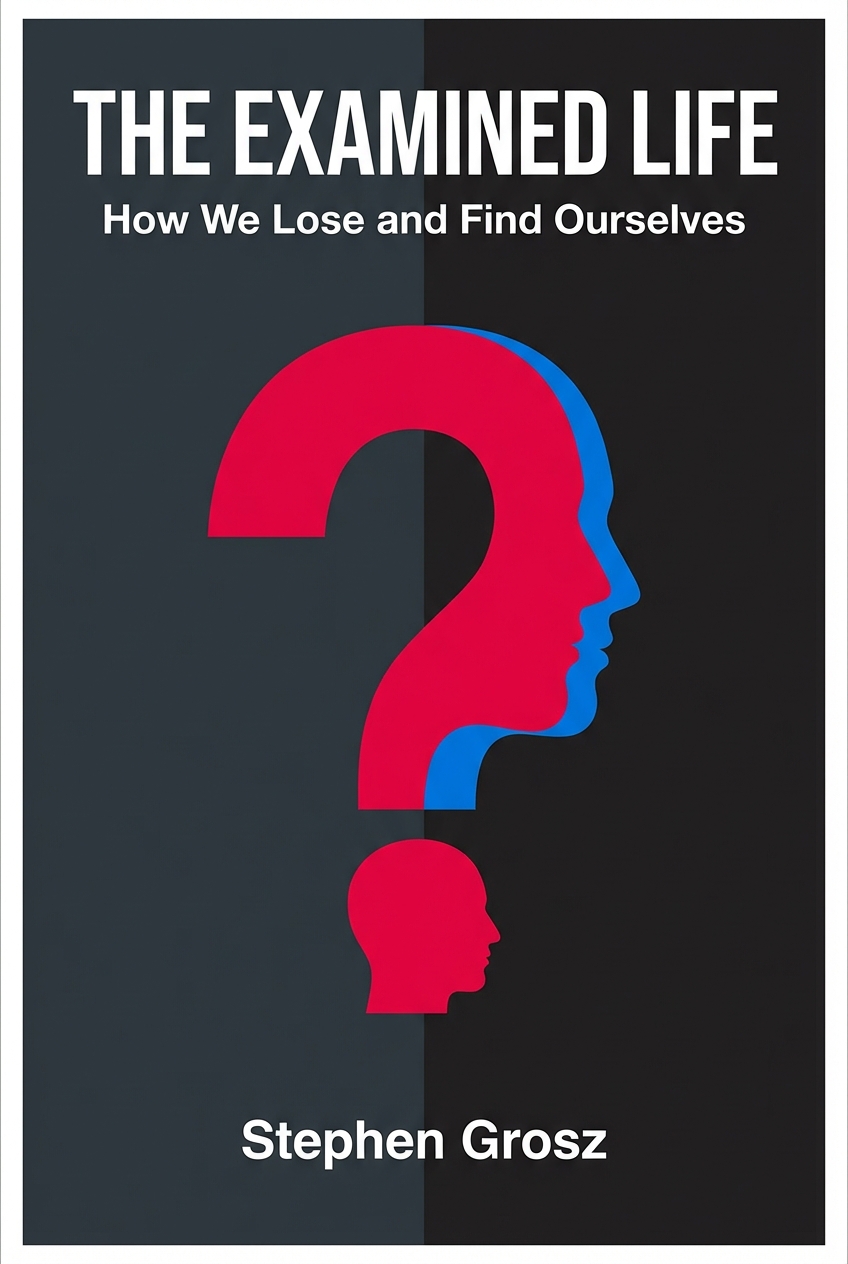
The Examined Life book cover

The Script

A man walks into his first therapy session, sits down, and announces that he has a problem with boredom. He describes a life of privilege and success—a loving family, a thriving career, impressive travels—but confesses that none of it touches him. He feels like he’s watching his own life on a screen, detached and uninspired. He’s tried everything: new hobbies, exotic vacations, even affairs. Each new thing provides a brief flicker of interest before the same dull gray feeling returns. He believes the problem is external, that he just hasn’t found the right 'thing' yet. The therapist listens, not to the story of boredom, but to the story underneath the boredom. He hears a different narrative, one about a deep, unacknowledged fear of feeling anything at all.

This gap—between the story we tell ourselves and the story our lives are actually telling—is the territory Stephen Grosz has explored for over twenty-five years. As a practicing psychoanalyst, he has sat with hundreds of people, listening to the tales they use to explain their anxieties, their grief, and their deepest patterns. He noticed that behind the most complex problems often lay a simple, human truth that had been lost or forgotten. Moved by the quiet power of these discoveries, Grosz began to distill these decades of listening into brief, potent stories. He wanted to capture the moments of change, the small shifts in understanding that allow a person to finally see the plot of their own life in a new light. The result is a collection of human moments that reveal how we lose our way, and more importantly, how we can begin to find our way back.

Module 1: The Invisible Scripts That Run Our Lives

We often think we are in complete control of our decisions. But Grosz shows how much of our behavior is driven by scripts written long ago, often in childhood. These scripts operate unconsciously, shaping our reactions and relationships.

The first step is to recognize that an unspoken story can possess us. When we can't articulate a painful past experience, that story doesn't just disappear. It finds other ways to be told. It surfaces through self-destructive behaviors, anxieties, and patterns we don't understand. A patient named Peter, for example, experienced extreme neglect as a baby. He couldn't put this trauma into words. Instead, he lived it out. He would suddenly blow up successful relationships and his career. He was enacting the chaos of his infancy without knowing why. His life became the story he couldn't tell. This shows us that our most confusing behaviors could be a message from a part of ourselves that has never been heard.

So what does this mean in practice? It means we must listen to more than just words. Grosz emphasizes that a person's most important communications are often non-verbal. They are found in actions, silences, and patterns. Peter's sudden decision to end his therapy was a form of communication. It made his analyst feel the shock and confusion that he, as a helpless child, had felt. To understand ourselves and others, we have to pay attention to the gaps between the words. What isn't being said? What feelings does a person's behavior evoke in us? A colleague's chronic lateness or a friend's constant joking is a signal pointing to a deeper, unvoiced story.

This leads to a crucial insight. Trauma internalized in childhood shapes adult psychology. Frightening experiences from our early years, especially those involving a lack of empathic care, become a template. This template dictates our feelings and behaviors in adulthood. For Peter, his early experience of violence created a core belief that it was dangerous to be vulnerable. To protect himself, he adopted a defensive posture. He became the aggressor to avoid ever feeling like the victim again. He would attack first—in his relationships, at work, and even against himself. This was a deeply ingrained survival strategy. Understanding this allows us to look at our own defensive patterns with more compassion and curiosity.

Finally, Grosz introduces a powerful idea about the therapeutic process itself. He suggests that the therapeutic relationship is a "wall" that both separates and connects. Using a metaphor from the philosopher Simone Weil, he describes the professional boundaries of therapy—the set roles, the quiet room, the scheduled time—as a wall. This wall separates the analyst and patient. But it's also the very structure through which they communicate. It's by tapping on this wall, through words, silences, and actions, that understanding is slowly built. This concept applies beyond therapy. In any professional relationship, clear boundaries and structures create the safety needed for real communication and trust to develop.

Module 2: The Hidden Functions of Our Defenses

We all have defense mechanisms. They are the psychological strategies we use to protect ourselves from painful emotions. But sometimes, these defenses cause more harm than good. Grosz's stories reveal how these defenses work and what they cost us.

A common defense is using humor. The book suggests that humor can be a barrier to emotional processing. A patient named Lily used witty, self-deprecating jokes to describe her parents' emotional neglect. When describing a cold hug from her mother, she’d quip, "as if I have fleas." The punchline arrived just when you’d expect her to express hurt or anger. This humor provided temporary relief. It even created a bond with the listener who laughed along. But it also stopped her from feeling the real pain of the situation. It allowed her to avoid confronting her parents and, more importantly, her own sadness. It's a pattern many of us use. We make a joke to deflect a difficult conversation or a painful feeling. It works in the moment, but it keeps us stuck.

Another powerful defense is emotional numbness. Grosz argues that sustained emotional neglect can lead to a numbing of our own feelings. Lily learned this skill as a teenager at boarding school. Her desperate pleas to come home were ignored. She described the experience as a furnace that "burned away any belief in my own feelings." This ability to numb herself allowed her to survive. It allowed her to maintain a relationship with her parents without feeling the constant sting of their indifference. But the cost was immense. She lost trust in her own emotional reality. This is a critical insight for high-performers. In environments that prize stoicism, we can learn to suppress our feelings to function. But over time, this disconnection from our own emotions erodes our ability to make authentic decisions.

Now, let's turn to a defense that looks like a virtue: praise. We think praise builds confidence. But Grosz, citing the work of Carol Dweck, warns that excessive or person-focused praise can undermine confidence. When we praise a child for being "clever," we are praising a fixed trait. This creates anxiety. The child becomes afraid of doing anything that might disprove the "clever" label. They become less likely to take on challenges and more likely to lie about their failures. The research is clear. Children praised for effort become more resilient and motivated. Children praised for intelligence become more fragile.

So what's the alternative? Genuine confidence is built through attentive presence. The book offers the example of an educator named Charlotte Stiglitz. When a child showed her a drawing, she didn't say, "You're a great artist." She said, "There is a lot of blue in your picture." This simple, non-judgmental observation invited the child to talk about his work. It communicated that his activity was worth thinking about. This is a profound shift in mindset. True validation comes from someone taking the time to truly see and understand our world. For any leader or parent, this is a powerful tool. Instead of generic praise, offer specific, thoughtful observations. It shows you are paying attention, and that is what truly builds confidence.

Read More