All Books
Self-Growth
Business & Career
Health & Wellness
Society & Culture
Money & Finance
Relationships
Science & Tech
Fiction
Topics
Blog
Download on the App Store

The Flower School

The Principles and Pleasures of Good Flowers

15 minJoseph Massie

What's it about

Ever dreamed of creating stunning floral arrangements but didn't know where to start? Unlock the secrets to transforming simple blooms into breathtaking masterpieces. This guide gives you the foundational skills to make any space more beautiful with flowers, whether you're a beginner or a budding pro. Learn directly from award-winning artist Joseph Massie as he demystifies the art of floral design. You'll discover the core principles of shape, color, and texture, and master practical techniques for selecting, conditioning, and arranging flowers. Get ready to express your creativity and bring professional-level beauty into your home.

Meet the author

Joseph Massie is an internationally acclaimed artist, author, and floral designer, celebrated for winning an unprecedented five consecutive RHS Chelsea Flower Show Gold Medals by the age of 26. His journey began in his hometown of Liverpool, where a weekend job in a flower stall ignited a lifelong passion for botanical art. This humble start blossomed into a world-renowned career, leading him to establish his own Flower School to share the foundational principles and profound joy of working with flowers, which he now beautifully details in his book.
Listen Now

Opens the App Store to download Voxbrief

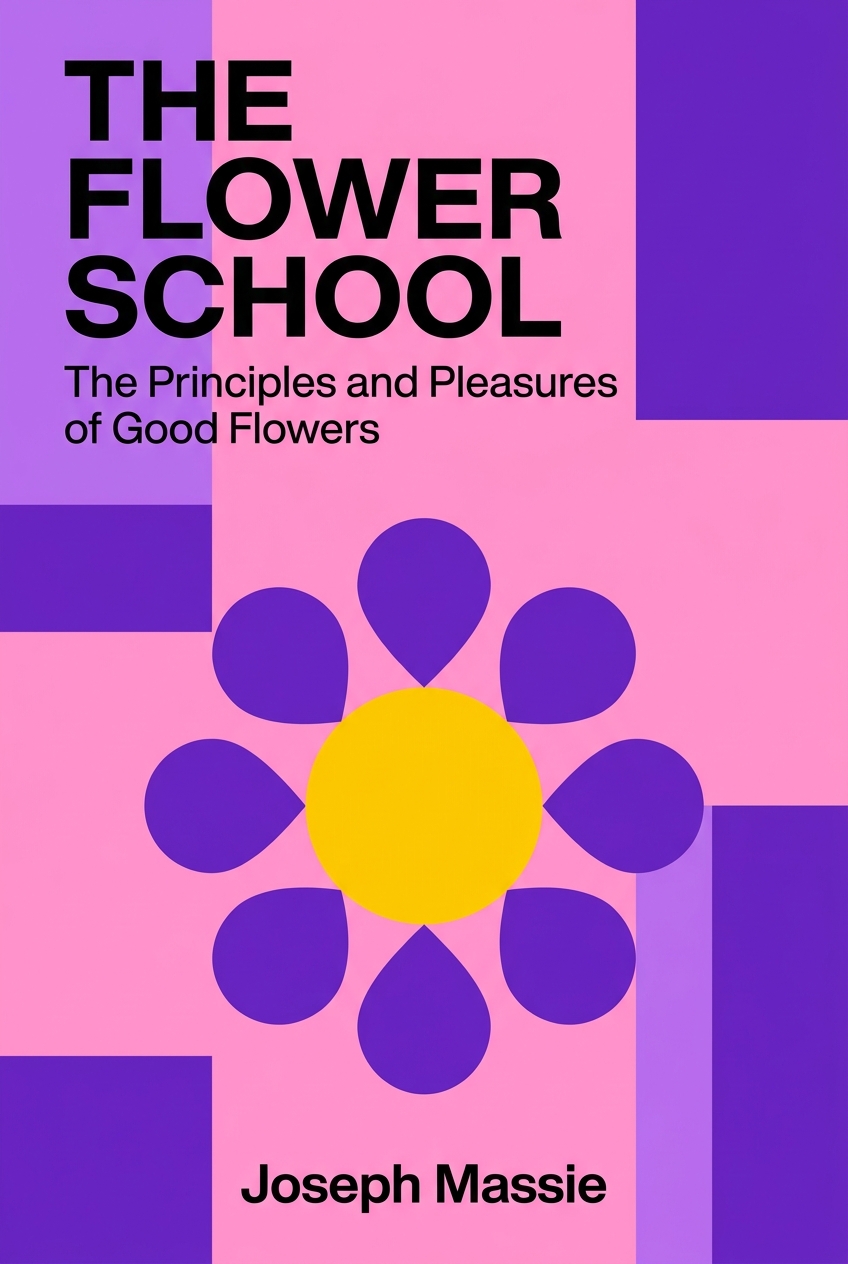
The Flower School book cover

The Script

In a master jeweler’s workshop, two apprentices are given identical raw emeralds, cloudy and full of inclusions. The first apprentice, aiming for perfection, meticulously grinds away every flaw, striving for a flawless, brilliant-cut gem. The result is technically perfect, but small, cold, and a fraction of its original size. The second apprentice studies the stone’s internal world—the delicate ‘jardin’ of flaws. Instead of erasing them, she carves and polishes the stone to feature them, turning a network of fractures into a starburst pattern and a dark inclusion into the heart of a miniature nebula. Her finished gem is larger, deeper, and tells a story. It is alive and full of character.

This exact challenge—seeing the inherent character within natural material and elevating it, rather than forcing it into a preconceived ideal—is the central tension in floral design. It's a principle Joseph Massie, a celebrated artist who works with flowers as his medium, has spent his career exploring. After winning five consecutive gold medals at the RHS Chelsea Flower Show by the age of 25, he realized that technical mastery was only half the equation. He saw a gap between the rigid, formulaic instructions taught in many schools and the intuitive, artistic process that creates truly breathtaking work. He wrote "The Flower School" to bridge that divide, creating a guide that honors the wild, imperfect beauty of nature and teaches others how to see the story within the stems.

Module 1: The Foundation—Mindset, Space, and Tools

Before you touch a single flower, you need to prepare your mind and your environment. Massie argues that true artistry grows from a foundation of knowledge, not just technical mimicry. This is about understanding the "why" behind the "how."

The first step is to cultivate a student's mindset by prioritizing foundational theory over mere technique. Many people want to jump straight to making beautiful things. But Massie insists that learning the elements of design, color theory, and principles like the Golden Ratio is what separates a technician from an artist. This theoretical knowledge is universal. It applies to photography, interior design, and even UI/UX. It gives you a language to understand and create beauty in any medium.

Next, you have to establish a dedicated workspace, even if it's temporary and imperfect. Your creative work needs a home. Massie himself started in his mother's back room with an old IKEA cupboard. You don’t need a perfect, custom-built studio. You just need a designated space. This could be a corner of your garage or a simple trestle table. The key is to have a comfortable workbench, good lighting, and easy access to water. A dedicated space signals to your brain that it's time to focus and create.

From there, it's about the tools. Mastering a small set of essential tools and sustainable materials is critical for efficiency and effect. You don't need a hundred different gadgets. You need a few high-quality items. This includes sharp Japanese secateurs, a good floristry knife, and wire cutters. You also need "mechanics," the support materials for your arrangements. Massie champions a shift toward sustainability here. Instead of petroleum-based floral foams, he advocates for natural alternatives like basalt-based foam, reusable chicken wire, and traditional Japanese pin holders called kenzans.

Finally, you need to learn to condition flowers properly based on their stem type to maximize their life. This is a non-negotiable skill. General conditioning is simple: recut stems at a 45-degree angle and use clean water with flower food. But different flowers need different care. Soft stems like tulips need the bulb base removed. Woody stems like lilac need a sharp, clean cut. Bleeding stems like poppies need to be cauterized with a flame to seal them. Mastering these techniques can extend a flower's vase life by up to 60%. It’s the difference between an arrangement that lasts two days and one that lasts a week.

Now that we have the foundations in place, let's explore the universal principles of design.

Read More