All Books
Self-Growth
Business & Career
Health & Wellness
Society & Culture
Money & Finance
Relationships
Science & Tech
Fiction
Topics
Blog
Download on the App Store

The Last Story of Mina Lee

A Reese's Book Club Pick – A NYT Bestseller Historical Mystery of Love and Deception

11 minNancy Jooyoun Kim

What's it about

Have you ever felt like you didn't truly know your own parents? Get ready to uncover the secret life of Mina Lee, a Korean immigrant whose sudden death leaves her daughter, Margot, questioning everything she thought she knew about her mother's past and their complicated relationship. You'll follow Margot as she pieces together a hidden history of love, sacrifice, and deception stretching from 1980s Seoul to modern-day Los Angeles. This gripping journey reveals the unspoken struggles of immigrant families and the secrets we keep to protect the ones we love.

Meet the author

Nancy Jooyoun Kim is the New York Times bestselling author of The Last Story of Mina Lee, a celebrated Reese’s Book Club pick and award-winning debut novel. A graduate of the UCLA creative writing program, Kim draws from her own experiences as a Korean American woman to explore powerful themes of family, immigration, and identity. Her writing gives a profound voice to the intricate and often hidden stories that shape the lives of immigrant mothers and their American-born daughters.
Listen Now

Opens the App Store to download Voxbrief

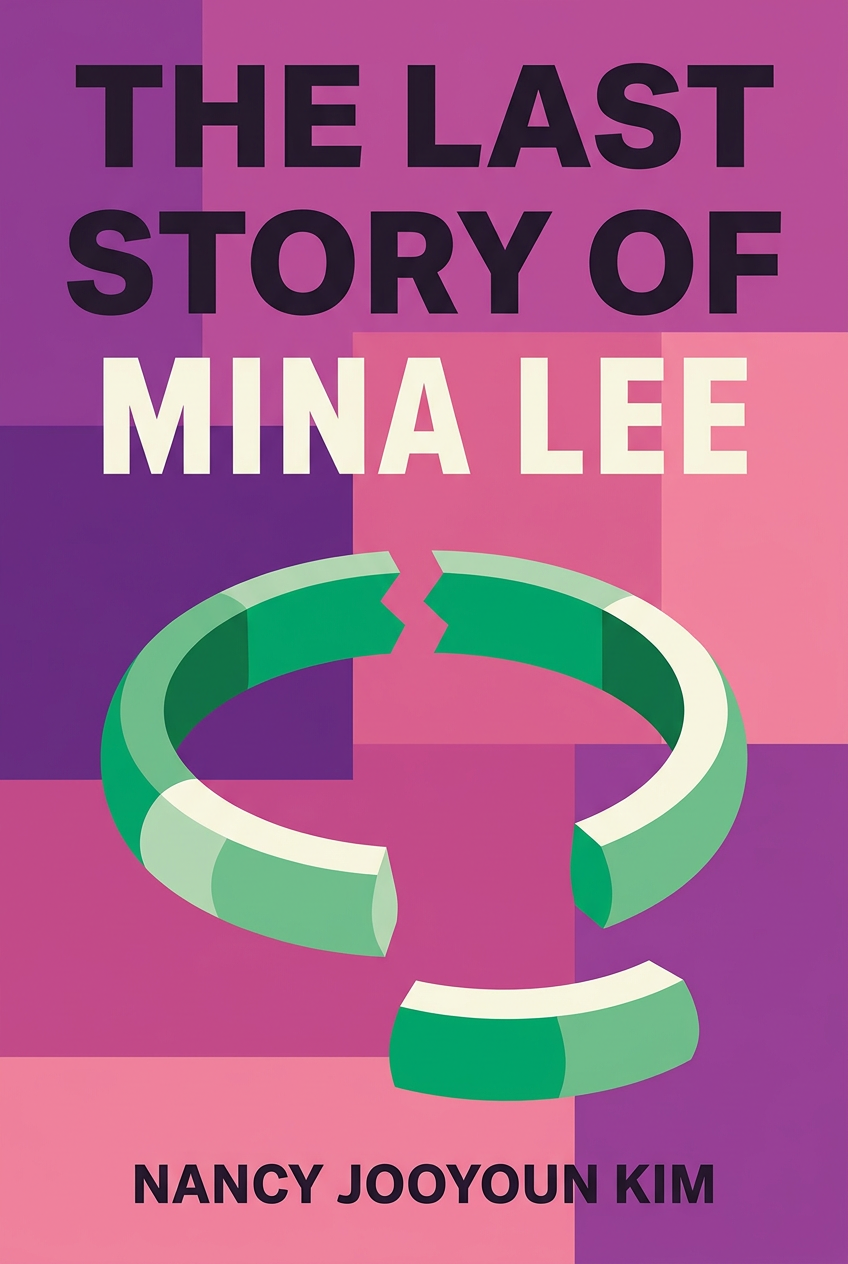
The Last Story of Mina Lee book cover

The Script

You open the door to your mother’s apartment, expecting the familiar scent of kimchi and the low hum of the television. Instead, you find silence. You find an empty space where a life used to be. On the kitchen counter sit two bowls. The first is a pristine, white porcelain bowl, the kind used for special guests—a symbol of the clean, presentable life she wanted everyone to see. Next to it is a chipped, everyday ceramic bowl, stained from years of use, holding the remnants of her last, unfinished meal. This is the bowl she actually lived with, the one that holds the unvarnished truth of her daily existence. One bowl represents the story your mother told the world; the other holds the story she actually lived. How do you begin to understand the person who used them both?

This gap between the public story and the private reality is the emotional territory Nancy Jooyoun Kim explores in her debut novel, "The Last Story of Mina Lee." Growing up as the daughter of Korean immigrants, Kim was intimately familiar with the stories families tell to protect themselves and the silences they keep to survive. She noticed how immigrant parents often present a simplified, resilient narrative to their children, editing out the hardship and loneliness. Kim wanted to write a story that honored both the pristine bowl of her parents’ hopes and the chipped bowl of their hidden struggles, creating a narrative that could finally hold the full, complicated truth of their experience.

Module 1: The Invisible Weight of the Immigrant Past

The immigrant experience is often framed as a journey toward a new beginning. But for many, it’s a story defined by profound loss. Characters like Mina Lee, a Korean War orphan, carry deep-seated anxieties that are often invisible to their American-born children. This creates a fundamental disconnect. Mina’s past trauma shapes her entire existence in ways her daughter, Margot, can’t comprehend.

A core insight here is that past trauma dictates present behavior in subtle, powerful ways. Mina dislikes driving on freeways and rarely travels. To her daughter, this seems like a simple quirk. But for Mina, who fled war as a child and was permanently separated from her parents, movement is inherently tied to loss. Her aversion is an embodied memory of the worst moment of her life. This principle extends beyond major traumas. For many immigrants, the daily grind of survival in a new country—working low-wage jobs, navigating a foreign system—is its own form of trauma. It leaves little room for emotional expression or connection.

This brings us to a crucial point for anyone leading or working in diverse teams. Recognize that a colleague’s "quirks" or communication style might be rooted in a history you don't see. Mina never speaks of her past. She bottles it up. Her daughter Margot assumes she simply doesn't want to talk about things that hurt. But the silence is a survival mechanism. For professionals, this means practicing a deeper form of empathy. Instead of judging a quiet colleague or a hesitant team member, consider the unseen context. Their silence could be the echo of a life spent navigating hardship.

So what happens next? This silent history creates a chasm. Cultural and linguistic divides can mask a lack of true emotional connection. Margot and her mother have "choppy bilingual" conversations. They talk about practical things, like dinner or bills. But they never talk about their lives. Margot feels frustrated by her mother's lack of English, while Mina feels isolated in a world she can't fully access. This dynamic is common. The practical needs of survival often overshadow the emotional work of a relationship. The lesson is sharp. If your communication with someone is purely functional, you probably don't know them at all. You are only interacting with the surface.

Module 2: The Architecture of Family Secrets

Families, especially those dealing with trauma, often build their stability on a foundation of secrets. It’s not always malicious. Sometimes, as one character, Miguel, puts it, "agreeing to the same lie is what makes a family family." This idea is central to the novel. Secrets are a functional, if painful, part of the family structure.

This leads to a powerful realization: Shared silence is a form of communication, but it comes at a cost. Mina’s entire life in America is a web of secrets. She has a hidden romantic past. She has relationships her daughter knows nothing about. She even conceals the full depth of her suffering. This secrecy is a form of protection. She wants to shield her daughter from the pain of her past and the shame of her present struggles. But the cost is immense. Margot grows up feeling disconnected from her mother, loved but also kept at a distance. When Mina dies, Margot realizes she is a stranger to the woman who raised her.

Here's where it gets interesting for our own lives. We must audit the "agreed-upon fictions" in our professional and personal relationships. What topics are off-limits with your team? What truths are you avoiding with your business partner or your family? These silences often serve a short-term purpose. They maintain harmony. They avoid conflict. But over time, they erode trust and prevent true connection. The novel suggests that confronting these secrets, while painful, is the only path to genuine understanding. Margot’s journey to uncover her mother's past is a journey to finally meet her.

Furthermore, these secrets are not just personal. Uncovering a parent's hidden past is a way to understand your own place in a larger historical story. Margot's investigation is about understanding the Korean War, the realities of undocumented immigration, and the sacrifices her mother made. By excavating Mina's life, Margot is excavating her own identity. She begins to understand her own inherited anxieties and her place in the long, complex story of her family. This is a profound shift. It moves from seeing a parent as just a parent to seeing them as a historical actor, a person with a life that existed before and outside of you.

Read More