All Books
Self-Growth
Business & Career
Health & Wellness
Society & Culture
Money & Finance
Relationships
Science & Tech
Fiction
Topics
Blog
Download on the App Store

The Last Time I Lied

A Novel

12 minRiley Sager

What's it about

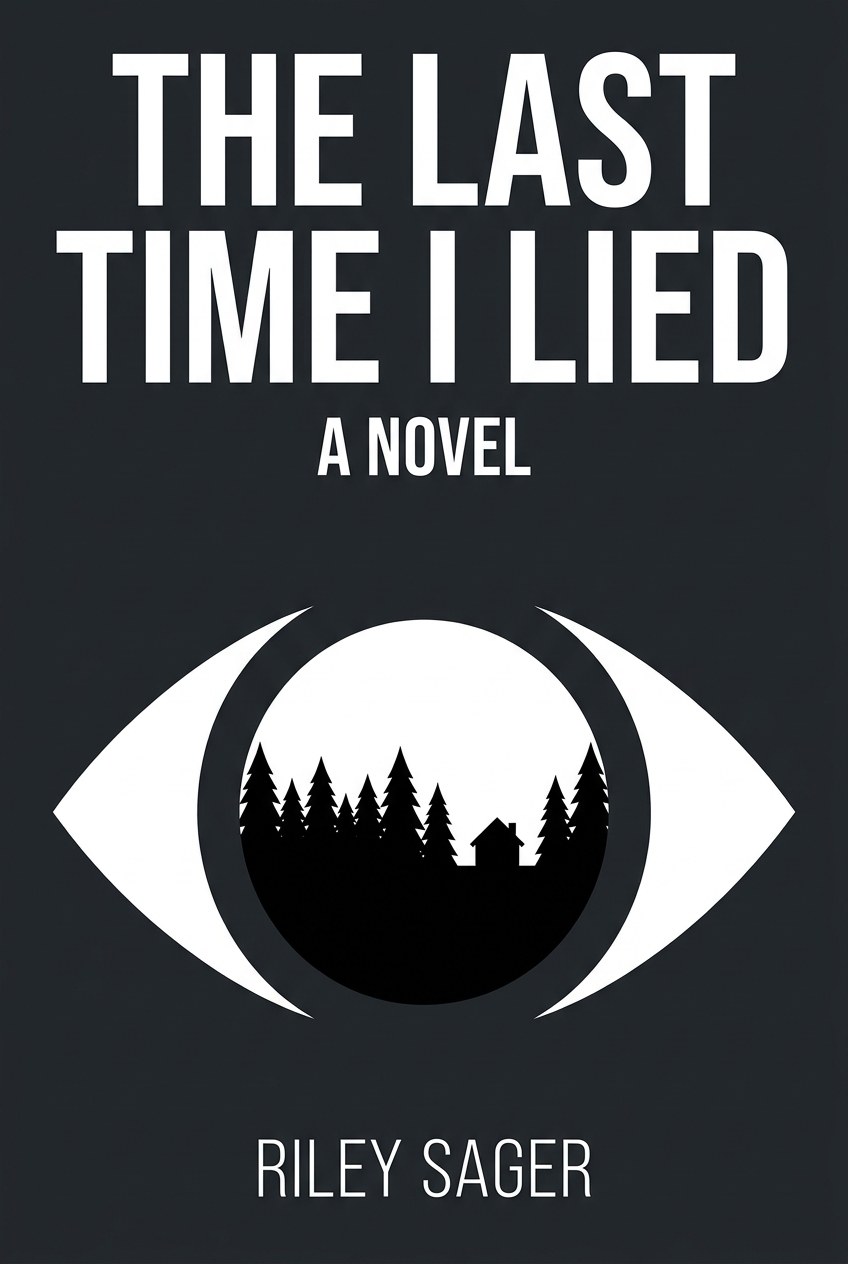
Ever wondered if the secrets you keep are more dangerous than the lies you tell? Fifteen years ago, Emma watched three friends vanish from summer camp after a game of truth or dare went wrong. Now, she's back, and the camp's dark history is calling her name. You'll follow Emma, now a famous artist, as she returns to the newly reopened Camp Nightingale. Haunted by the past and a cryptic clue her friends left behind, she must unravel a web of deceit that's tighter than ever. Can you piece together the puzzle of what really happened that night before you become the next one to disappear?

Meet the author

Riley Sager is the New York Times bestselling author of multiple blockbuster thrillers, celebrated for his masterful twists and suspenseful, atmospheric storytelling that keeps readers guessing until the end. A former journalist, editor, and graphic designer, Sager now writes full-time, drawing on a lifelong love of classic horror films and mystery novels. This passion for intricate plots and cinematic tension is evident in every page of his work, including the chilling and unforgettable narrative of The Last Time I Lied.
Listen Now
The Last Time I Lied book cover

The Script

Every time a building inspector clears a site for demolition, they sign off on a story. The official report notes structural fatigue, foundation cracks, maybe asbestos—a clean, logical reason for the wrecking ball. But what that report never captures is the building’s other story, the one held in its walls. It doesn’t mention the specific pattern of water stains on a ceiling that a child once saw as a map to a fantasy kingdom, or the exact squeak of the third stair that always betrayed a teenager sneaking in past curfew. When the building comes down, both stories are erased—the official, documented one, and the silent, lived-in one. We are all like this. We have the official story of our lives that we tell ourselves and others, and then there is the other version, the one that haunts the quiet rooms of our memory, a version we can’t quite trust but also can’t ever fully demolish.

This gap between the story we tell and the one that haunts us is the ground where Riley Sager builds his novels. Sager, a former journalist, became fascinated with the way memory can feel both crystal clear and completely unreliable, especially when shaped by trauma. He noticed how a single, terrifying event could fracture a person's life into a 'before' and an 'after,' creating two conflicting narratives. He wrote The Last Time I Lied to explore this very idea: what happens when a woman is forced to return to the place where her life broke in two, and must confront the ghosts of the story she’s been trying to escape for fifteen years.

Module 1: The Echo Chamber of Trauma

The story centers on Emma Davis, a successful artist living in New York City. But her success is built on a single, obsessive subject. Fifteen years ago, she was a camper at the elite Camp Nightingale. Her three cabinmates—Vivian, Natalie, and Allison—vanished in the middle of the night. Emma was the last person to see them alive. This event became her entire identity.

The first major idea is that unresolved trauma traps you in a repetitive loop. Emma’s art is the perfect example. For fifteen years, her entire body of work has been a series of paintings depicting a dark, imposing forest. Hidden within the layers of paint are the faint figures of three girls in white dresses. She paints them, then she paints over them, making them disappear again and again. Her gallery owner sees profound art. Her therapist sees a coping mechanism. But the truth is, it’s a prison. She is creatively and emotionally paralyzed, unable to paint anything else. This illustrates how trauma can lock our focus, forcing us to reenact the moment of impact until we find a way to break the cycle.

Building on that idea, the book shows how guilt distorts perception and sabotages relationships. Emma carries a heavy burden. She knows she played a role in the girls' disappearance. A teenage fight, a locked door, a lie told to the police. This guilt makes her a deeply unreliable narrator, not just for the reader, but for herself. She constantly questions her own memories. When Franny, the camp's owner, invites her back to teach art at the newly reopened camp, Emma’s paranoia spirals. She misreads intentions, seeing threats where there might be none. She keeps secrets from her boyfriend, Marc, creating distance. This is a powerful reminder for any professional. Unaddressed failures or ethical compromises can fester, coloring our judgment and eroding the trust we have with colleagues and partners.

Finally, the narrative demonstrates that returning to the source of trauma is a high-risk, high-reward path to closure. Marc, her boyfriend, encourages her to go back to Camp Nightingale. He frames it as a "textbook case of closure." For Emma, the "not knowing" what happened to the girls is a torment worse than death. The ambiguity has kept her suspended in time. So, she agrees to return. It’s a terrifying choice, but also the only path forward. The book proposes that sometimes, the only way to move past a foundational failure is to go back to the scene. You have to confront the ghost to finally understand it. This is about integrating the past so it no longer controls the present.

Read More