All Books
Self-Growth
Business & Career
Health & Wellness
Society & Culture
Money & Finance
Relationships
Science & Tech
Fiction
Topics
Blog
Download on the App Store

The Lost Girls of Willowbrook

A Heartbreaking Novel of Survival Based on True History

15 minEllen Marie Wiseman

What's it about

What if the one person you trusted most was the reason you were locked away? Immerse yourself in a harrowing tale of survival based on the true, dark history of an infamous institution, where one young woman must fight for her life and expose the truth. You'll follow the story of Sage, who is mistakenly institutionalized while searching for her missing twin sister. Inside the horrific Willowbrook State School, you'll uncover the secrets of her sister's disappearance, the brutal reality inmates faced, and the unbreakable bond of sisterhood that fuels a desperate escape.

Meet the author

Ellen Marie Wiseman is the New York Times bestselling author of highly acclaimed historical fiction that has been translated into twenty languages and published worldwide. Her passion for uncovering the stories of forgotten women in history stems from a childhood spent visiting her mother at a state-run mental institution. These early experiences inspired her to give a voice to the voiceless, leading to powerful and deeply researched novels like The Lost Girls of Willowbrook, which illuminates a dark chapter of the past.
Listen Now

Opens the App Store to download Voxbrief

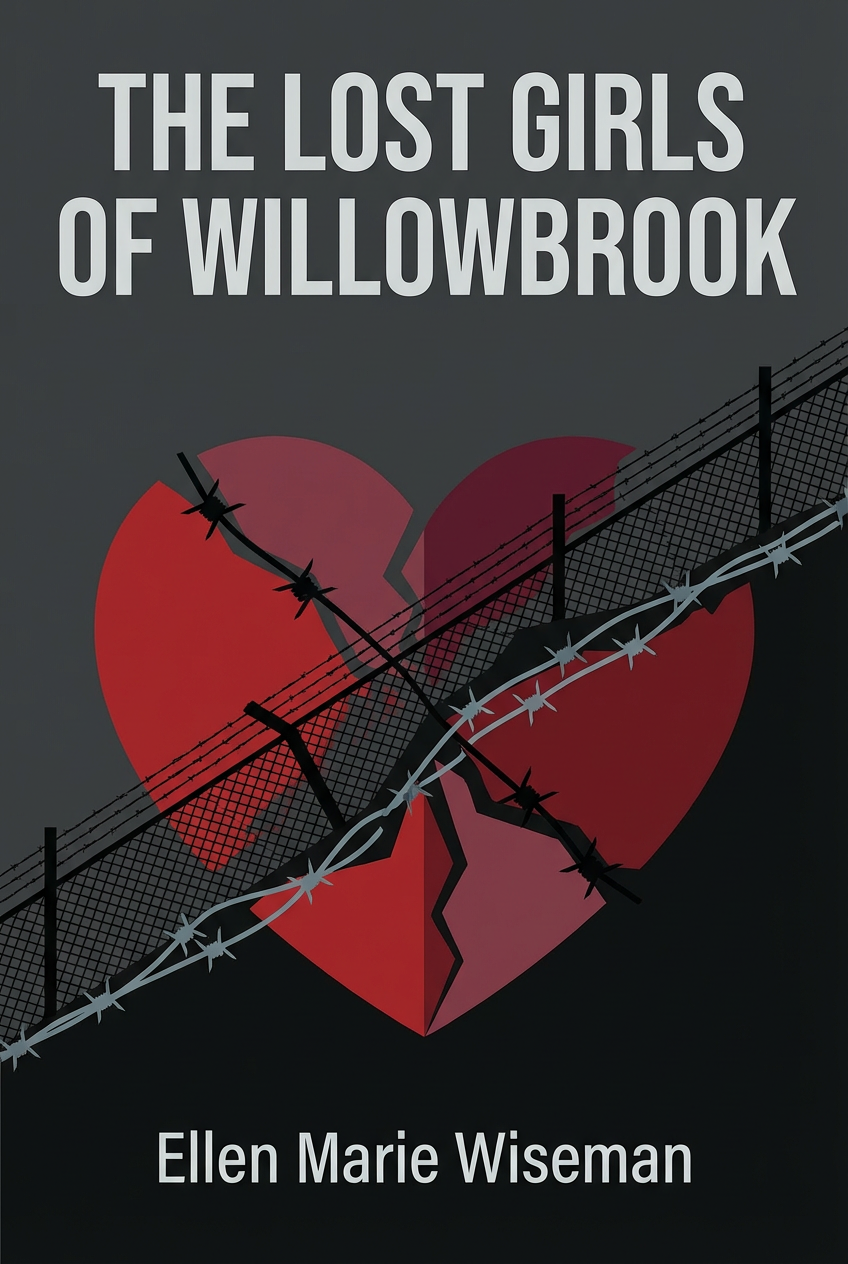
The Lost Girls of Willowbrook book cover

The Script

You’re running late for work, rushing down a familiar sidewalk, when you see it: a single, child-sized sneaker, scuffed and unlaced, lying in the middle of the pavement. For a split second, your day’s frantic schedule evaporates. You see not just a lost shoe, but a story—a child who was just here, a parent who might be frantic, a small, intimate moment of life interrupted. Most people walk by. They might register the shoe, feel a flicker of concern, and then continue on their way, the urgent demands of their own lives pulling them forward. The shoe remains, a silent testament to a story that, for almost everyone, will remain unfinished.

But what happens if you can't walk away? What if that single, discarded object is a clue you feel compelled to follow, a thread that, once pulled, begins to unravel everything you thought you knew about your own life? For one young woman, a classified ad in a newspaper—a single, out-of-place notice—becomes that lost sneaker. It hints at a story she cannot ignore, pulling her into a world hidden in plain sight, a place of secrets and forgotten people that society has chosen to walk past. This magnetic pull toward the stories that others discard is a driving force for author Ellen Marie Wiseman. Known for her deeply researched historical fiction that gives voice to the marginalized, Wiseman has a gift for finding the lost sneakers of history—the small, overlooked details that lead to harrowing and important truths. Her own past, marked by a mother who was institutionalized, gave her a unique and personal lens through which to explore the real-life tragedy of Willowbrook, compelling her to tell the story of those who were left behind.

Module 1: The Anatomy of a Lie

The story begins with a seismic shock. Sage, a teenager on Staten Island in the 1970s, discovers that her twin sister, Rosemary, did not die from pneumonia six years ago. She is alive. And she has been institutionalized at the notorious Willowbrook State School. This single revelation detonates the foundation of Sage's life, exposing the deep fault lines of familial betrayal.

A family’s deception can be more damaging than the initial tragedy. Sage’s mother and stepfather didn't just lie; they constructed an entire false reality. They staged a death, held a funeral, and forced Sage to grieve a sister who was still living. This was a calculated act of erasure driven by societal shame. Her stepfather admits people would whisper and stigmatize the family because of Rosemary's disability. They chose social comfort over truth. For Sage, this betrayal is a profound wound. It makes her question her mother's love and her own memories. The grief she felt for years was real, but its cause was a fabrication.

This brings us to a critical insight. Societal stigma often drives families to hide, rather than support, their most vulnerable members. Alan, the stepfather, explains that doctors said Rosemary would "never get better." The family treated her condition as a shameful secret to be locked away. Willowbrook became the perfect solution. It was a place to send the unwanted, a "dumping ground" just like the nearby Fresh Kills Landfill where Alan worked. The institution’s systemic neglect—lost patients, canceled visits, and horrific conditions—was a price they were willing to pay to maintain their public image.

And here's the thing. Urban legends often arise to explain real, ungraspable horrors. The local community has a boogeyman named "Cropsey," a supposed killer who haunts the woods around Willowbrook. When Rosemary goes missing from the institution, Sage's friends immediately invoke this myth. The legend of Cropsey is a coping mechanism. It provides a simple, monstrous face for a complex and terrifying reality. It's easier to believe in a lone madman than to confront the systemic cruelty of an institution and a society that throws its own children away. Sage initially dismisses the legend, but the story's grip shows how we use folklore to make sense of the senseless.

Module 2: The Facade of Care

Driven by a desperate need for truth, Sage travels to Willowbrook alone. What she finds is a chilling lesson in cognitive dissonance. The journey to the institution is the first step into a world where nothing is as it seems.

The initial view of Willowbrook is shockingly serene. Snow-covered lawns, brick buildings, even a playground. It looks more like a quiet college campus than a house of horrors. This placid exterior creates a moment of false hope. Maybe the stories were exaggerated. Maybe Rosemary was safe. But this leads to a crucial point: The most dangerous institutions often present a benign public face. The sign says "Willowbrook State School," suggesting education and growth. The reality inside is a psychiatric asylum.

The serene facade quickly crumbles. Ominous details always betray a rotten core. Sage notices the high fences, a lone shoe discarded in the snow, and sinister gargoyles on a staircase. Inside, the air is thick with the smell of bleach and human waste. She witnesses a family, the Chans, desperately trying to get answers about their son's bitten ear and lost sneakers. The attendant's indifference is a clear signal. This system is operating exactly as designed, by keeping families out and problems in. The rules are for the institution's protection.

This is where the story pivots into a nightmare. Sage is mistaken for her twin sister, Rosemary. Her protests are dismissed as delusions. Her identity is stripped away in an instant. This brings us to a terrifying insight: Once you are labeled, your reality becomes irrelevant to the system. Dr. Baldwin, a figure of authority, uses gaslighting as a tool of control. He insists Sage's pleas are symptoms of Rosemary's psychosis. He references treatments and conversations that never happened. Her clothes, her hairstyle, her memories—all are twisted into evidence of her "illness."

So what happens next? Sage is physically restrained, tied to a gurney with leather straps, and forcibly sedated. Her autonomy is completely erased. This reveals the true function of the institution. Control is the primary goal of a dysfunctional system. Dr. Baldwin uses the threat of more drugs and transfer to a high-security hospital to coerce her into silence. Her logical arguments are useless. Her identity as "Sage" is a bug in their system, and they are determined to erase it. This is an act of institutional violence.

Read More