All Books
Self-Growth
Business & Career
Health & Wellness
Society & Culture
Money & Finance
Relationships
Science & Tech
Fiction
Topics
Blog
Download on the App Store

The Paris Novel

11 minRuth Reichl

What's it about

Ever felt stuck in a life you didn't choose, dreaming of a bolder, more authentic you? Discover how one woman’s unexpected journey to Paris helps her shed a lifetime of insecurities and finally embrace her true passions, proving it's never too late to reinvent yourself. Follow Stella's transformation as she steps out from her mother's shadow and into the vibrant heart of Paris. You'll learn how connecting with your senses—through food, art, and new friendships—can unlock the courage to rewrite your own story, pursue your deepest desires, and build a life filled with joy and purpose.

Meet the author

As the final editor-in-chief of Gourmet magazine and the former restaurant critic for The New York Times, Ruth Reichl is one of America's most influential food writers. Her storied career, which also includes time as the restaurant critic for the Los Angeles Times, has taken her from Berkeley's culinary revolution to the grand kitchens of France. This deep, personal connection to the world of gastronomy and her love for Paris provide the rich, authentic backdrop for her captivating and delicious storytelling.
Listen Now

Opens the App Store to download Voxbrief

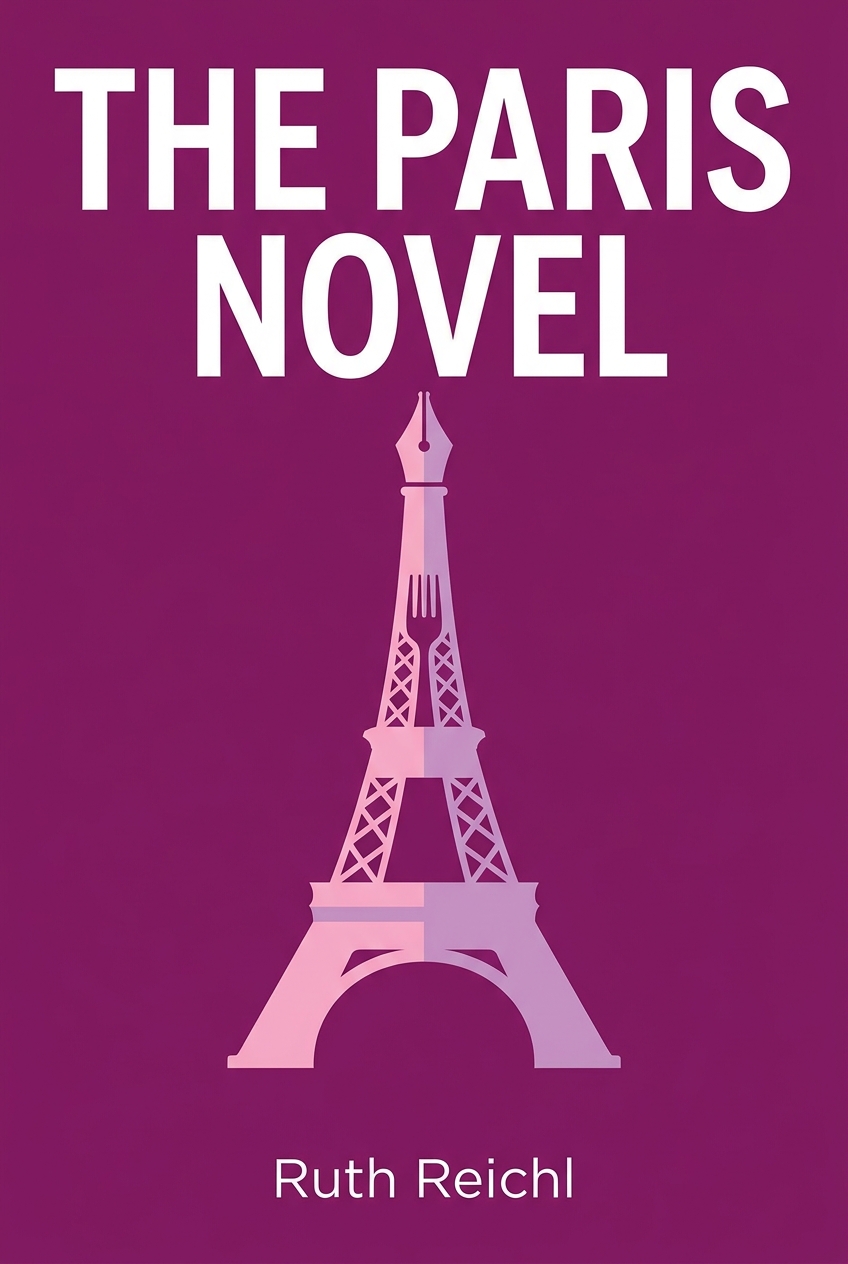
The Paris Novel book cover

The Script

You’re in a city you don’t know, standing before two doors. Behind the first is a life you’ve always wanted: a grand apartment with high ceilings, a career glittering with success, and a social calendar full of important names. It is stable, admirable, and perfectly arranged. Behind the second door is a life you’ve never dared to imagine. It’s a small, sunlit room above a bustling market, filled with the scent of baking bread and the murmur of a language you don’t yet speak. There is no clear path, no guarantee of success—only the quiet, insistent pull of a joy you can’t explain. The choice feels impossible, a decision between the person you were told to be and the person you might become.

This very choice between a life of obligation and one of authentic passion is the current that runs through the work of Ruth Reichl. A celebrated food critic and former editor-in-chief of Gourmet magazine, Reichl has spent her career exploring how what we eat shapes who we are. After losing her prestigious job, she found herself unmoored, confronting a version of this choice in her own life. It was during this period of reinvention, while sorting through her late mother’s papers, that she discovered a hidden story—a story of a young woman in Paris who chose the second door. That discovery became the seed for The Paris Novel, a deeply personal book about mothers, daughters, and the courage it takes to create a life that truly nourishes you.

Module 1: The Armor of a New Identity

The story begins with Stella, a woman living a small, controlled life in New York. She is defined by opposition to her glamorous, neglectful mother, Celia. After Celia's death, Stella finds herself in Paris. She has a command from her mother: spend all the inheritance money and don't come back until it's gone. This journey is a confrontation with a lifetime of self-denial.

This leads to a pivotal moment in a vintage clothing shop. Stella tries on a Dior dress. She sees a stranger in the mirror. A confident, sensual woman. The shopkeeper tells her the dress was meant for her. This introduces a powerful idea. A single object can act as a catalyst for profound personal transformation. The dress is a psychological key. It unlocks a part of Stella that was buried under years of routine and fear. She buys the dress as an experiment in becoming someone new.

Following the shopkeeper's instructions, Stella wears the dress through Paris. The world treats her differently. Men look at her with appreciation. The maître d' at a famous café is solicitous. She realizes her mother understood this power all along. The power of appearance. It's about performance. And here's the thing. Identity is a performance you can consciously choose and direct. Stella had always performed the role of the quiet, dutiful copy editor. The dress gives her a new script. It allows her to step into the role of a confident, adventurous woman. She feels her "real self" would cringe, but the dress becomes her armor. It gives her permission to be bold.

But this new identity is fragile. It is constantly tested by old habits and fears. Stella is a professional fact-checker. Her mind is trained to find flaws and inconsistencies. So when she meets a charming older man named Jules Delatour, her internal alarms go off. She enjoys their conversation. She feels a connection. Yet, she is deeply suspicious. Opening yourself to new experiences requires navigating the tension between vulnerability and self-protection. Her past trauma, especially involving a manipulative family friend named Mortimer, has taught her to be guarded. Every act of kindness from Jules is filtered through a lens of suspicion. Is he genuine? Or is he another predator hiding behind a veneer of sophistication? This internal battle shows that transformation is a constant negotiation between the person you were and the person you are trying to become.

Module 2: The Quest for Lost Histories

Stella's journey soon evolves beyond her personal transformation. It becomes a mission. In a museum, Jules shows her Manet's painting, Olympia. Stella is initially uncomfortable. But as she looks closer, she sees something powerful in the subject's defiant gaze. She realizes this is a portrait of a real woman, Victorine Meurent. A woman who was also a talented painter in her own right. A woman whose own art has been completely erased from history.

This discovery ignites a new purpose in Stella. She decides she will find Victorine's lost paintings. This reveals a central theme of the book. A profound engagement with art can spark a mission for historical justice. Stella's work as a copy editor trained her to appreciate facts. She sees the erasure of Victorine's legacy as a historical injustice that needs correcting. The art becomes a call to action. It gives her a reason to stay in Paris, a focus beyond her own anxieties. Her personal quest for identity merges with a historical one. She is finding a lost woman from the past.

So what happens next? The search for Victorine is not easy. It requires navigating the labyrinthine archives of Paris. Stella faces icy librarians and bureaucratic dead ends. Yet, this process teaches her a crucial lesson. Systematic, patient investigation is essential for uncovering hidden truths. She learns to be a detective. She follows faint clues from baptismal records to death certificates. She pieces together the fragmented story of Victorine's life. The search is a series of failures punctuated by small victories. Each dead end teaches her persistence. Each small discovery fuels her hope.

Along the way, Stella builds an unlikely team. She is joined by Lucie, the young daughter of the bookshop owner, and the strict librarian, Mademoiselle Duseigne. This underscores another key insight. Building rapport and using emotional intelligence can open doors that formal procedures block. Lucie's childish charm melts the heart of a stern priest. Mademoiselle Duseigne, initially a gatekeeper, becomes a crucial ally, using her network to access special resources. The quest becomes a collaborative effort. It shows that uncovering history is a collaborative act. It depends on the connections you forge and the community you build. Stella, who has always been a loner, learns to rely on others. This collaborative search becomes a powerful engine for her own growth.

Read More