All Books
Self-Growth
Business & Career
Health & Wellness
Society & Culture
Money & Finance
Relationships
Science & Tech
Fiction
Topics
Blog
Download on the App Store

The Sicilian Inheritance

A Novel

13 minJo Piazza

What's it about

Ever wonder if your family history holds a dark secret? For one woman, a trip to Sicily to claim a forgotten inheritance unearths more than just a crumbling villa. It reveals a century-old murder mystery, and she might be the next victim. Follow her journey as she navigates the sun-drenched Sicilian landscape, untangling a web of family secrets, vendettas, and the truth about her great-grandmother's death. You'll uncover a story of female resilience and the deadly price of silence, forcing you to question how well you truly know the people you come from.

Meet the author

Jo Piazza is an award-winning journalist and the international bestselling author of more than a dozen critically acclaimed books, including the Reese's Book Club pick We Are Not Like Them. A dual American and Italian citizen, she traveled to Sicily to uncover the truth behind her own great-grandmother's mysterious death. Her investigation into this dark family legend, and the stories of other forgotten Sicilian women, became the inspiration for her gripping new novel.
Listen Now

Opens the App Store to download Voxbrief

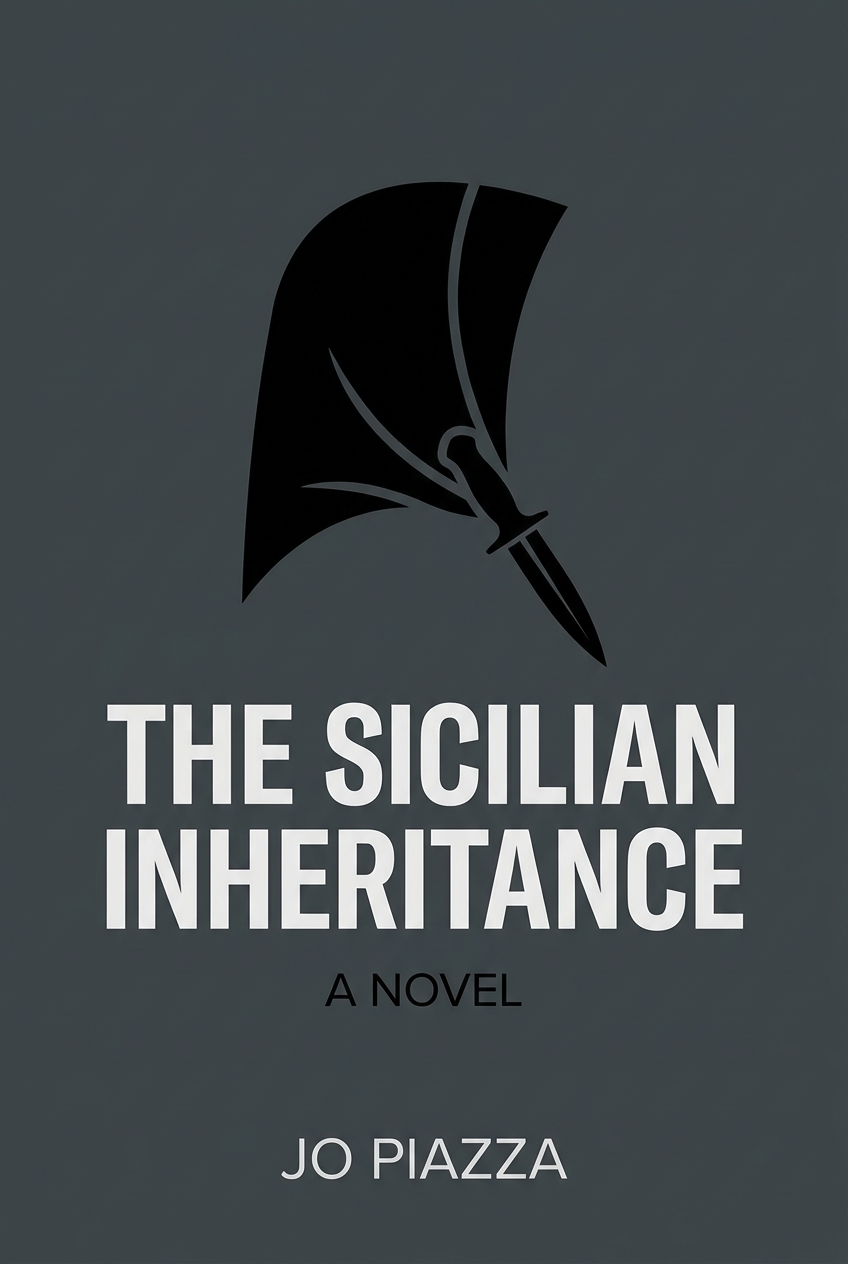
The Sicilian Inheritance book cover

The Script

Think of two identical, antique ceramic plates. They were fired in the same kiln, shaped by the same hands, and painted with the same intricate lemon-branch pattern. One plate is placed in a velvet-lined museum case. It is preserved under perfect light, admired from a distance, its story fixed and official: a beautiful example of Sicilian artistry. The second plate is used every day. It holds warm pasta, is scraped by forks, and is passed between generations at a loud, chaotic family table. It gets chipped, its glaze crazed with fine lines, its story accumulating in the scars and stains of a lived life. While the museum plate tells the story of an object, the dinner plate tells the story of a family.

This gap between the pristine, official narrative and the messy, lived-in reality is what drives Jo Piazza's work. As a journalist and podcast host, Piazza has spent her career uncovering the hidden stories behind public facades. But for "The Sicilian Inheritance," the story was personal. While researching her own family history in Sicily, she stumbled upon a dark rumor: her great-great-grandmother hadn’t died of a simple illness, as the family story went. She had been murdered. Piazza realized the official family history was the museum plate, polished and preserved. To find the truth, she had to piece together the story of the dinner plate—the one full of chips, cracks, and the undeniable evidence of a life actually lived.

Module 1: The Weight of the Past

The story opens with Sara, a contemporary butcher and chef in Philadelphia. Her life is in freefall. Her acclaimed restaurant, La Macellaia, has failed, leaving her with a mountain of debt. Her marriage has collapsed. She feels like a ghost in her own life, haunted by regret. The narrative immediately establishes a core idea: your identity is profoundly shaped by the unresolved stories of your ancestors.

Sara’s late Aunt Rosie was the family historian, the keeper of their Sicilian-American heritage. Before she died, Rosie had one last request for Sara. She wanted her to go to Sicily, to their ancestral village of Caltabellessa. The official purpose was to claim a small parcel of land. But the real mission was to uncover the truth about Sara’s great-grandmother, Serafina Forte. The family story was that Serafina died of illness. But Rosie suspected she was murdered. This unresolved mystery becomes the engine of the plot, pulling Sara across the Atlantic and into a past she never knew.

This journey is about grappling with personal failure. Sara’s professional collapse is mirrored in her emotional state. She feels disconnected from her passion for food, her family, and even herself. The trip to Sicily, initiated by her aunt’s dying wish, represents a chance at renewal. Yet, this brings us to another critical insight. You can't escape your present problems by running to the past; you can only find a new lens through which to view them. Sara arrives in Sicily burdened by bankruptcy and a custody battle, hoping for a quick transaction. She wants to sell the land, get the cash, and fix her life. But the island has other plans. The past isn’t a simple asset to be liquidated. It’s a living entity with its own demands.

So, what happens when you start digging? You find that history is a messy, contested space. Sara’s investigation is met with resistance. The local priest refuses to discuss Serafina’s burial, spitting on the ground and declaring, "We do not bury women like her." This reveals that Serafina was not the saintly matriarch of family lore. She was an outcast. A woman who defied convention. And that defiance had consequences that still ripple a century later. This leads to a powerful realization for Sara. Reclaiming your heritage means confronting the uncomfortable truths, not just the romanticized myths. The picturesque Sicilian landscape, so idealized by her aunt, hides a darker story of misogyny, violence, and secrets. Sara must choose. Will she retreat from this complicated legacy, or will she embrace the full, messy truth of the woman whose name she shares?

Module 2: A Tale of Two Women

To understand Sara’s journey, we must turn to the parallel story of her great-grandmother, Serafina Forte. The novel alternates between Sara’s modern-day quest and Serafina’s life in early 20th-century Sicily. This dual-timeline structure is where the heart of the book beats. It shows how the struggles of women echo across generations, even when the details change.

Serafina’s world is one of rigid constraints. In her village, a woman’s destiny is marriage and motherhood. Ambition is seen as dangerous. Serafina, however, is different. She is fiercely intelligent. Her one desire is to get an education, to become a teacher, to escape the "prison" of her village. This ambition immediately sets her apart. The novel makes it clear that female ambition has always been a radical act, especially in societies that try to contain it. Serafina’s desire for knowledge is a form of rebellion. But her path is brutally cut short when a moment of youthful passion leads to pregnancy. At fifteen, she is forced to marry. Her dreams are sacrificed for the sake of family honor.

From this point, Serafina’s life becomes a study in resilience. Her husband, Gio, is a sulfur miner, his body and spirit broken by the brutal work. He is often absent, leaving Serafina to raise their children in isolation. Here, the narrative reveals a crucial theme. In the absence of formal power, women create their own networks of knowledge and support. With the village doctor gone and men emigrating to America for work, the women of Caltabellessa begin to run the town. They take over businesses. They support each other. And Serafina, mentored by the town’s outcast healer, or strega, discovers her true calling. She learns the art of healing, blending folk remedies with modern medicine from books. She becomes the unofficial village doctor, delivering babies, treating illnesses, and saving lives. Her work gives her purpose. It gives her a new identity.

But here’s the thing. This newfound power is a double-edged sword. A woman who steps outside her prescribed role often becomes a target of suspicion and fear. As Serafina’s skills grow, so do the whispers. The men who once respected her now call her a witch. Her competence is seen as a threat. This tension is central to her story. She is both revered and reviled, a savior to the women and a danger to the patriarchal order.

This parallel narrative deepens Sara’s own story. As Sara reads Serafina’s hidden diary, she sees her own struggles reflected back at her. Serafina’s passion for healing mirrors Sara’s passion for feeding people. Serafina’s fight for autonomy in a world that wants to control her resonates with Sara’s own battle to rebuild her life after personal and professional collapse. The connection between the two women becomes palpable. It is a shared spirit of defiance.

Read More