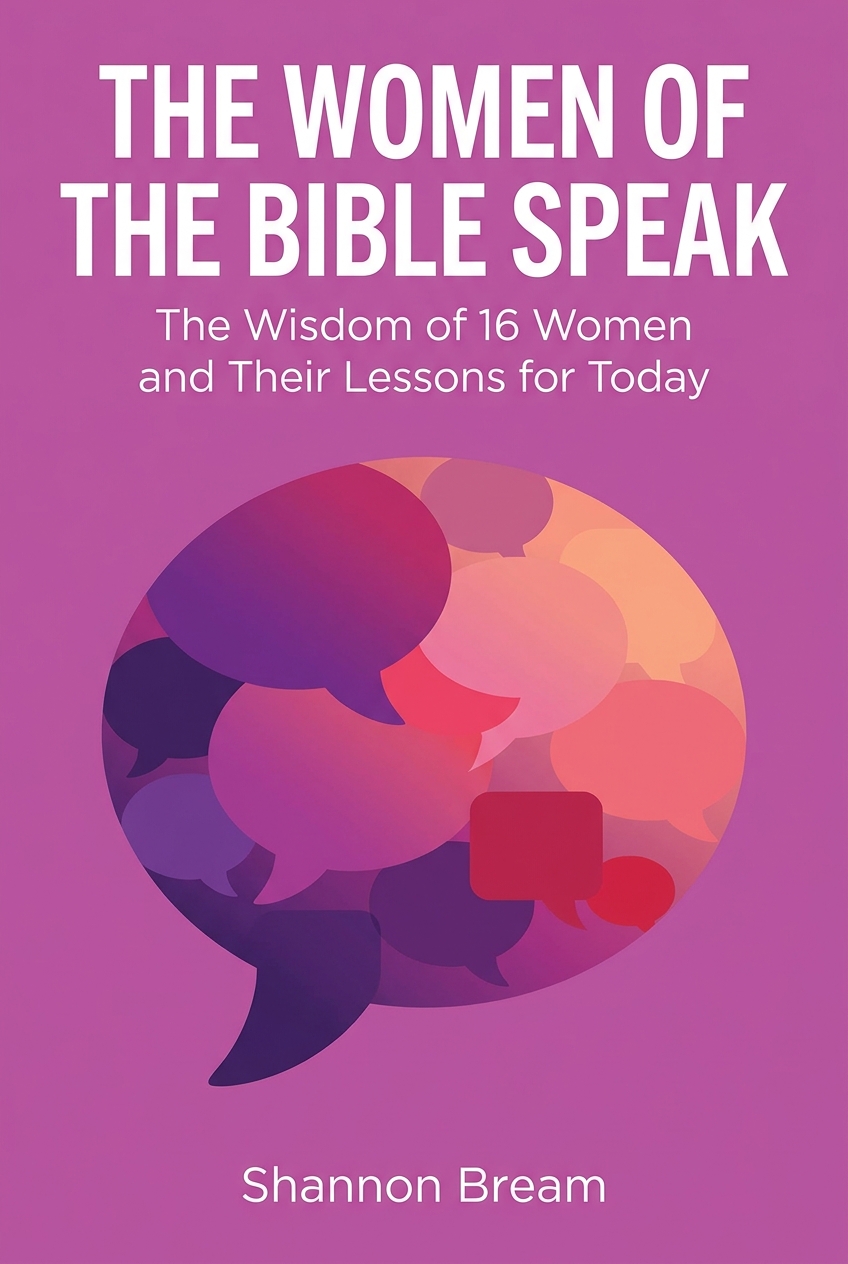
The Women of the Bible Speak
The Wisdom of 16 Women and Their Lessons for Today
What's it about
Ever wonder what ancient wisdom could teach you about modern life? Discover how the legendary women of the Bible navigated betrayal, loss, and impossible odds to find their purpose. Their timeless stories hold powerful, practical lessons for finding strength and faith in your own journey today. You'll explore the lives of 16 remarkable women, from Esther's courage to Mary Magdalene's devotion. Uncover how their struggles and triumphs can illuminate your path, helping you overcome personal challenges, deepen your spiritual connection, and lead a more resilient and meaningful life.
Meet the author
Shannon Bream is the anchor of FOX News Sunday and the network's chief legal correspondent, bringing years of journalistic rigor and legal insight to her storytelling. A former corporate attorney who found her calling in journalism, Bream combines her analytical skills with a deep personal faith to explore the timeless stories of scripture. This unique background allows her to uncover the profound wisdom and modern-day relevance within the lives of the Bible’s most influential women, offering readers both inspiration and practical guidance.
The Script
Two antique book restorers are given identical, centuries-old volumes. The spines are cracked, the pages brittle, and entire sections are missing. The first restorer approaches the task with reverence for the original text. He meticulously cleans each page, reinforces the binding, and leaves the gaps as they are—sacred voids, testaments to the book’s long and difficult journey. The second restorer sees the gaps as opportunities. She dives into historical archives, studying the period, the author, and other related works. She carefully reconstructs the missing context, adding notes and scholarly bridges that allow a modern reader to understand what was lost and why it mattered. The first book is a beautifully preserved artifact. The second is a living story, made whole again.
For generations, the stories of the women in the Bible have often been treated like that first book: preserved, revered, but with their gaps and silences left untouched. We know their names—Eve, Sarah, Esther, Mary Magdalene—but their full humanity, their fears, their strategic thinking, and their profound faith can feel distant, trapped behind the artifacts of ancient history. These stories, filled with struggle and resilience, often raise more questions than they answer, leaving us to wonder about the voices in the voids.
This very challenge is what captivated Shannon Bream, the chief legal correspondent for Fox News and anchor of FOX News Sunday. While she spent her days analyzing complex legal arguments and breaking news, she found herself returning to these ancient biblical narratives as unsolved cases. She saw women who were active participants whose choices ripple through history. Bream realized that by applying her journalistic skills—digging for context, examining motivations, and connecting disparate facts—she could bridge the gaps. She wrote The Women of the Bible Speak to move these figures from the category of preserved artifact to that of living story, offering a fresh perspective on their struggles and triumphs for a modern audience searching for faith and strength.
Module 1: Faith Under Impossible Pressure
Life often puts us in situations that feel impossible. A project deadline is immovable. A market shift threatens your startup. Personal challenges feel overwhelming. In these moments, our first instinct is often to take control. To engineer a solution. The stories of Sarah and Hagar serve as a powerful case study on this very impulse.
God promised Abraham and Sarah a child. It was a clear promise. But years passed. Nothing happened. Sarah was old. From a human perspective, it was impossible. So she took matters into her own hands. This leads to our first insight. Human impatience often complicates divine promises. Sarah gave her servant, Hagar, to Abraham. She decided to build a family through her own efforts. The result was immediate conflict. Jealousy and bitterness entered her home. Her attempt to force the outcome created a generation of pain.
This story highlights a critical tension for any leader. We are rewarded for making things happen. For driving results. Yet, some of the most significant breakthroughs require patience. They require trusting a process you don't fully control. Sarah's story suggests that our need for immediate control can sometimes sabotage the greater reward that comes with waiting.
Now, let's turn to Hagar. She was a slave. She was powerless. After becoming pregnant, she was mistreated by Sarah and fled into the desert. She was alone and desperate. And here's the thing. It was in this moment of total vulnerability that God met her. This reveals a second powerful idea. God often reveals Himself to those the world overlooks. An angel appeared to Hagar. This was the first appearance of "the angel of the Lord" in the Bible. It was to an abandoned, pregnant, enslaved woman. He told her that God saw her suffering. He affirmed her dignity. He gave her a promise for her own son.
For anyone who has ever felt invisible in a meeting or passed over for a promotion, Hagar’s story is a profound reminder. Your value is determined by your character and intrinsic worth, not your title or social standing. Hagar was given a divine promise in spite of her status. Later, when she and her son were cast out and near death, God intervened again. He provided water and reassured her of His protection. This reinforces that divine care extends to the rejected and the powerless.
Finally, the relationship between these two women becomes a powerful symbol. The Apostle Paul later uses Sarah and Hagar to represent two different ways of living. Hagar, the slave, represents a life of bondage. It’s a life defined by trying to earn favor through human effort. Sarah, the free woman, represents a life of promise. It’s a life based on faith in something you didn't earn. This brings us to a final insight. We must choose between a life of striving and a life of trust. Are you operating like Hagar, trying to force outcomes and earn your place through sheer effort? Or are you operating like Sarah was meant to, trusting that a promise will be fulfilled, even when it seems illogical? The narrative challenges us to see this choice in our professional lives as well as our spiritual ones.
We've explored how faith is tested. Next up: how our personal flaws fit into a bigger picture.