All Books
Self-Growth
Business & Career
Health & Wellness
Society & Culture
Money & Finance
Relationships
Science & Tech
Fiction
Topics
Blog
Download on the App Store

Their Dogs Came with Them

A Novel

14 minHelena Maria Viramontes

What's it about

Ever felt trapped by your circumstances, struggling to find your voice in a world that won't listen? Discover how a group of young Chicanas navigate violence, poverty, and displacement in 1960s East LA, fighting to carve out their own identities against a backdrop of societal upheaval. This powerful novel explores the lives of four young women—Ermila, Turtle, Tranquilina, and Pretty-Baby—as their neighborhood is literally torn apart by the construction of new freeways. You'll learn how community bonds are tested, how personal dreams clash with harsh realities, and how resilience blossoms in the most unforgiving of environments. Uncover the strength it takes to survive when the world tries to erase you.

Meet the author

Helena Maria Viramontes is a highly influential voice in Chicana literature and a professor of English at Cornell University, where she is a celebrated creative writing instructor. A native of East Los Angeles, her upbringing in the community she so vividly portrays provides the authentic foundation for her powerful stories of struggle, resistance, and resilience. Her work gives voice to the marginalized, drawing directly from the landscapes and lives that shaped her own experience and informed her compassionate, unflinching fiction.
Listen Now

Opens the App Store to download Voxbrief

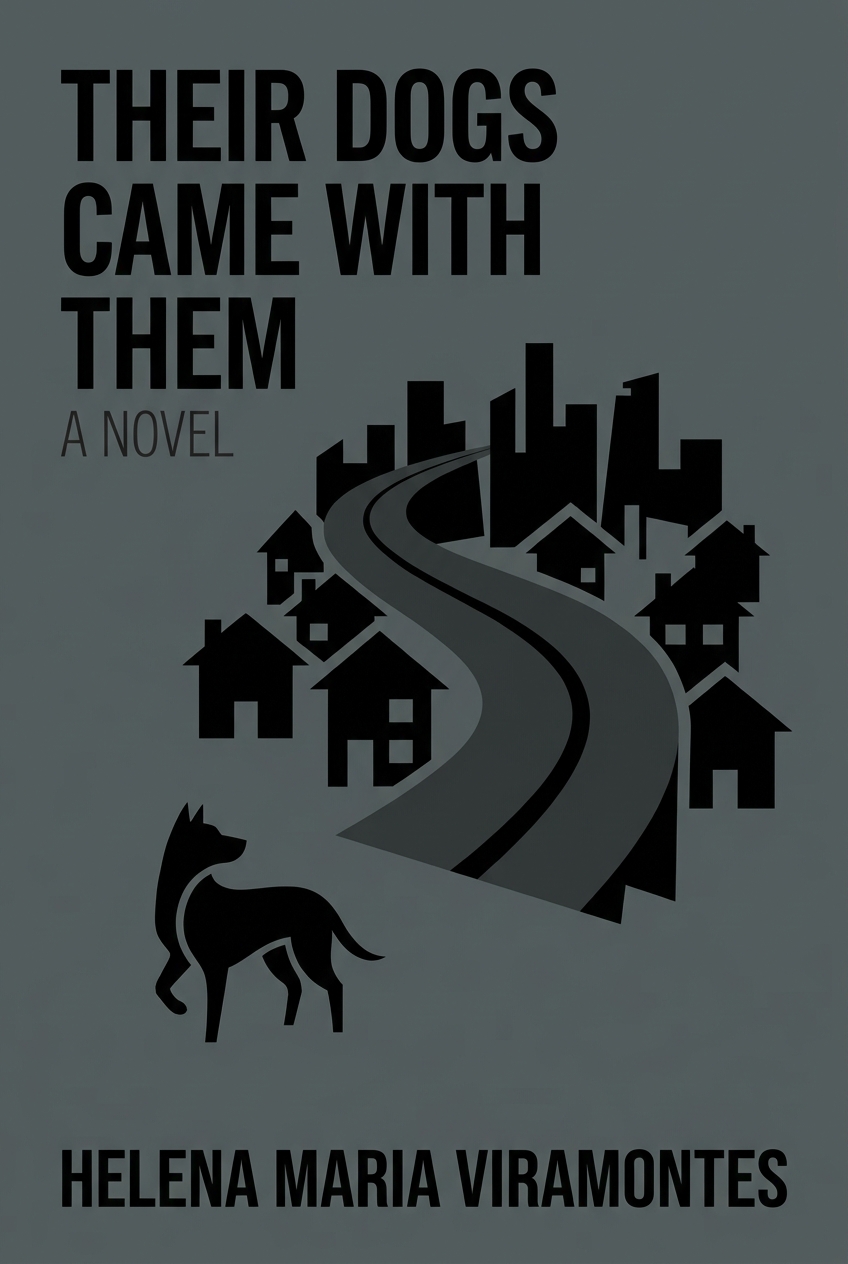
Their Dogs Came with Them book cover

The Script

A city planner lays out two maps on a table. The first is crisp, official, gridded with streets, zones, and property lines. It shows the path of a new freeway, a clean scar of progress cutting through a neighborhood designated as ‘blighted.’ Everything is precise, logical, inevitable. The second map is a collection of objects found in the path of that freeway: a worn-out baseball, a lace glove, a dog’s collar, a cracked votive candle holder. Each object is a pin dropped on a different kind of map, one of memory, loyalty, and loss. The first map shows where a community was erased; the second shows what was lost when it was.

This act of mapping the unmappable—the emotional geography of a place bulldozed in the name of progress—is the life’s work of Helena Maria Viramontes. Growing up in East Los Angeles, she witnessed firsthand the construction of the freeways that carved up her community, displacing families and paving over generations of history. She saw how the official story, the one on the city planner’s map, never told the whole truth. Her novel, “Their Dogs Came with Them,” is her answer to that silence. She took seventeen years to write it as an act of excavation—a way to unearth the lives, the ghosts, and the fierce loyalties buried beneath the concrete.

Module 1: The Erosion of Home and Community

The novel opens with a powerful idea. Home is a fragile space constantly threatened by outside forces. Viramontes shows how urban development acts like a slow-motion disaster, tearing communities apart.

This brings us to our first insight. Urban development can be as traumatic as a natural disaster. The story introduces us to Chavela, an old woman haunted by an earthquake in her homeland. The quake pulled the earth out from under her. It left only rubble and the smell of burnt flesh. Decades later, in East Los Angeles, she faces a new kind of earthquake. This one comes in the form of bulldozers. They are clearing her neighborhood to build a freeway. The result is the same. Displacement. Loss. Trauma. Viramontes draws a direct line between these two events. She suggests that forced displacement, whether by nature or by policy, leaves the same deep scars.

So what does this mean for a community? It means that physical displacement creates psychological fractures. The novel paints a vivid picture of First Street. One side is the "living side." Porches are cluttered with life. Gardens are thriving. The other side is the "dead side." Houses are vacant and vandalized. Earthmovers are covered in tarps, waiting like predators. This physical division mirrors the social breakdown. Neighbors disappear. Connections are severed. The community becomes a ghost of its former self. A decade later, the threat evolves. Quarantine Authority helicopters patrol the skies. They hunt stray dogs and enforce curfews. The invasion is constant. It just changes form.

And here's the thing. When community erodes, individuals are left in a state of perpetual surveillance and instability. The characters are always being watched. They are watched by police, by helicopters, by suspicious neighbors. This creates a climate of fear. It makes it impossible to feel safe, even in your own home. For professionals in fast-changing cities, this is a powerful reminder. The physical environment shapes our social fabric. When we build, we must consider what we are destroying. We must ask who is being displaced and what the human cost of "progress" really is.

We've seen how external forces tear communities apart. Next, we'll look at how individuals try to hold themselves together.

Module 2: The Battle for Identity and Memory

When your world is constantly changing, how do you hold on to who you are? Viramontes explores this question through her characters' fierce, often desperate, struggles with memory and identity.

The central idea here is that identity is a collage of given names, chosen roles, and external labels. Take the character Turtle. Her birth name is Antonia María. In school, she was called Tony Game. But her "For Real one," her chosen identity, is Turtle. This name connects her to her gang, the McBride Boys. It’s a name earned through loyalty and survival. Her identity is a constant negotiation. Her mother disapproves of her masculine appearance. A man on the street mistakes her for a boy. Turtle is caught between who she is and how the world sees her. This conflict is a source of deep internal tension.

This leads to a critical survival skill. In a hostile world, you must constantly adapt and remain vigilant. Turtle knows how to navigate her environment. She hides in alleys to avoid the Quarantine Authority helicopters. She scouts intersections to avoid rival gangs. She knows where to find food and how to stay unseen. Her street smarts are a calculated response to a world that offers no safety net. For anyone navigating a competitive or uncertain professional landscape, this resonates. Survival requires a keen awareness of your surroundings and the ability to adapt your strategy on the fly.

But flip the coin. While vigilance is key to survival, the past is always present. Memory serves as both a comfort and a source of pain. Turtle remembers watching steamrollers pave First Street as a child. She was eating a pickled pig's foot, innocent and carefree. This memory is a warm comfort. But it also highlights the harshness of her present reality. She is now hungry and in danger. She remembers stealing from a convenience store with her brother, Luis. It was a moment of camaraderie. But now Luis is gone, drafted into the Vietnam War. The memory of their bond deepens her sense of abandonment. Memory is a double-edged sword. It keeps the past alive, but it also keeps the wounds fresh.

Ultimately, the novel suggests that identity is forged in the space between belonging and alienation. The characters are constantly trying to find their place. They cling to family, to gangs, to memories. But they are also pushed away. They are marginalized by society. They are betrayed by loved ones. This constant push and pull is what shapes them. It’s a powerful exploration of what it means to be human in a world that tries to erase you.

So far, we've examined the external and internal worlds of these characters. Now, let's turn to the next generation and see how they navigate this inheritance.

Read More