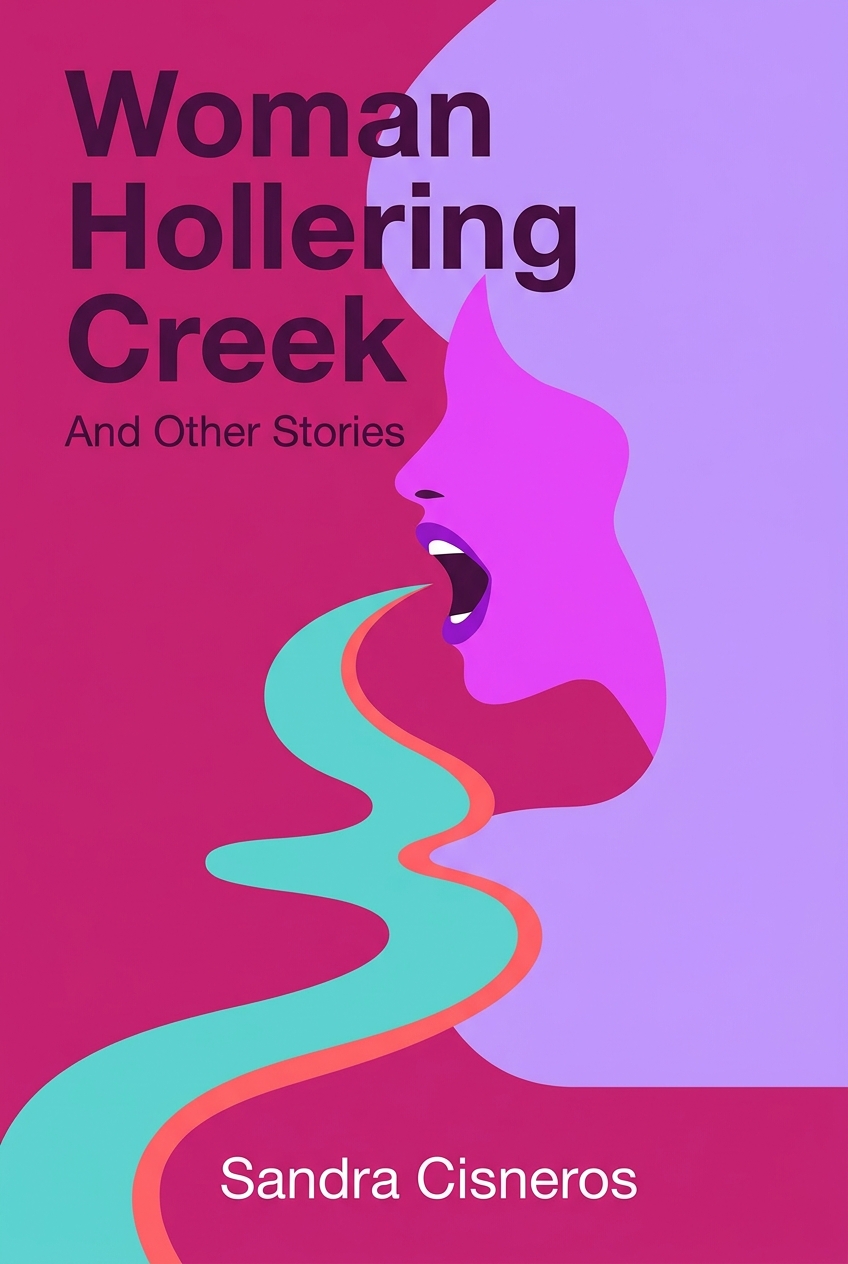
Woman Hollering Creek
And Other Stories
What's it about
Have you ever felt caught between two worlds, struggling to find your voice and forge your own path? Discover how to navigate the complex terrain of identity, tradition, and personal freedom, even when expectations from family and culture feel overwhelming. In these powerful stories, you'll explore the lives of Mexican-American women straddling the US-Mexico border. Through tales of love, heartbreak, and resilience, you'll learn how they challenge traditional gender roles, escape suffocating relationships, and ultimately reclaim their power and independence. Find inspiration in their journeys to define womanhood on their own terms.
Meet the author
Sandra Cisneros is a pioneering Chicana writer and MacArthur Fellow whose work has been instrumental in shaping contemporary American literature and giving voice to marginalized communities. The only daughter in a family of seven children, she moved frequently between Chicago and Mexico, an experience that cultivated her unique perspective on cultural identity, gender, and belonging. Her writing draws from this bicultural, working-class background, exploring the lives of Chicanas with lyrical prose and unflinching honesty, as powerfully demonstrated in Woman Hollering Creek.
Opens the App Store to download Voxbrief

The Script
A telenovela wedding dress, perfect and pristine, hangs in a closet. To the young woman who owns it, it’s a symbol of escape, the fabric of a new life woven from the dramatic love stories she watches on screen. It promises passion, romance, and a happily-ever-after far from her father’s house. But once she crosses the border into her new life, the dress—and the dream it represents—begins to fray. The vibrant colors of the imagined life clash with the dusty, harsh landscape of reality. The passionate hero from the screen becomes a silent, controlling husband. The dream, once a beautiful story, becomes a cage. She is left holding the tatters, trying to understand how the same object can represent both salvation and imprisonment.
This gap between the stories we are told and the lives we actually live is the territory Sandra Cisneros explores in Woman Hollering Creek. Having grown up straddling the border between Mexican and American cultures, between the Spanish her father spoke and the English of her Chicago neighborhood, Cisneros became a keen observer of these divides. She saw how the romantic myths of love and marriage, often imported through popular culture, collided with the complex and sometimes harsh realities faced by women in her community. Her own experience as the only daughter in a family of seven sons gave her a unique vantage point on female identity and expectation. She wrote this collection of stories to give voice to the women living in those spaces—the spaces between languages, between countries, and between the fairy tale and the truth.
Module 1: The Layered Self and the Weight of Childhood
We often think of growing up as a straight line. We leave one age behind to enter the next. But Cisneros challenges this idea from the very first stories. She suggests that our childhood selves never really leave us. They live inside us, like nested dolls, ready to surface at any moment.
This brings us to our first insight. Your identity is a composite of every age you have ever been. In the story "Eleven," a young girl named Rachel is falsely accused of owning an ugly red sweater. On her eleventh birthday, she feels the humiliation so intensely that she breaks down crying "like I'm three." She explains that even when you're eleven, parts of you are still ten, nine, eight, and so on. When you're scared, the five-year-old you might want to curl up in your mother's lap. When you say something foolish, the ten-year-old you might feel a rush of embarrassment. This shows that maturity is about integrating our younger selves. For a professional, this means recognizing that moments of insecurity or emotional reaction aren't failures. They are echoes of past selves that still need to be understood and managed.
On top of that, childhood isn't always a carefree time. For many, it's a period of immense, unseen responsibility. Childhood often involves invisible labor that shapes adult resilience. In "Salvador Late or Early," we meet a young boy who is the primary caregiver for his younger brothers. He wakes them, feeds them, and guides them through the world. He carries a "history of hurt" and moves through his day largely unseen by teachers and society. His childhood is a quiet apprenticeship in duty and survival. This silent burden forges a deep sense of responsibility. It’s a reminder that the most capable people in any room might be the ones who learned to carry the heaviest loads when they were young, their strength forged in silence.
So what happens next? These early experiences, rich with sensory detail, become the bedrock of our identity. Cultural identity is forged through powerful, sensory memories. Think about the smells and tastes that instantly transport you back to your childhood. In "My Lucy Friend Who Smells Like Corn," the narrator’s connection to her friend is defined by a warm, comforting sensory world. Lucy smells like corn, tortillas, and the specific aroma of nixtamal, the treated corn used to make masa. This is the scent of belonging, of family, of a culture the narrator longs to be a part of. These sensory anchors ground us. They are the untranslatable language of home. In our own lives, connecting with these sensory details—the food, the music, the textures of our past—can be a powerful way to reconnect with our core identity, especially when we feel adrift.
Module 2: The Worlds We Build and the Roles We Play
Childhood is also a masterclass in creation. It’s about building entire universes from scraps and imagination. Cisneros shows how this creative drive shapes our understanding of value, culture, and ourselves.
The first lesson here is that imagination finds value where others see flaws. In "Barbie-Q," two young girls have a meager collection of Barbie dolls. Their world is transformed when they find a treasure trove of fire-damaged dolls at a flea market. One doll has a melted foot, and they all smell faintly of smoke. But the girls are ecstatic. They see past the imperfections to the potential for new stories and new games. Their logic is simple and profound: "so long as you don’t lift her dress... who’s to know?" This is a powerful mindset for any innovator. It’s the ability to look at a damaged asset, a failed project, or a limited budget and see opportunity. It’s about focusing on the utility and the story, not the superficial flaws.
Building on that idea, our early lives are often structured by rituals that become part of our identity. Family and cultural traditions provide a foundational structure for childhood. In "Mexican Movies," a family’s weekly trip to the cinema is a highly structured ritual. There are rules about where to sit, what snacks to buy, and when the kids have to go to the lobby during the "adult" scenes. The memory is saturated with sensory details: the feel of the red carpet, the taste of jujubes, the comfort of being carried to bed asleep. These rituals create a sense of stability and belonging. They are the repeatable patterns that define a specific time and place in our lives. For busy professionals, creating our own small, consistent rituals can provide a similar anchor in a chaotic world.
But flip the coin. What happens when you feel caught between two cultures? A bicultural identity often means feeling like an observer of your own heritage. In "Mericans," a group of children waits outside a Mexican church while their grandmother prays inside. They feel disconnected from the deep, traditional faith of their elders. Moments later, an American tourist couple is shocked to hear them speak English, labeling them "Mericans." The children exist in a liminal space. They are the subject of old-world prayers but are seen as outsiders by both cultures. This captures the feeling of being a hybrid—never fully belonging to one world or the other. It’s a constant negotiation of identity, a feeling many people in multicultural environments know well.
And here's the thing. This negotiation extends to gender. Children learn societal rules through play, often replicating the very dynamics they will face as adults. Gender roles are learned and negotiated through childhood play. In "Barbie-Q," the girls' play revolves around classic narratives of romance and rivalry between women. In "Mericans," the young female narrator is often excluded from her brothers' games or forced into a villainous role. She learns that "crying is what girls do" and suppresses her emotions to avoid being called a "girl" as an insult. This play is a rehearsal space for societal expectations, where children internalize the rules of gender long before they can critically analyze them.