All Books
Self-Growth
Business & Career
Health & Wellness
Society & Culture
Money & Finance
Relationships
Science & Tech
Fiction
Topics
Blog
Download on the App Store

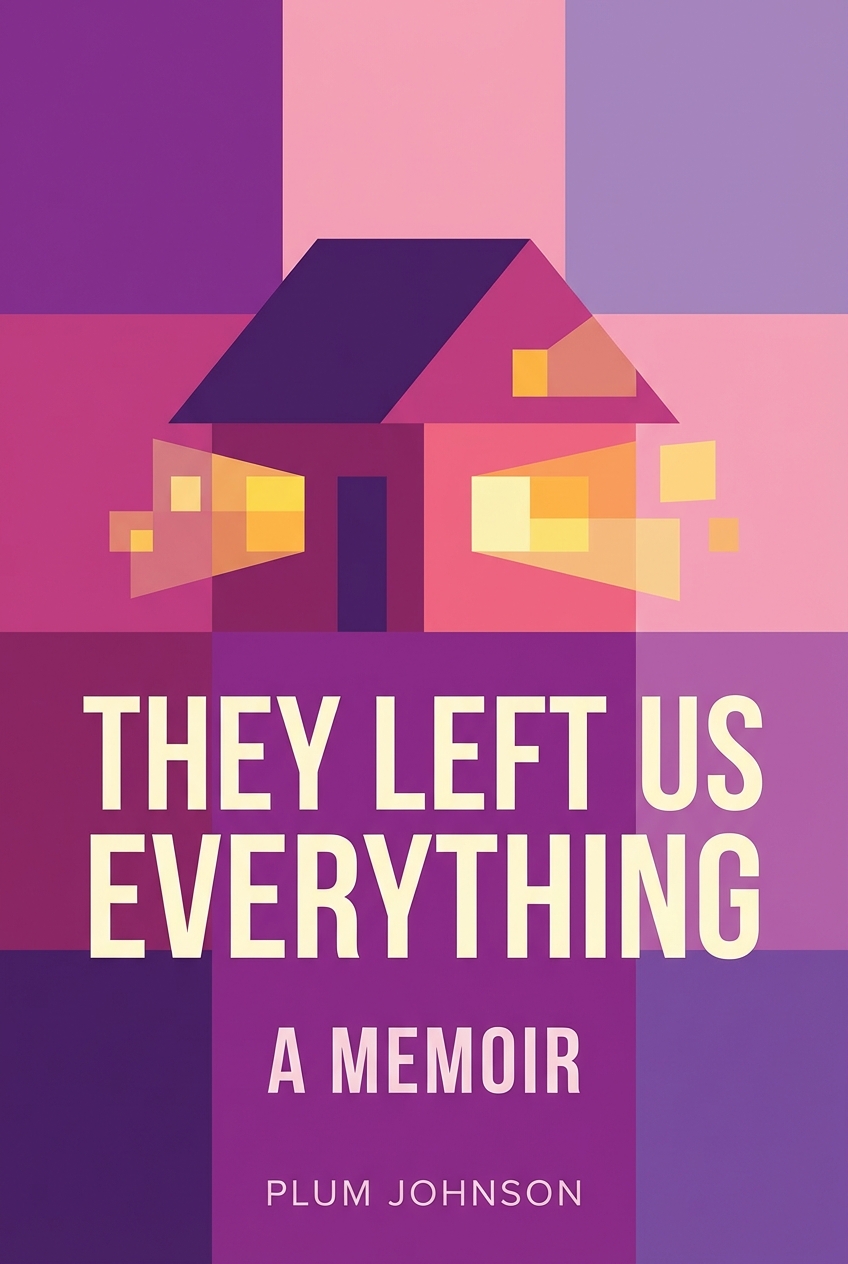
They Left Us Everything

A Memoir

14 minPlum Johnson

What's it about

What do you do when the people who raised you are gone, and you're left with a house full of their memories? Discover how to navigate the emotional and physical chaos of clearing out a family home, transforming a painful duty into a journey of healing and self-discovery. Plum Johnson shares her deeply personal yet universal experience of sifting through her parents' belongings after their deaths. You'll learn how to tackle the overwhelming task of decluttering a lifetime's worth of possessions, find closure in forgotten objects, and ultimately understand your own story by piecing together theirs.

Meet the author

Plum Johnson is the celebrated author of the RBC Taylor Prize-winning memoir, They Left Us Everything, a national bestseller beloved for its honesty and warmth. After her mother’s death, Johnson faced the overwhelming task of clearing out her childhood home, a 23-room house overflowing with a lifetime of possessions. This profound, year-long experience of sifting through her family's history led her to uncover the complex truths of love, loss, and the meaning we find in the things we leave behind.
Listen Now

Opens the App Store to download Voxbrief

They Left Us Everything book cover

The Script

For every family, there is a house that acts as a silent archivist, its closets and crawlspaces holding the physical evidence of a shared life. It's the place where growth charts are penciled onto door frames, where a forgotten box of holiday decorations sits beside a stack of old love letters. For decades, this repository gathers layers of memory and meaning. But when the primary residents are gone, the house presents a monumental task to those left behind. Suddenly, every object—from a tarnished silver spoon to a threadbare armchair—becomes a choice. Is this junk, or is it a treasure? Is it a burden to be discarded, or a legacy to be preserved? This is an archaeological dig into the lives of the people you thought you knew best, forcing a confrontation with their history, and your own.

This exact challenge fell to Plum Johnson and her three brothers after their mother died. Their childhood home, a sprawling 23-room house on a lake, had to be emptied and sold. For over a year, Johnson sifted through the accumulated objects of her parents' 65-year marriage. What began as a daunting logistical problem soon transformed into a profound emotional journey. As she sorted through drawers and dusted off shelves, she uncovered not just forgotten possessions, but the hidden stories of her parents' lives—their triumphs, their heartbreaks, and the secrets they kept. Johnson, an artist and writer, realized this overwhelming task was also a once-in-a-lifetime opportunity to understand her family in a new way. "They Left Us Everything" is the memoir born from that experience, a deeply personal account of navigating the emotional and physical weight of a family's legacy.

Module 1: The Archaeology of Grief

When Johnson's mother dies, the task ahead seems purely logistical. Empty a house. Sell it. Move on. But she quickly learns that clearing a family home is an emotional excavation. Every object, from a dusty perfume bottle to a forgotten dry-cleaning receipt, is a trigger. It’s a portal back to a specific moment in time. This process reveals a profound truth: Grieving is an active, physical process of sorting through the past. It happens in dusty attics and cluttered basements. It’s about the hard work of deciding what to keep and what to let go.

Johnson and her siblings create a system. They label everything. They create an inventory. But no system can prepare you for the emotional ambush of finding your mother's pocket litter—a used tissue, a dog biscuit, a crumpled list. These mundane items are what break Johnson. They are what she calls "the proof of my mother." This is where the real work begins. And here’s a key insight: Objects are vessels of memory and unresolved emotion. A cheap glass dish, carefully hand-washed for decades, holds more value than a sterling silver platter appraised for its meltdown weight. The value is in the story it tells. It’s in the hands that held it.

This leads to a surprising discovery. Sorting through her parents' things, Johnson starts to see them as people. Young, flawed, vibrant people who lived through wars, fell in love, and fought bitterly. She finds hundreds of letters from their WWII courtship. She uncovers a hidden tin trunk with her father's wartime logbook. Suddenly, the stern, disciplined father she knew becomes a young man who survived a POW camp. The difficult, demanding mother becomes a spirited Red Cross volunteer. The lesson here is powerful. You must re-examine your parents as individuals to truly understand your own story. Their choices, their secrets, and their struggles are woven into the fabric of your own life. Johnson realizes that by holding onto their things, she was clinging to a specific version of her past. Letting go of the objects was the only way to let go of the old stories and find a new perspective.

Finally, the process of clearing the house forces a confrontation with her own life. Johnson sees her mother's chaotic creativity reflected in her own messy home. She recognizes her father's disciplined record-keeping in her own obsessive cataloging of the estate. She is surrounded by the physical evidence of who her parents were. This forces her to ask a critical question. Who is she without them? And that’s the final piece of this module. Letting go of a parent's home is a necessary step in untangling your own identity. The house was the backdrop of her life. Dismantling it forces her to find her own footing, separate from the roles of daughter and caregiver. The physical clutter was overwhelming. But the real clutter, she realizes, was in her head.

Module 2: The Architecture of Family

We've explored the emotional weight of objects. Now, let's look at the structure that contains them: the family itself. Johnson's memoir paints a vivid picture of a family held together by love, but also by tension, unspoken rules, and clashing personalities. Her parents' marriage was a "lifetime of battle, full of tumult and the occasional truce." Her father was a British disciplinarian, an orphan who believed hardship built character. His motto was, "You can’t make strong steel without a hot fire!" Her mother was an American free spirit from a wealthy family who believed life was meant to be fun. This fundamental conflict shaped everything.

This brings us to our first point. Every family operates with an unwritten set of rules and roles. In the Johnson family, these roles were distinct. Plum was the eldest, the emotional confidante. Her brother Robin was the diplomat and family historian. Chris was the sensitive barometer of their mother’s moods. And Victor, the youngest, was the pragmatic financial manager. These roles, assigned in childhood, persist into adulthood. They dictate who handles the will, who comforts whom, and who makes the difficult calls. When they gather for "Sibling Suppers" to manage their parents' decline, they are falling back into a lifelong dynamic, a system they built together to survive and support each other.

And it doesn't stop there. The family dynamic isn't just internal. It extends outward. Johnson's mother was famous for her radical hospitality. She would invite strangers, hitchhikers, and runaway teens to live with them. Her father, despite his strictness, had his own quiet acts of charity. This reveals another layer. A family's values are expressed through a complex blend of stated beliefs and contradictory actions. Her father demanded fiscal discipline, tracking every "ice cream cone" in his ledger. Yet he would pay a homeless man every Saturday for years, insisting his children serve the man tea with the best silver. This taught them a lesson he never said aloud: "that could be you one day." The contrast between the rigid rules inside the house and the open-door policy to the outside world created a confusing, yet deeply formative, environment.

But what happens when this structure is tested by illness and loss? Johnson’s father develops Alzheimer's, and the family’s resourcefulness is put to the ultimate test. Here, we see that humor and creativity are essential coping mechanisms for navigating long-term crisis. The siblings innovate. They create a "fake Alzheimer's account" with a limited debit card so their father can maintain the dignity of handing out cash without bankrupting himself. They send him on a Caribbean cruise, reasoning he can wander safely on a ship. They find laughter in the absurdity of his confused postcards. This dark humor is a survival tool. It's the glue that holds them together when the official structure of the family is crumbling under the weight of illness.

Finally, the story shows how these family dynamics play out in the final act of inheritance. The siblings use a formal bidding system to divide their parents' possessions, an attempt to impose order on an emotional process. But the old roles resurface. Regrets emerge. And in the end, fairness is achieved through conversation and compromise. This is the final insight. True resolution in a family comes from negotiation, not regulation. After the formal auction, they gather on the verandah and "horse-trade" items until everyone is happy. They rely on their shared history and humor to navigate the final, painful task of dispersal. The system gets them started, but their bond gets them to the finish line.

Read More