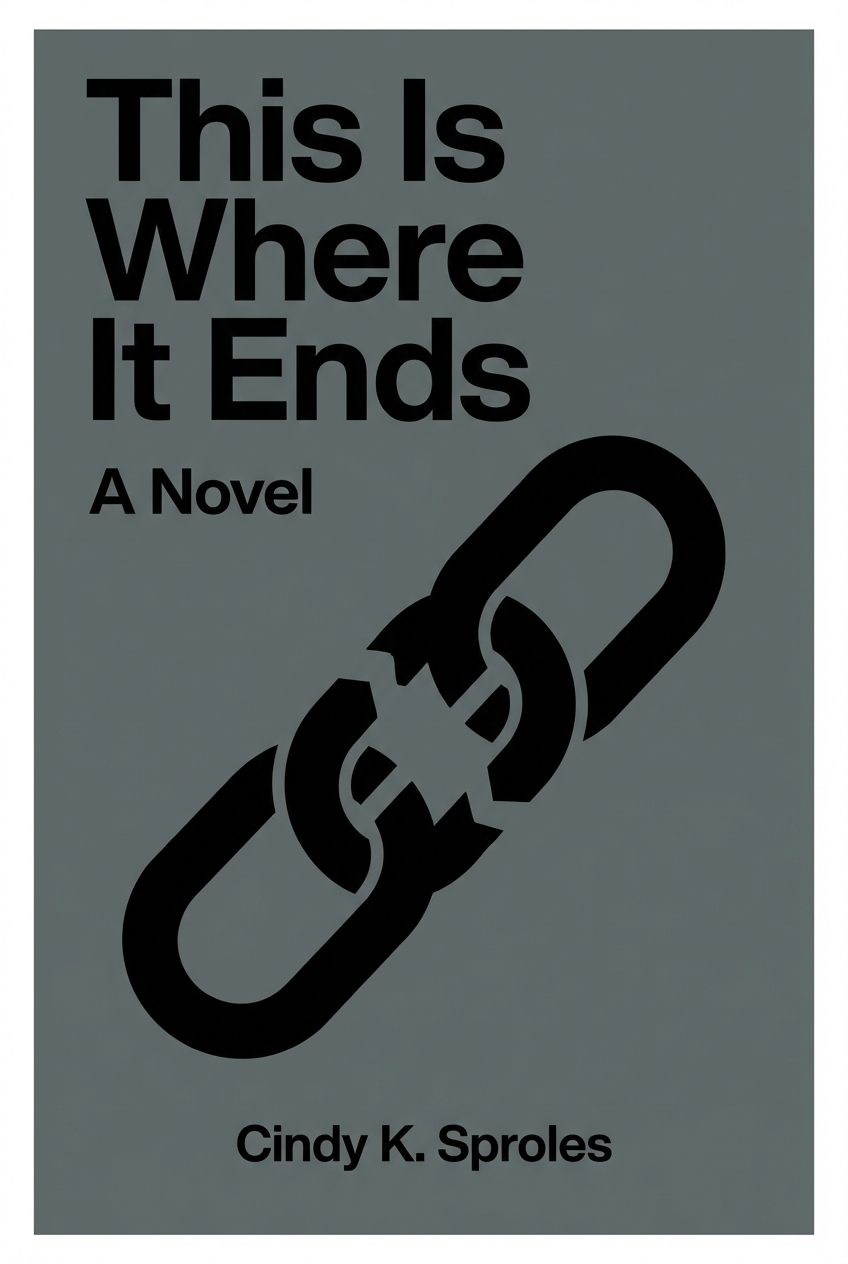
This Is Where It Ends
A Novel
What's it about
What if the person you trusted most was hiding a secret that could destroy everything you hold dear? For Minerva, a gifted Appalachian healer, that nightmare becomes a reality when a deathbed confession shatters her world and pits her against the very community she has sworn to protect. Discover a story of impossible choices and unwavering faith in the face of betrayal. You'll learn how one woman's courage can expose a town's darkest secrets, challenge long-held beliefs, and redefine the meaning of justice, forgiveness, and family. This is a powerful tale of love and loss that will keep you on the edge of your seat.
Meet the author
Cindy K. Sproles is a multi-award-winning author and the cofounder of Christian Devotions Ministries, recognized for her deep expertise in Appalachian culture and history. Her own mountain roots and extensive research into the region's people and their enduring faith provide the authentic, heartfelt foundation for her powerful storytelling. This unique background allows her to craft narratives that are not only historically rich but also profoundly human, exploring the resilience of the human spirit in the face of hardship.
The Script
In a forgotten corner of the mountains, tradition is a current that runs deeper than any river. For the women of the death house, this current dictates every action. When a neighbor begins their final journey, these women are summoned by an unspoken understanding. They arrive with clean linens, simmering broths, and a quiet strength, their hands knowing the sacred work of washing a frail body, spooning water between cracked lips, and singing the old hymns that guide a soul from one world to the next. Their task is to provide a good death—a passage marked by dignity, peace, and the comfort of community. This is a duty, a final act of love for those they have lived beside their entire lives. But what happens when the person they are called to care for is not a friend, but an enemy? What happens when the hands meant to soothe are the same hands that hold a lifetime of hurt, and the hymns of comfort catch in a throat tight with resentment? Can the ritual of a good death wash away a legacy of pain, or does it only sharpen the edges of unforgiveness?
This very question—the tension between sacred duty and bitter history—is the one that Cindy K. Sproles couldn't shake. Growing up in the Appalachian mountains, she was surrounded by the stories of these death house ladies, women who were pillars of a community's final, most vulnerable moments. She saw the immense respect they commanded and the profound service they offered. Sproles, an author and speaker who has dedicated her career to preserving the unique heritage of Appalachia, felt compelled to explore the limits of this tradition. She wondered what would happen if this sacred calling collided with the most difficult parts of human nature—betrayal, judgment, and the stubborn refusal to forgive. "This Is Where It Ends" became her way of putting that ancient tradition to the ultimate test, crafting a story that honors the past while asking if some wounds are too deep for even the most sacred rituals to heal.
Module 1: The Crushing Weight of a Secret
The story opens on a powerful premise. Secrets are active, corrosive forces. They can dictate the entire course of a life.
Minerva Jenkins lives this reality every day. On his deathbed, her husband Stately made her promise to keep a secret. This vow instantly became her burden. She calls it her curse, her chains. She is 94 years old, nearly blind, and utterly alone on a remote mountain. All for a box that holds a secret she never wanted. This is the first major insight from the book. A secret forced upon another is a selfish act that creates a lasting, haunting burden for the bearer. Minerva feels the secret is "eatin at me." She sees the promise as the most selfish thing someone could do to a person they claim to love. It has poisoned her peace and isolated her from the world.
This leads to a second, related idea. Burdensome secrets create profound emotional and physical isolation. The secret is the reason Minerva and Stately lived apart from society. After his death, it becomes the reason she stays. She reflects that after Stately died, she "put a chain around my legs and hooked it to a stake in the ground." She chose to stay hidden away. She blamed the promise, but she now sees her own role in her isolation. This self-awareness is painful. It reveals how a single, unexamined obligation can shrink your world until there's nothing left but you and the secret.
And here’s the thing. The weight of that secret intertwines with every other emotion. It's not a clean burden. Grief is a complex mix of sorrow, love, and righteous anger. When Stately dies, Minerva is heartbroken. She loses the only man she ever loved. But she's also furious. Furious that he left her alone to tend a tiny farm and guard his past. She asks, "What kind of man does that to the woman he loves? Just to guard a secret." Her grief is a messy, contradictory storm of love and betrayal. This shows how unresolved issues don't just disappear with death. They linger. They complicate the grieving process.