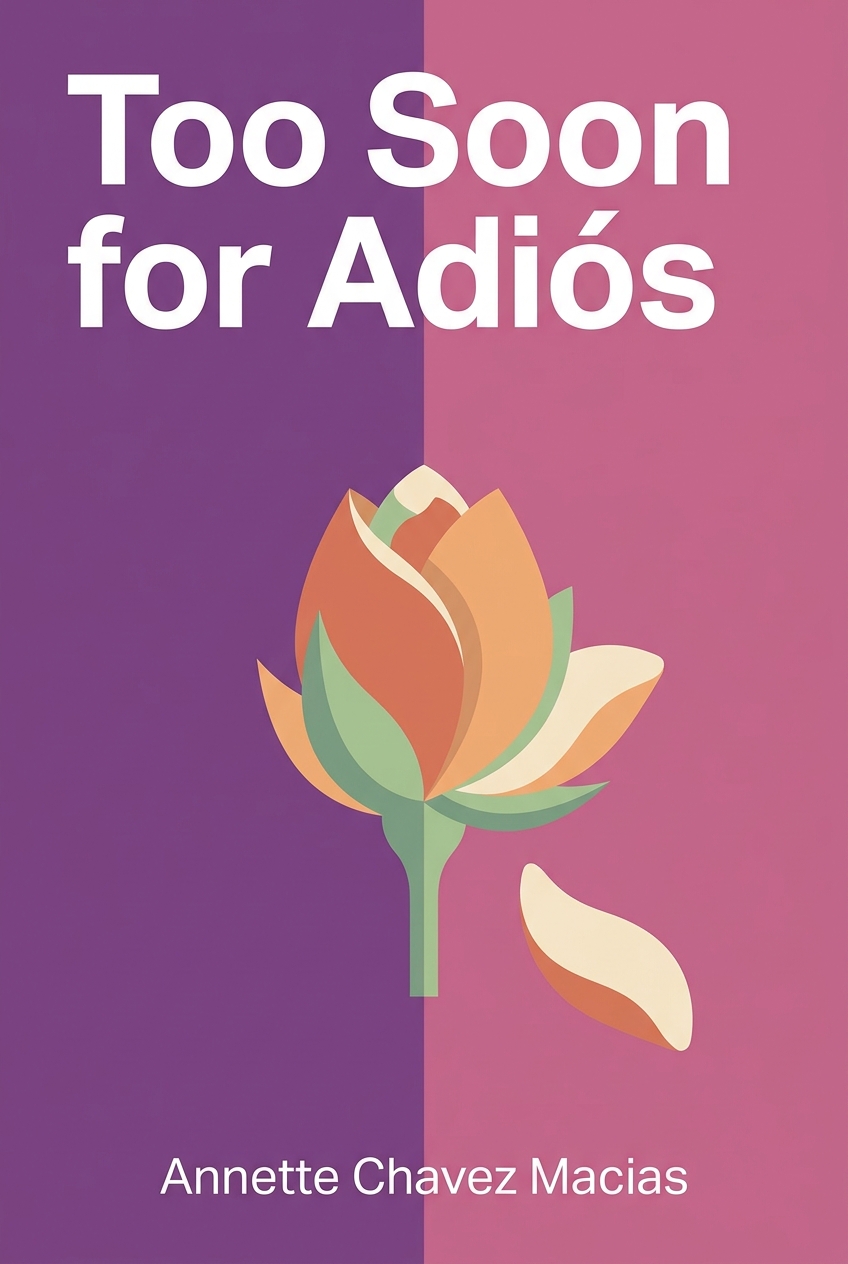
Too Soon for Adiós
What's it about
Ever feel like you're stuck between who you are and who your family expects you to be? Discover how to navigate complicated family dynamics and find your own path, even when it means challenging the traditions you were raised with and forging a new definition of home. You'll learn how one woman's journey to save her family's struggling business becomes a powerful lesson in self-discovery. Uncover the secrets to balancing personal ambition with familial duty, healing old wounds, and learning that sometimes, saying goodbye is the only way to truly find your way back.
Meet the author
Annette Chavez Macias is an award-winning author whose debut novel, Big Chicas Don't Cry, was named a Best Book of the Year by both Apple Books and PopSugar. A first-generation American of Mexican descent, she draws from her own bicultural experiences to write heartfelt stories about family, love, and identity. Her novels explore the intricate bonds and unique challenges faced by Latinas navigating life and relationships, bringing authenticity and warmth to every page.
Opens the App Store to download Voxbrief

The Script
Think of the small, local coffee shop you love. It’s a living museum of relationships. There’s the barista who knows your order before you speak, the quiet corner table that witnessed a first date, the scuffed armchair where a friendship was mended over lukewarm lattes. Each object holds a story. Now, imagine that shop is closing. The owner, who poured their life savings and their heart into the worn floorboards, has to say goodbye. What happens to all those stories? Do they evaporate with the last wisp of espresso steam, or do they cling to the people who lived them, becoming a part of their own personal history?
This question of how places shape our relationships—and what we lose when those places disappear—is at the heart of “Too Soon for Adiós.” Author Annette Chavez Macias found herself exploring this very idea, drawing from her own experiences with the beloved, family-run businesses that act as community anchors. As a prolific author of contemporary fiction that celebrates her Mexican-American heritage, Macias wanted to write a story about the bittersweet reality of endings and the courage it takes to fight for the places, and people, that feel like home. The result is a novel that feels both deeply personal and universally understood, a love letter to the spaces that hold our memories long after we’ve moved on.
Module 1: The Collision of Grief and Secrets
Grief is never simple. For the protagonist, Gabby, her mother's death is a chaotic storm of regret and confusion. Their relationship was complicated. It was messy. Gabby, a chef, never felt her mother truly approved of her career or her life choices. This unresolved tension hangs in the air, making every memory a double-edged sword. At the funeral, Gabby is already drowning in what-ifs. She regrets not taking more photos. She regrets the fights and the days of silence that followed. She tried to cram a lifetime of connection into her mother's final hours, but it wasn't enough. It never is.
This is where the first major insight hits. Grief is amplified by unresolved conflict. The small arguments and unspoken resentments of the past become enormous weights in the present. Gabby’s sorrow is for the relationship they never quite managed to have. This is a familiar pain point for many. We assume we'll have more time. We put off the hard conversations. Then, suddenly, time runs out.
But Gabby isn't alone in her grief. Her mother’s best friends, Auntie Martha and Auntie Lily, form a powerful support system. They were her mother's "ride or dies." They provided practical help during the illness, like hiring a cook and offering a place to live. After her death, they provide emotional stability. This brings us to a critical counterpoint. A chosen family can be a lifeline during profound loss. For those with small or strained biological families, community becomes everything. These "aunties" show up. They provide casseroles, comfort, and a sense of continuity when Gabby's world feels like it's collapsing.
So what happens next? Just as Gabby starts to navigate this new, motherless world, a stranger appears at the funeral. His name is Raul. He claims to be her biological father. This shatters Gabby's reality. She believed her father was Juan, the man who raised her until he died when she was sixteen. The hostile reaction from Auntie Lily confirms this is a long-buried secret. This leads to the module's core lesson. Major life crises often unearth hidden family histories. The structures we rely on become unstable. The narratives we’ve built our identities on are suddenly questioned. Gabby is now grieving not only the mother she knew but also the family history she thought was true. A panic attack grips her at the luncheon, a physical manifestation of her world spinning off its axis. The discovery forces her to confront a past that was intentionally kept from her, turning her grief into a complex puzzle of betrayal and identity.