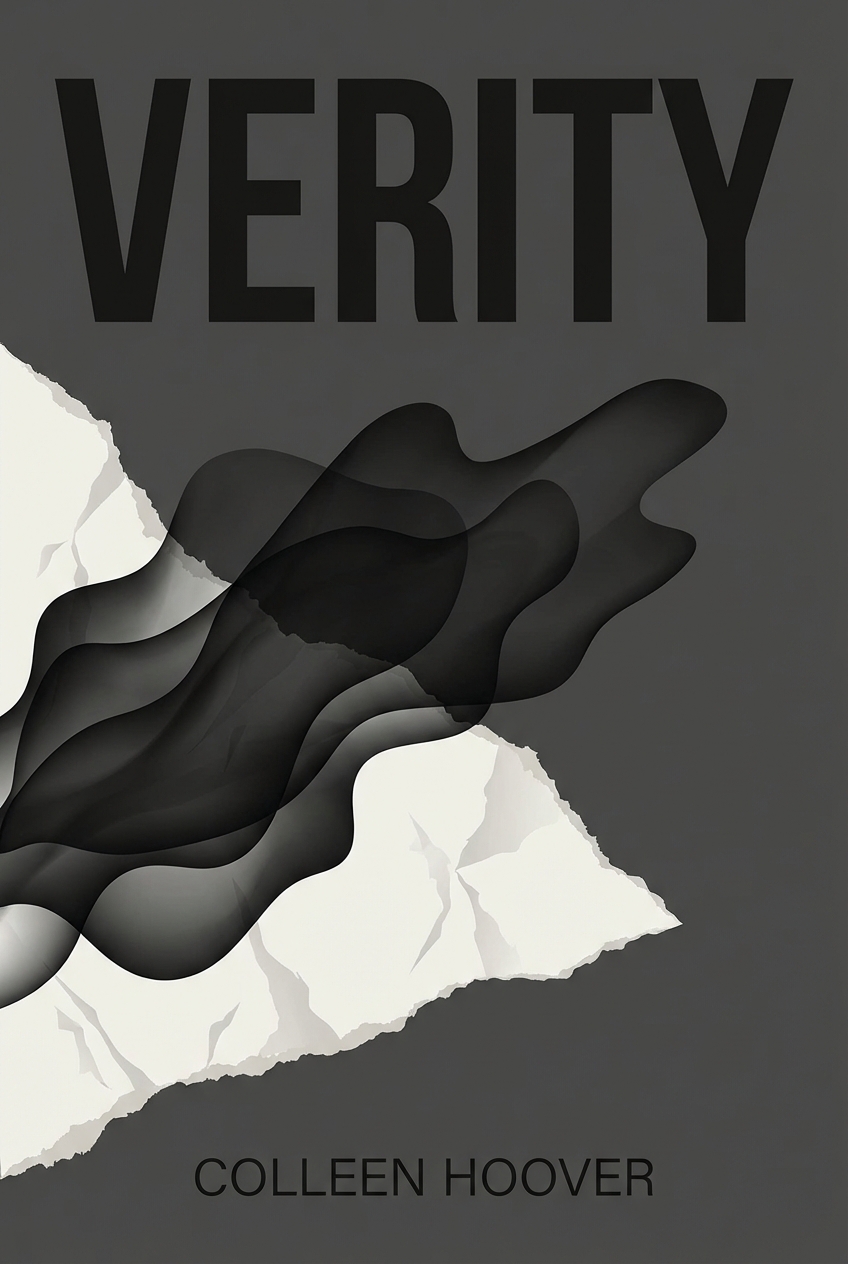
Verity
The thriller that will capture your heart and blow your mind, from the author of IT ENDS WITH US
What's it about
Ever wondered what secrets lie hidden in someone else's life? Get ready to uncover the chilling, unpublished autobiography of a famous author. This isn't just a story; it's a psychological thrill ride that will make you question everything you think you know about truth and deception. You’ll follow a struggling writer who accepts a job finishing the works of an injured novelist, only to find a manuscript that reveals a horrifying version of the past. As you dive deeper into this dark and twisted family history, you'll learn how obsession can blur the lines between love and manipulation, forcing you to confront a shocking, heart-pounding conclusion.
Meet the author
Colleen Hoover is the 1 New York Times bestselling author of over twenty novels and novellas, whose books have become a global phenomenon beloved by millions of readers. A former social worker, Hoover’s profound understanding of complex human relationships and emotional extremes infuses her writing, allowing her to craft gripping psychological thrillers like Verity. She masterfully explores the darker aspects of love and obsession, solidifying her status as a powerhouse of both contemporary romance and suspense.
The Script
We believe that memory is a library, a quiet place where our past is catalogued and stored. We trust it as the definitive record of who we are. But what if your memory is a live performance? A story that changes with every telling, edited by a director—your present self—who has their own agenda. What if the most cherished memories, the ones that form the bedrock of your identity and your relationships, are the most heavily edited fictions of all? This is about the terrifying possibility that our entire perception of love, of betrayal, and even of ourselves, is built on a narrative that we actively, if unconsciously, rewrite every single day. The past is a fluid story we drag forward with us, and its meaning can be warped by a single, new piece of information.
This is the unsettling territory Colleen Hoover decided to explore after years of building a career on the foundations of romance. Known as the undisputed queen of the genre, with millions of books sold, Hoover had mastered the art of crafting epic love stories that readers could depend on. But she became fascinated by a darker question: what happens when the very foundation of a great love story is a lie? She wanted to write a book that deliberately played with the reader's trust, one that pulled the rug out from under the genre she helped define. "Verity" was her answer—an experiment born from a desire to subvert her own formula and see how far she could push her readers into the gray space between love and obsession, truth and masterful deception.
Module 1: The Unreliable Narrator
The story begins with Lowen Ashleigh, a struggling writer on the brink of eviction. She's offered a life-changing job. She will ghostwrite the remaining books in a famous series by the author Verity Crawford. Verity is incapacitated after a car accident. Lowen accepts the job out of desperation. This requires her to temporarily move into the Crawford home to sort through Verity's chaotic office. It's a house steeped in tragedy. The Crawfords recently lost both of their young twin daughters in separate, horrific accidents.
Once there, Lowen stumbles upon a hidden manuscript. It's an autobiography Verity was writing, titled So Be It. And here's the first major insight: Reading a private confession warps your perception of reality. Lowen is immediately sucked into Verity's world. The manuscript is raw, sexually explicit, and deeply unsettling. It paints a portrait of a woman obsessed with her husband, Jeremy, and pathologically jealous of her own children. Lowen becomes a voyeur. She rationalizes reading the manuscript as professional research. She needs to understand Verity's mind to write in her voice. But really, she's captivated by the dark, forbidden secrets.
This discovery introduces a core theme of the book. Every narrative is a performance, and truth is dangerously subjective. Lowen is now caught between two realities. There's the reality she sees: Jeremy, a grieving, kind, and handsome father. Then there's the reality she reads: a story of manipulation, maternal resentment, and chilling calculation. She can't tell what's true. Is the manuscript a factual confession? Or is it a brilliant writer's twisted creative exercise, a practice in writing from a villain’s point of view? This uncertainty is the engine of the entire story. Lowen’s grip on reality begins to slip. She starts seeing things. She hears noises. She feels a menacing presence in the house.
So what's the takeaway here? It's a warning about the stories we consume. Unverified information, especially when it's emotionally charged, can become a lens that distorts everything you see. Lowen’s professional task becomes a personal obsession. Her judgment is clouded by Verity’s words. She starts projecting the manuscript’s narrative onto her interactions with Jeremy and his son, Crew. Every small event in the house is now filtered through the dark lens of the autobiography. This sets the stage for a dangerous psychological spiral.