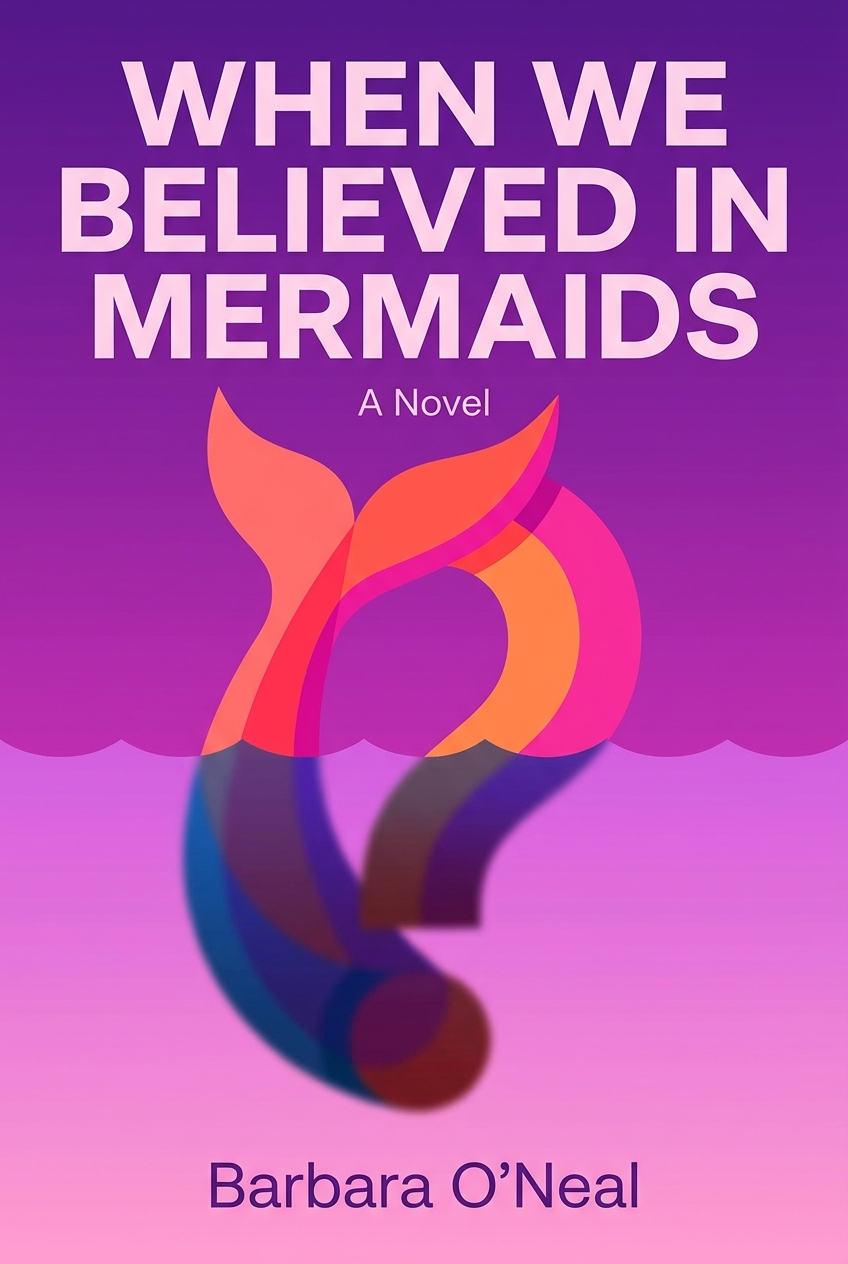
When We Believed in Mermaids
A Novel
What's it about
What if you saw your sister, who died fifteen years ago, on the news? That's what happens to Kit, who must confront a past she thought was buried. This journey will force you to question everything you believe about family, identity, and the secrets we keep. Uncover the truth alongside Kit as she travels to New Zealand in search of her long-lost sister. You'll explore the devastating event that tore them apart and discover why one sister chose to disappear, leaving you to ponder the immense power of love, loss, and forgiveness.
Meet the author
Barbara O'Neal is a Wall Street Journal, Washington Post, and USA Today bestselling author of more than a dozen novels, celebrated for her compelling stories of family and second chances. A former journalist, she travels the world to find inspiration for her books, exploring the complexities of love, loss, and the secrets we keep. Her keen observations of human relationships and stunning settings, like the one found in When We Believed in Mermaids, bring her powerful narratives to life.
Opens the App Store to download Voxbrief

The Script
You’re standing in line at the grocery store, glancing at the television screens above the registers. Amid the usual blur of celebrity news and sports highlights, a news report catches your eye: footage from a disaster scene on the other side of the world. Then, for just a fraction of a second, you see it. In the chaos of the crowd, a face you haven't seen in fifteen years. A face you buried. A face belonging to someone everyone, including you, knows is dead. The broadcast moves on, the cashier calls for the next customer, but you are frozen. Your world, once built on the solid ground of that loss, has just liquefied. The person you mourned is alive. And if that is true, then the entire story of your life, the foundation of your identity, is a lie.
This is the impossible moment that launches Barbara O'Neal's novel, When We Believed in Mermaids. O'Neal, a novelist known for her deep dives into family secrets and emotional resilience, crafts stories that explore how we rebuild ourselves after the unimaginable happens. She was fascinated by the idea of a single, public image shattering a private, long-held reality. For her, the question was about the quiet, devastating work that comes after the initial shock. What do you do when the person you've grieved for is suddenly, inexplicably, back? O’Neal uses this premise to explore the complex architecture of family stories—the parts we tell, the parts we hide, and the parts that, when revealed, can either tear us apart or finally set us free.
Module 1: The Ghosts of a Fractured Past
The story hinges on two sisters, Kit and Josie Bianci. They were raised in a world that was both magical and destructive. Their parents were obsessed with each other, leaving the children to navigate a landscape of passionate fights and neglect. This chaotic upbringing becomes the defining force in their lives. The core idea here is that childhood trauma creates deep, divergent survival strategies that shape adult identity.
Kit, the younger sister, reacts to the chaos by seeking order. She becomes an ER doctor. It's a profession where she can control chaos, fix what is broken, and follow clear protocols. Her life is a fortress built against the emotional storms of her youth. Her home is tidy. Her routines are sacred. She uses surfing as a meditative tool to process the world. Surfing is how she finds stillness. It's how she manages the ghosts of her past.
Josie, the older sister, internalizes the drama. She mirrors her parents' volatility. She chases storms, both literal and metaphorical. Her life becomes a whirlwind of addiction, instability, and running away. She thrives on the very chaos Kit desperately avoids. This leads to a profound insight: Family trauma creates unique, often opposing, coping mechanisms. One person seeks control, the other embraces the storm.
Then, a terrorist bombing in France. Josie is declared dead. For fifteen years, Kit grieves a sister whose body was never found. This absence of physical proof is crucial. It keeps a sliver of hope alive in Kit's subconscious. It’s a wound that never fully closes. The author makes a powerful point here. Without the tangible reality of death, grief becomes a haunting, a state of permanent uncertainty. Kit sees her sister in crowds a hundred times. Each time, hope rushes in, followed by the crushing weight of reality. This is the fragile state we find Kit in when the story begins.
Module 2: The Lie That Becomes the Truth
The book’s inciting incident is a news report. A fire at a nightclub in Auckland, New Zealand. In the background of the shot, Kit sees a woman with a familiar face and a distinctive scar. A scar only her sister Josie has. Her mother, now sober and clear-eyed from years in AA, sees it too. This is a possibility.
So Kit flies to Auckland. This journey is a journey into the past she has spent her life trying to contain. Here's where the narrative splits. We follow Kit's search in the present. We also get flashbacks from the perspective of "Mari," a successful house-flipper living in a beautiful Auckland suburb. She has a loving husband, two children, and a seemingly perfect life. And as we soon learn, Mari is Josie.
This introduces one of the book's most compelling themes. To escape unbearable trauma, sometimes a person must metaphorically kill their former self. Josie didn't just move; she orchestrated a complete reinvention. She adopted a new name, a new accent, a new backstory. "Josie Bianci is dead," she tells herself. "I intend for her to stay that way." Her new life is a carefully constructed reality built on the foundation of sobriety and fierce determination. She had to erase Josie, the addict, the runaway, the victim, to become Mari, the mother, the wife, the creator.
But this new life is a fragile fortress. It’s built on secrets. Her husband, Simon, knows nothing of her real past. He thinks she's an orphan from Canada. This creates a profound and lonely isolation for Mari. She lives in constant fear of exposure. A stray news camera, a slip of the tongue—any of it could bring her carefully built world crashing down. And here’s the thing. A life built on secrecy creates an unbridgeable gap between your inner self and the people you love most. Mari is surrounded by family, but she is utterly alone with her truth.