All Books
Self-Growth
Business & Career
Health & Wellness
Society & Culture
Money & Finance
Relationships
Science & Tech
Fiction
Topics
Blog
Download on the App Store

Where the Forest Meets the Stars

13 minGlendy Vanderah

What's it about

Have you ever felt so broken by loss that you've forgotten how to heal? Discover a story that shows you how unexpected connections can mend even the deepest wounds and reignite your belief in the extraordinary possibilities of life. You'll join Joanna, a grieving ornithologist, as her solitary world is turned upside down by a mysterious, barefoot girl named Ursa who claims to be an alien. As Joanna and her reclusive neighbor Gabriel try to unravel Ursa’s past, you’ll explore the powerful ways love, trust, and a little bit of magic can help you find your way back from darkness.

Meet the author

Glendy Vanderah is a Wall Street Journal, USA Today, and Washington Post bestselling author whose debut novel, Where the Forest Meets the Stars, became a global phenomenon. Before she began writing, Vanderah worked as an endangered bird specialist in Illinois, and her deep connection to the natural world beautifully informs her stories of hope, healing, and human connection. Her background in biology and her love for the outdoors provide the authentic, magical backdrop that has captivated millions of readers worldwide.
Listen Now
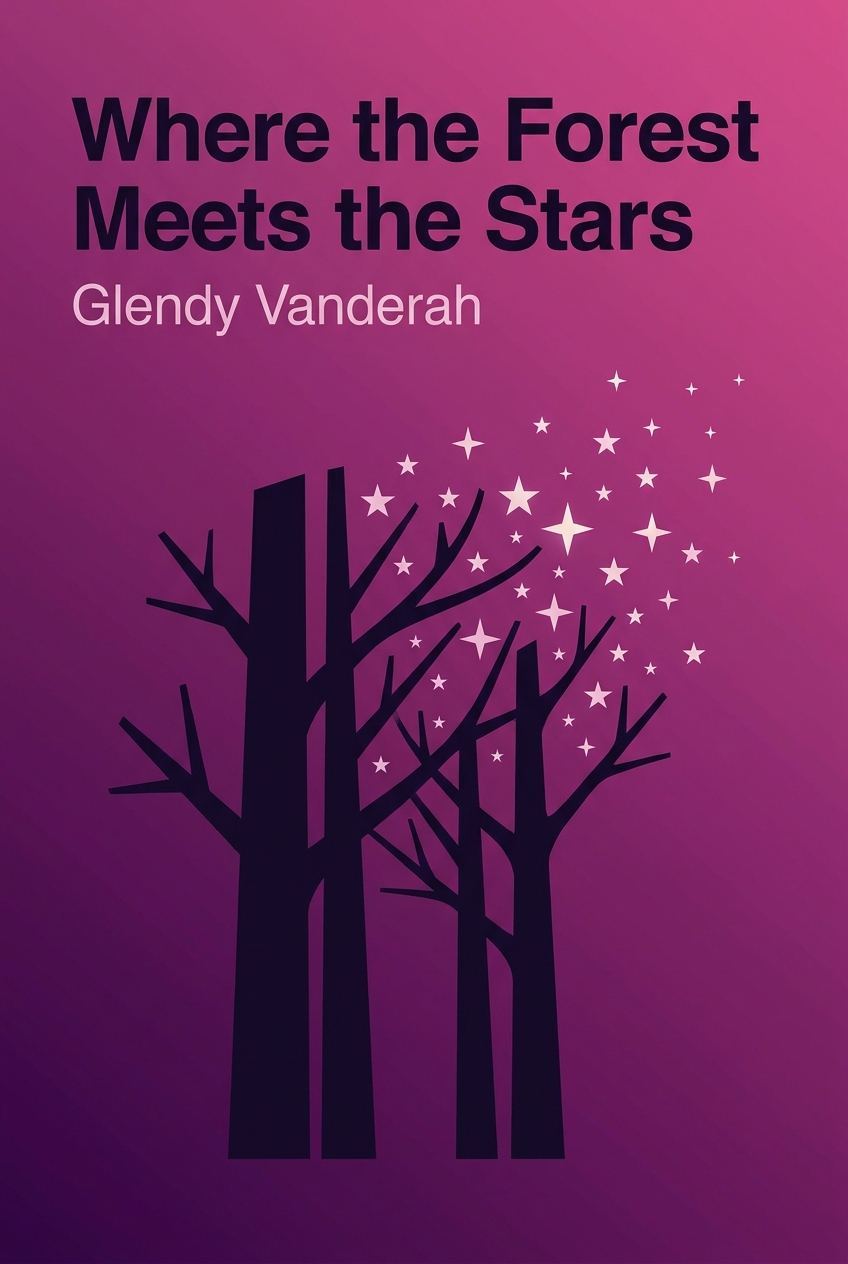
Where the Forest Meets the Stars book cover

The Script

Every family has its own private folklore, a collection of stories told so often they become as solid as the foundation of the house. These are the load-bearing walls of identity, the beams that define who belongs and why. But what happens when one member of the family carries a different version of the story, one that doesn’t fit the official narrative? It’s like a single, discordant instrument in an otherwise harmonious orchestra, a note that threatens to reveal the entire performance is built on a fragile, unspoken agreement. This person becomes the keeper of a dangerous truth: that the family’s shared history might be a beautiful, carefully constructed fiction designed to hide a much more painful reality.

This gap between the stories we are told and the truths we feel in our bones is the space where Glendy Vanderah’s fiction lives. Before becoming a novelist, Vanderah was a professional biologist, spending her days observing the intricate, often brutal, logic of the natural world. She was fascinated by how organisms adapt for survival, sometimes in ways that are both beautiful and heartbreaking. She began writing as a way to explore the human equivalent—the emotional adaptations we make to survive our own private histories and the profound loneliness that can settle in when our personal truth feels alien to everyone around us. Her debut novel, “Where the Forest Meets the Stars,” emerged from this curiosity, creating a story where three profoundly lonely people, each nursing their own secret grief, must decide if they can build a new story together.

Module 1: The Collision of Rationality and Responsibility

The story opens with Joanna Teale, a bird biologist. She's recovering from immense personal loss. She has retreated to a remote cabin in rural Illinois for her research. Her life is about data, observation, and solitude. Then, a small, barefoot girl appears at her cabin. The girl, who calls herself Ursa, claims to be an alien. She says she's here to witness five miracles.

Jo’s immediate response is rational. This is a lost child. She needs to go home. Jo tries logic. She tries threats. She even considers calling the police. But something stops her. Caring for the vulnerable often forces you to act against your own practical judgment. Jo sees the girl is hungry. She sees the fear in her eyes when she mentions foster care. Her scientific, problem-solving mind is overridden by a deeper, empathetic instinct. She feeds the girl. She lets her stay. This decision marks the story's central conflict. It’s the battle between the head, which demands a logical, safe solution, and the heart, which responds to another's immediate suffering.

This dynamic is something many of us face. We build systems and processes to manage risk. We rely on data to make decisions. But sometimes, a human element appears that our frameworks can't account for. The author suggests that in these moments, true responsibility requires moving beyond established protocols and engaging with the messy reality of the situation. Jo doesn't abandon her logic. Instead, she expands her investigation. She starts gathering a different kind of data. She observes Ursa's behavior, listens to her strange stories, and begins to form a hypothesis that goes far beyond "lost child." She partners with her reclusive neighbor, Gabriel, to solve the mystery. This collaboration shows that tackling complex human problems often requires a team, blending different perspectives and strengths.

So here's the thing. Effective intervention begins with prioritizing a person's immediate safety and emotional state, even if it complicates the long-term solution. Jo and Gabe choose to protect Ursa first and deal with the consequences later. They create a small, insulated world for her. It's a world where she feels safe enough to exist. This foundation of trust becomes the only path to uncovering the truth. Their choice is risky. It's legally questionable. But it's also profoundly human.

Read More